Axios AM

September 19, 2026

Happy Saturday! Smart Brevity™ count: 1,314 words ... 5 mins. Erica Pandey is your weekend host. Edited by Katie Lewis.
🎤 Breaking: MS NOW White House correspondent Akayla Gardner reported on-air, from outside the gates, that she found her press pass had been deactivated when she tried to enter the White House this morning. President Trump said yesterday that he was "banning" CNN, MS NOW and Politico "from the White House as a result of their constant 'reporting' FAKE NEWS!"
- MS NOW said it "intends to take any and all steps necessary to defend our First Amendment rights." CNN said an enforcement of the ban would be an "illegal assault" on journalists' constitutional rights. Politico said: "We will vigorously defend our First Amendment rights." The backstory.
1 big thing: Global gas crunch
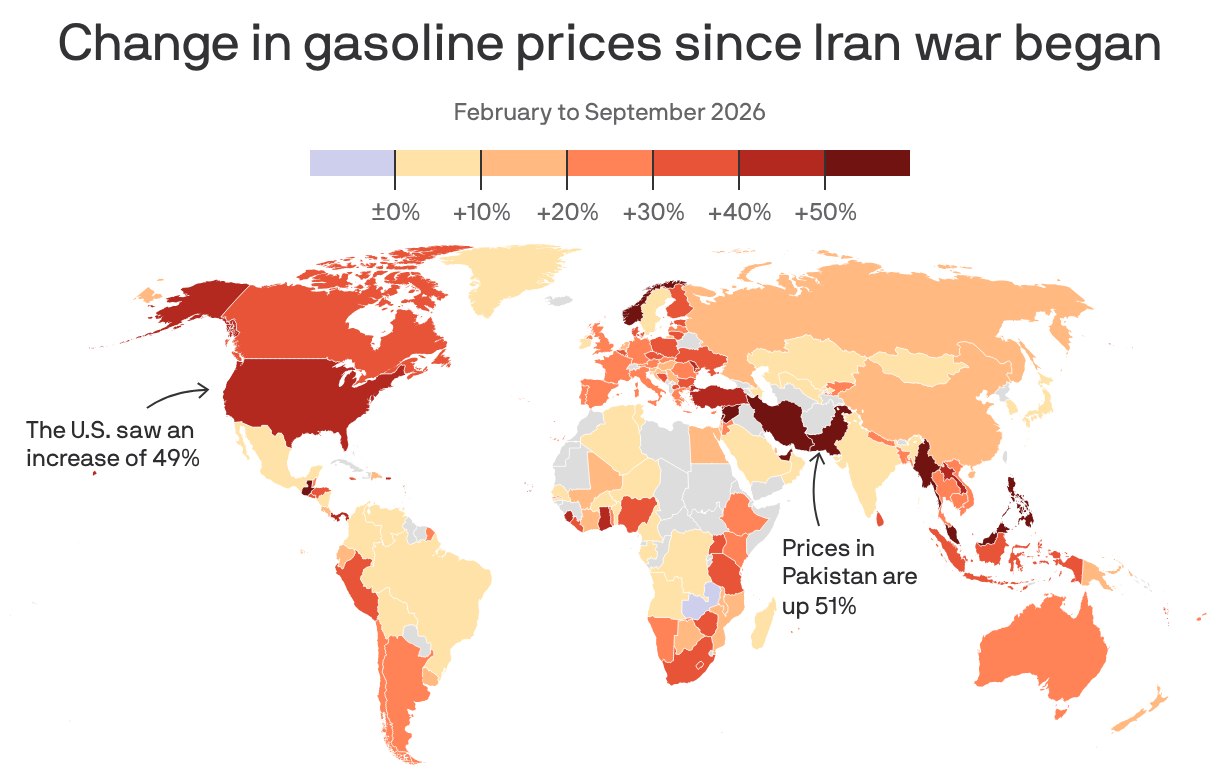
The Iran war is driving up fuel prices worldwide, leading to angry protests around the globe and straining the economies of countries that have nothing to do with the war.
- Why it matters: The price surge squeezes consumers and strains governments trying to contain the shock — especially poorer countries with little money to spare, Axios' Ben Geman reports.
What to watch: With no resolution to the conflict in sight, many governments face a hard choice — spend more money to keep prices down or face the political consequences of higher fuel costs.
- Dozens of nations have taken steps to cap, subsidize or lower taxes on various fuels, the International Energy Agency says. Governments are also taking steps to reduce demand, including more remote work and limiting government travel.
2. 🚨 CNN: Chatbot blunder "almost started a war"

The intelligence report rocketed around the U.S. military last spring: A Chinese ship in the Middle East was transporting nuclear-weapon components, CNN's Katie Bo Lillis and Zachary Cohen report.
- Preparations to intercept started immediately. Armed U.S. military members were ready to board the ship. Planes were in the air.
🤖 But the report that "almost started a war" was "entirely false," a source told CNN.
- A special operations analyst had used a chatbot to help generate the report, and the AI had misidentified what was on the ship.
3. 🏈 GOP's football blitz
Republicans scrambling for midterm momentum are making a massive bet on football, pouring millions into advertising during the country's biggest NFL and college games, Axios' Alex Isenstadt reports.
- Why it matters: Republicans are trying to hold onto male voters — football's core audience and a critical part of President Trump's 2024 coalition.
📉 Stat du jour: After winning 55% of the male vote in 2024, Trump has seen his standing with men deteriorate. A new Fox News poll puts his approval among them at 42%, down 9 points from a year ago.
- The signs of slippage are particularly clear among young men. A spring Harvard Youth Poll found men ages 18–29 favored a Democratic congressional candidate by 8 points, after reporting an even split between Trump and Harris in 2024.
Zoom in: Republicans are capitalizing on their money advantage by dominating the football airwaves.
- They ran 5,546 TV spots during the NFL and college games and pre- and postgame programming where they advertised most heavily last weekend, compared with 471 for Democrats — nearly 12 times as many, according to ad-tracking data obtained by Axios.
- Republicans' biggest presence was during the blockbuster Texas-Ohio State matchup, which featured teams from two states with competitive Senate races. The pro-GOP Senate Leadership Fund (SLF) super PAC spent $2 million, airing ads in every quarter before 14 million viewers on ABC.
🍻 In Michigan, SLF struck a deal with a vendor that manages sports programming in Michigan bars, putting its ads on more than 1,000 TVs at 150 bars across the state.
4. 🐊 Florida's next hot spot

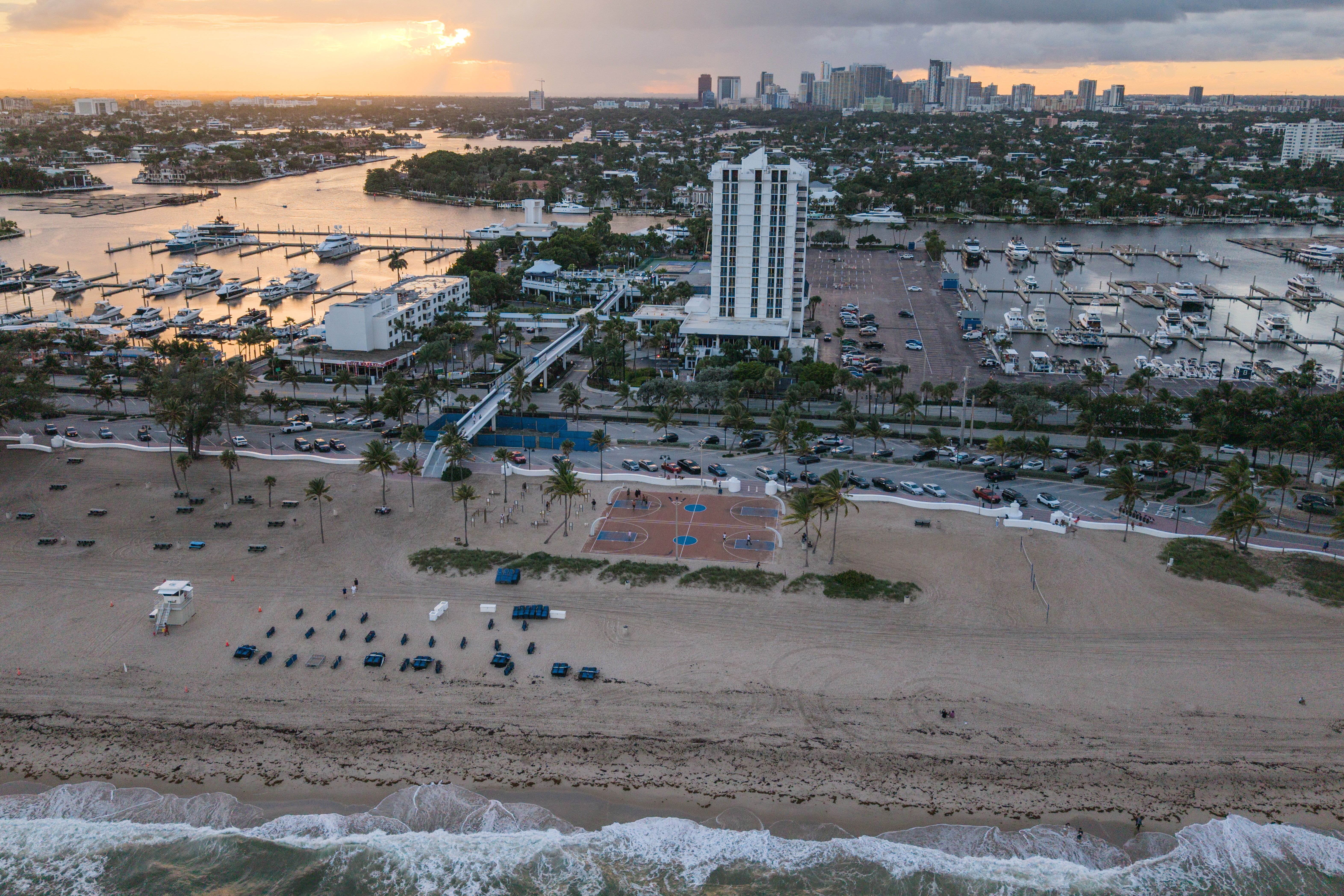
Fort Lauderdale — which sits between Miami and Palm Beach — has long marketed itself as a viable alternative to those two cities. Now, the South Florida city is getting its moment, with a rush of new luxury condominium projects and corporate tenants.
- The intrigue: "Much of the work is planned and financed by deep-pocketed New York developers betting that Fort Lauderdale's time has finally come. ... New York-based firms are behind 4.6 million square feet of downtown development, roughly 45% of the total," Bloomberg reports.
✈️ Zoom in: Fort Lauderdale is getting transplants from big cities around the country, including New York City, Los Angeles and San Diego.
- The city's under-45 population is up 25% since 2020.
"For some people, Miami became too hectic, too busy, too noisy," Miki Naftali, a New York developer with projects in Fort Lauderdale, told Bloomberg. "So Fort Lauderdale is a fantastic city for those that just want one notch down."
5. 🤔 Winning over AI skeptics
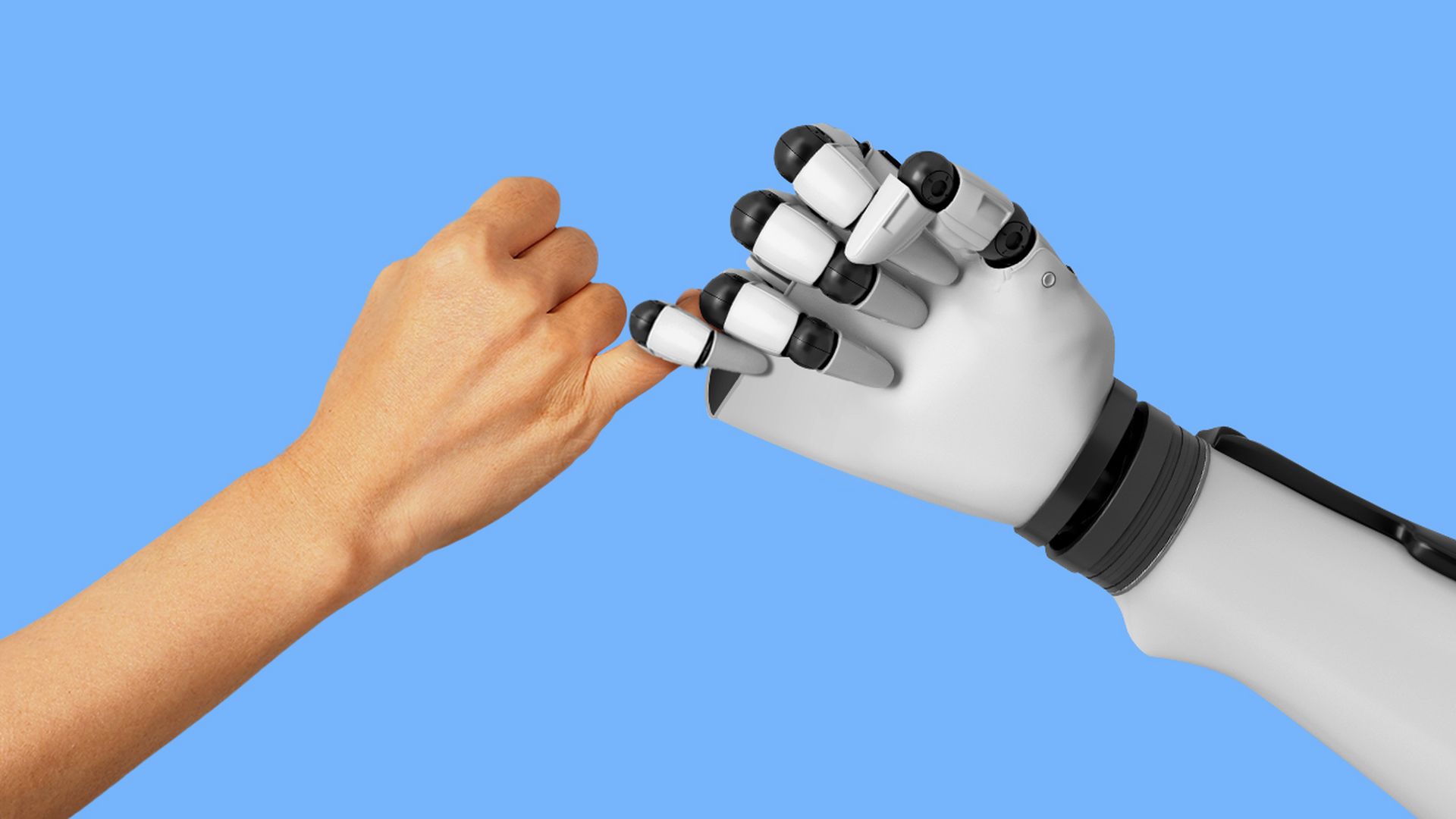
Practical applications of AI that keep people alive, safe and protected from scams help break through Americans' skepticism of the technology, Axios' Herb Scribner writes from a Morning Consult poll taken for Axios.
Trust in AI jumped 14 points — from 41% to 55% — for these cases:
- 🪖 Helping others: A Veterans Affairs tool flagged more than 130,000 at-risk veterans and helped connect them to care.
- 💳 Fraud detection: An AI fraud-detection system flagged suspicious transactions quickly before any money was removed from an account.
- 💊 Cancer discovery: A Mayo Clinic AI tool spotted pancreatic cancer on CT scans up to three years before any diagnosis.
- 🌪️ Disaster relief: A tool called "GraphCast" was used to show how early warnings for hurricanes, floods and extreme heat can be detected.
- 🚒 Curbing fatal illness: An AI system at Johns Hopkins cut sepsis deaths by about 20% by flagging warning signs hours in advance.
6. 💡 Nuclear reality check
Nuclear power's comeback is running into roadblocks, Axios' Alan Neuhauser writes.
- Why it matters: Investors piled into nuclear energy companies, expecting returns to rise alongside the power-hungry AI data centers. But enthusiasm is turning into frustration with the industry's long timelines, high costs and intense engineering challenges.
👀 Case in point: This week, engineering firm Holtec postponed its $900 million IPO.
- Holtec wants to be the first U.S. company to restart a retired nuclear reactor — at Palisades Nuclear Plant in Michigan — and the pitch had enough appeal to garner up to $1.52 billion in federal loan guarantees.
- But restarting isn't simple: Holtec twice delayed the reactor's start date after finding the equipment was in worse-than-expected condition. Then federal inspectors found that Holtec wasn't following radiation-exposure regulations.
Zoom out: Nuclear and uranium stocks on the S&P 500 have plummeted nearly 29% since Jan. 1.
- Three advanced nuclear companies that went public this year have struggled: Fuel maker Standard Nuclear and reactor developers X-energy and Deep Fission are trading far below their list prices.
📉 The bottom line: Nuclear power could help ease the data-center power crunch, but it's not coming quickly.
- Get Axios Pro Deals for exclusive industry news and analysis.
7. 🎨 Presidential portraits
Former President George W. Bush has a new book of oil paintings coming on March 9, featuring his oil portraits of political prisoners and dissidents.
- "The Call of Freedom: Portraits of Political Prisoners and Dissidents" will include Bush's portraits of such symbols of oppression as the late Mahsa Amini, whose death in 2022 while in the custody of Iranian authorities led to nationwide protests, and the imprisoned Nicaraguan bishop Rolando José Álvarez Lagos.
- Former Soviet Union dissident Natan Sharansky is contributing a foreword. (AP)
Bush, 80, writes: "This book, coupled with our work at the Bush Institute, is a chance for me to send a message that the United States cares deeply about people seeking freedom. And hopefully these stories will remind us that we who live in liberty have a duty to stand with those who do not."
8. 🍲 Lingo for the road: "Food divorce"

For some couples, the secret to staying together is eating apart.
- Coordinating daily meals can be exhausting. "Mismatched work shifts, meal-prep burnout, strict diets, and the explosion of GLP-1 medications like Ozempic have only amplified the divide," the New York Post reports.
So people are trialing "food divorce": You figure out your meals, and I'll figure out mine.
📬 Thanks for reading! Please invite your friends to join AM.
Sign up for Axios AM