Axios AI+
April 21, 2026


👋 Bye, Tim Apple. More below on what's next.
Today's AI+ is 1,148 words, a 4-minute read.
📈 If you're a CEO or on a CEO's team: Request to join Axios CEO Jim VandeHei's free new Axios C-Suite weekly newsletter.
1 big thing: Apple enters post-Cook era chasing its next hit
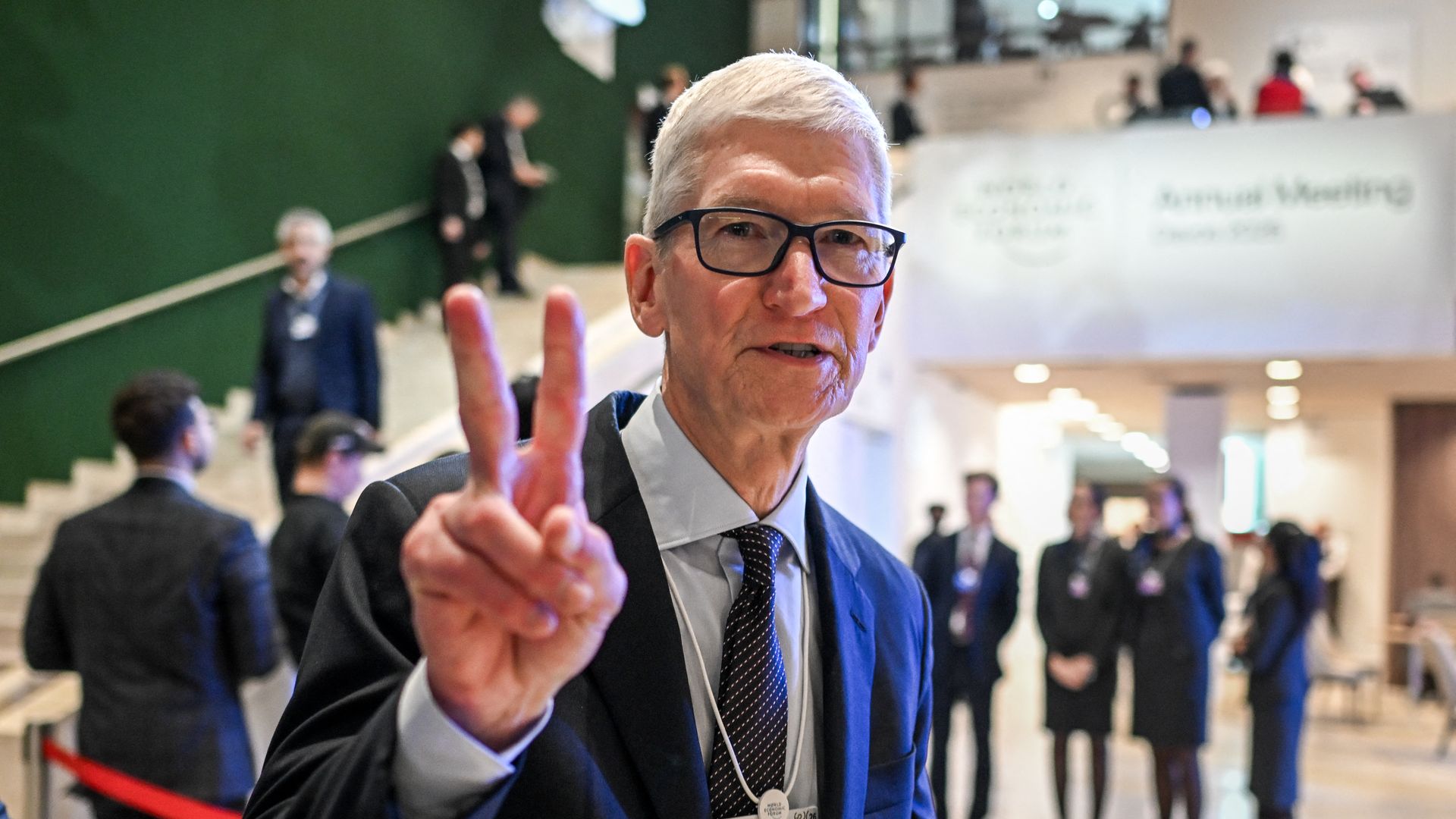
The Tim Cook era is coming to a close with an existential challenge for Apple: figuring out what comes after the iPhone.
Why it matters: Cook extended the iPhone's success into products like the Apple Watch and AirPods and built a powerful services business. But the company hasn't broken into a major new category — and has stumbled into the AI era.
Driving the news: Apple announced yesterday that Cook will cede the CEO reins to hardware chief John Ternus, while remaining with the company as executive chairman.
- The company also promoted Johny Srouji, the driving force behind Apple's chip success, to the new role of chief hardware officer.
- That could entice Srouji, whose name is often mentioned in tech CEO searches, to stay in Cupertino.
The big picture: Cook has executed masterfully to maximize the company's iPhone success and transform Apple into one of the world's most valuable companies.
Yes, but: His efforts to expand far beyond that device have largely sputtered. The company assembled a significant team to try to enter the autonomous car market, but gave up before bringing anything to market.
- The company's initial foray into the mixed reality market, Vision Pro, remains for sale but at a price that has attracted relatively few buyers.
Zoom in: Apple's position in AI remains uncertain.
- In 2024, Cook painted a compelling vision for Apple Intelligence, personalized AI that would be able to answer questions from data stored in a variety of places, but do so in a way that would not be accessible to Apple or anyone else.
- But it has struggled to turn the vision into reality, repeatedly delaying the most ambitious features outlined in that keynote. A revamped Siri with some of those capabilities is expected later this year.
- Apple also decided to strike a deal with Google to have access to its Gemini family of models to power future Apple Intelligence features.
The other side: Apple's restraint could pay off if it can maintain its hardware advantage while others spend heavily on AI models, as Dan Primack outlined in an article last week.
- While most of its tech giant peers have spent billions on data centers and compute capacity, Apple has avoided such large outlays.
- If the AI models turn out to be a commodity, Apple may look wise to have avoided the compute capacity craze entirely.
Zoom out: That still leaves unsettled what the next big hardware breakthrough will look like.
- OpenAI paid $6.5 billion to acquire legendary designer Jony Ive and his hardware team, with an initial device expected to be unveiled later this year.
- Meta continues to advance both its Quest virtual reality headsets and its Ray-Ban smart glasses.
- Google is also making a renewed push into smart glasses and VR headsets, in a joint effort with Samsung.
The bottom line: Cook proved Apple could continue to grow without Steve Jobs. Incoming CEO John Ternus must prove that it can still innovate.
2. OpenAI-Anthropic enterprise rivalry heats up

OpenAI is mobilizing consulting partners and touting its compute edge to claw back enterprise customers from Anthropic, as both labs barrel toward potential IPOs.
Why it matters: The outcome of this fight could determine which company hits the public markets with momentum, and which has to explain to investors why it's losing ground.
Driving the news: OpenAI is working to take market share from Anthropic's enterprise business.
- The AI lab is engaging several consulting partners to help enterprises deploy and scale Codex, OpenAI's coding tool.
- Partners will get early access to AI tools in hopes that they can help enterprises "rethink their business processes in the age of AI in a different way," chief revenue officer Denise Dresser told Axios.
Zoom out: It's part of OpenAI's broader shift toward enterprise revenue, after Claude Code's mass adoption led to businesses spending more money with Anthropic than OpenAI, per Ramp.
- Dresser told OpenAI employees in a memo last week that "the market is as competitive as I have ever seen it."
Between the lines: OpenAI and Anthropic are competing on everything from compute to enterprise adoption to model quality as both labs race toward IPOs that could come as soon as this fall.
- "Everyone's operating in winner-take-all mode" and that's happening at "every layer of the tech stack," says Anuj Kapur, CEO of AI software delivery platform CloudBees.
- Investor demand appears stronger for Anthropic than OpenAI in secondary markets, according to multiple reports.
If OpenAI doesn't catch up on revenue soon, Anthropic could "take a lead here that, let's say, over the next one or two years, could be insurmountable," David Sacks, tech investor and White House adviser, said on the "All-In" podcast.
- Growth compounds in the AI world: Models could get smarter over time due to more volume usage, for example.
- More paying customers could mean more revenue, which could be used to buy more compute.
Yes, but: OpenAI says it's ahead of Anthropic on compute capacity, which it highlighted in a recent investor letter reviewed by Axios.
- Anthropic CEO Dario Amodei has cautioned that aggressively scaling compute is risky given its high costs and uncertain demand, even as the company yesterday announced an expanded Amazon partnership to secure up to 5 gigawatts of additional compute.
- An OpenAI investor tells Axios that greater compute capacity is OpenAI's key advantage, as it can fuel more experimentation and keep Sam Altman's firm ahead on model performance.
The bottom line: OpenAI is spending to grow users, Anthropic is spending to protect margins, and both are battling toward the biggest IPOs in history.
3. Microsoft partners with construction unions

Microsoft and North America's Building Trades Unions are supercharging efforts to train workers for the AI economy, according to an announcement shared first with Axios.
Why it matters: AI infrastructure and data centers are expected to create new jobs, and companies are partnering with unions to ensure the workforce is ready.
Driving the news: NABTU and Microsoft will now offer free AI literacy courses and industry-recognized credentials to millions of skilled craft professionals across North America.
- The partnership also includes TradesFutures, a nonprofit that connects people to union construction apprenticeships and careers in 34 states.
4. Training data
- The Rockefeller Foundation is putting $100 million toward helping U.S. workers adapt to tech-driven changes to the labor market. (Axios)
- Google has created a "strike team" to help the company boost its agentic coding prowess, with co-founder Sergey Brin telling Google DeepMind staffers it needs to catch up in that area. (The Information)
5. + This
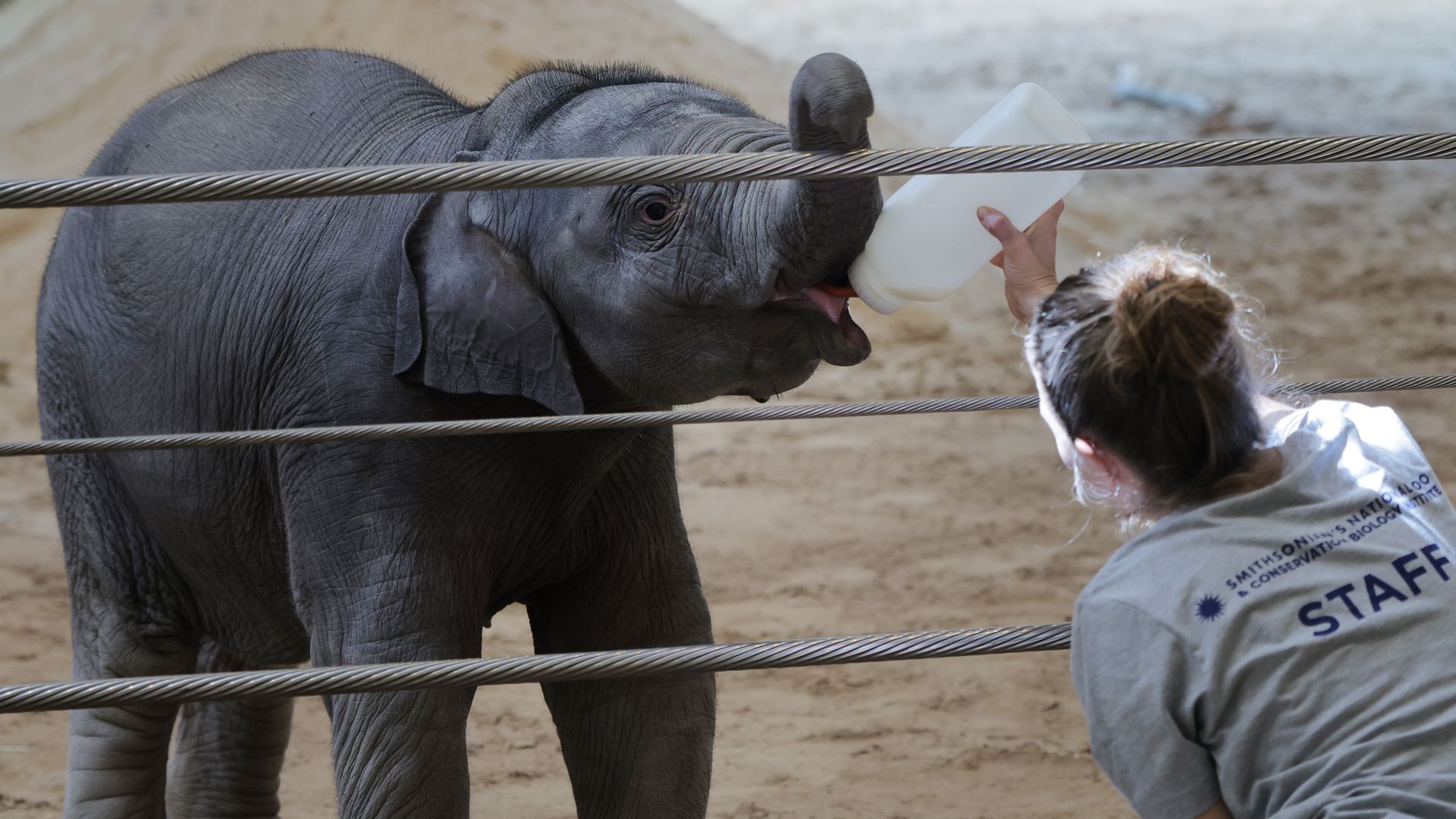
Two-month-old Linh Mai is making her debut at the National Zoo tomorrow. "She's sassy, playful — she's going to be demanding," elephant manager Robbie Clark told our Axios D.C. colleagues.
Thanks to Mackenzie Weinger for editing this newsletter and Matt Piper for copy editing.
Sign up for Axios AI+
