Axios AI+

January 30, 2025

Apple reports earnings later today, so I'll be watching that. Today's AI+ is 998 words, a 4-minute read.
1 big thing: OpenAI's latest D.C. deal
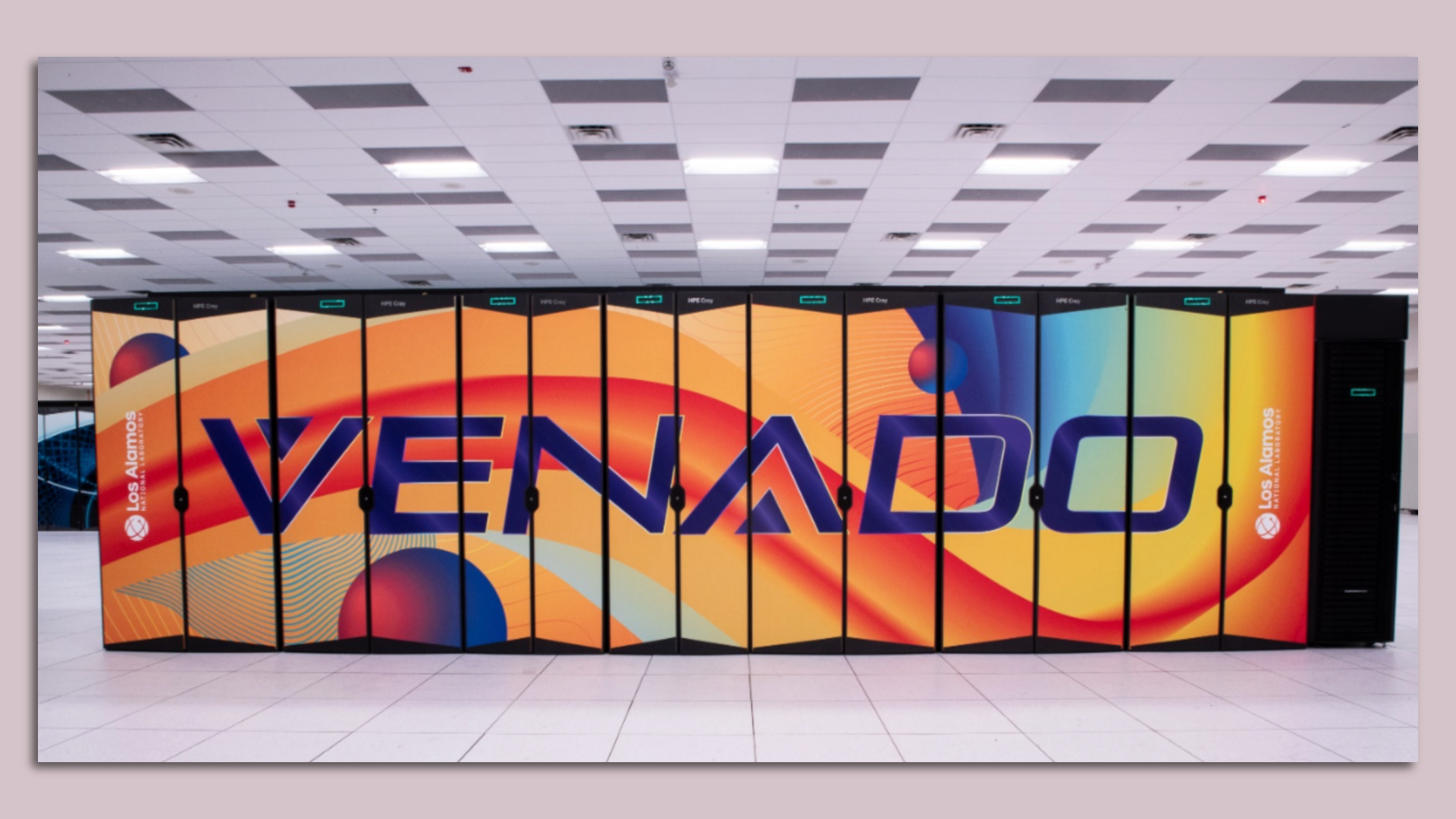
OpenAI will put its models on a supercomputer at Los Alamos National Laboratory and make them available to researchers at other U.S. national laboratories under a deal with the government announced today.
Why it matters: OpenAI is positioning the move as part of an effort to work with the Trump administration and support U.S. leadership and innovation.
Driving the news: As part of the deal, OpenAI and Microsoft will deploy o1 or another of OpenAI's o-series of reasoning models on Venado, an Nvidia-powered supercomputer based at Los Alamos. The model will also be available to researchers at Lawrence Livermore and Sandia National Laboratories.
- Venado is designed to help generate scientific breakthroughs in areas such as materials science, astrophysics and renewable energy.
OpenAI announced the partnership during a Washington, D.C., meeting today that included OpenAI CEO Sam Altman, members of Congress and staffers, and representatives of the Trump administration.
- At the same meeting, OpenAI product chief Kevin Weil was set to provide an off-the-record demonstration of other new capabilities OpenAI plans to introduce during the first quarter of this year.
- It's the first time the company has previewed new technology for U.S. government officials before an official release.
What they're saying: "As threats to the nation become more complex and more pressing, we need new approaches and advanced technologies to preserve America's security," Los Alamos lab director Thom Mason said in a statement.
- "Artificial intelligence models from OpenAI will allow us to do this more successfully, while also advancing our scientific missions to solve some of the nation's most important challenges."
Flashback: Last June, OpenAI and Los Alamos said they were working together to study the impact and risks of using generative AI in an active lab.
The big picture: Altman and other tech leaders have become fixtures in D.C. in recent weeks, with many present for Trump's inauguration. The tech companies have also been making moves seemingly aimed at pleasing the new administration, including seven-figure donations to the president's inauguration.
- Meta yesterday reached a deal with Trump that will see it pay $25 million — most toward Trump's presidential library — to settle claims related to the shuttering of his account after the Jan. 6 attack on the U.S. Capitol.
- Google is following the president's lead in its maps product, renaming the Gulf of Mexico as the Gulf of America.
Our thought bubble: Elon Musk — a dedicated foe of OpenAI who has repeatedly sued the company — may have the new president's ear. But Altman, who shared a photo op with the president at last week's Stargate announcement, is spending a ton of time with team Trump, too.
2. OpenAI says DeepSeek may have misused its model


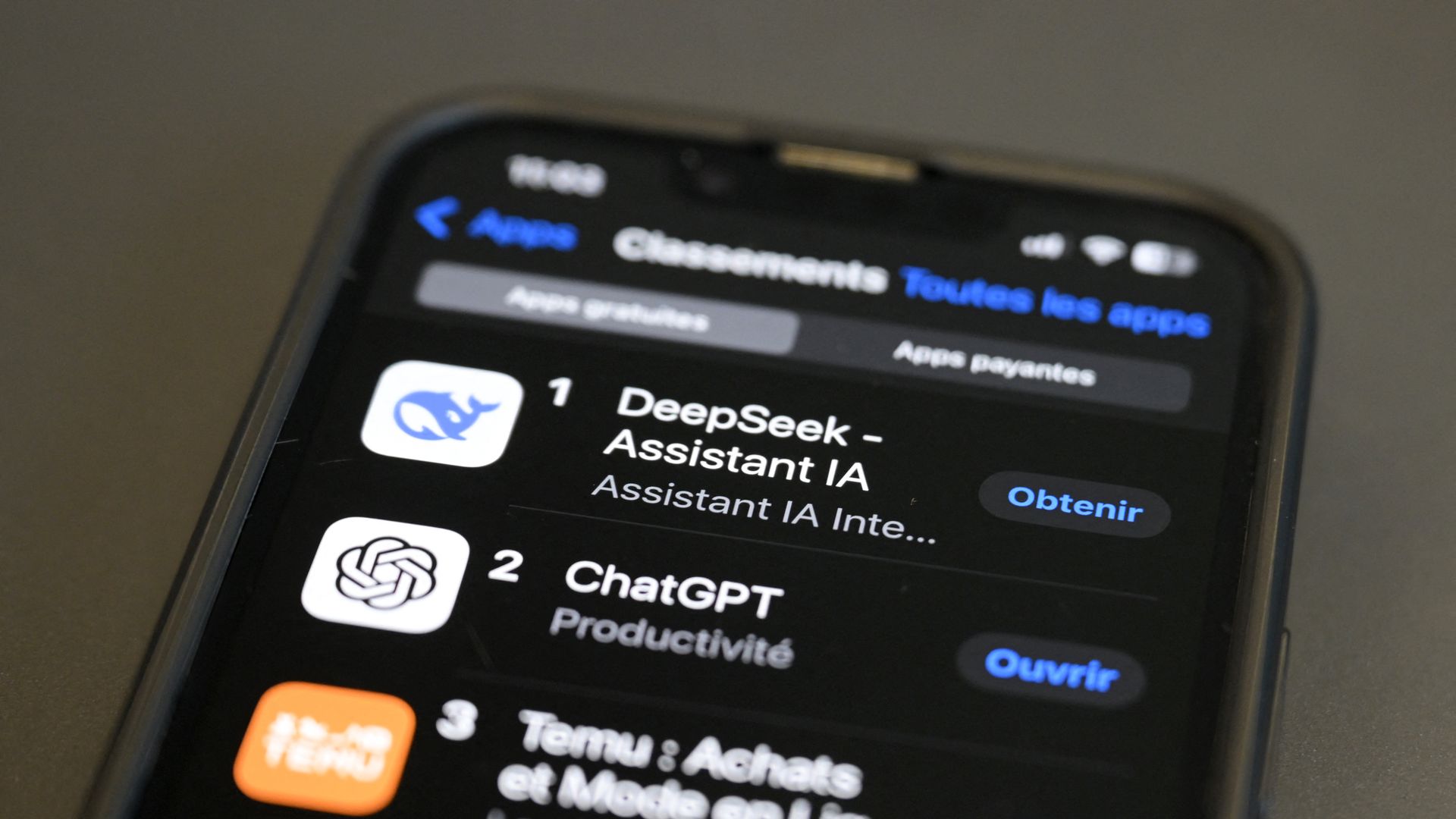
In a new war of words against Chinese AI maker DeepSeek, U.S. leaders and companies are suggesting there might be something "inappropriate" about how the popular AI model was built.
What they're saying: "We are aware of and reviewing indications that DeepSeek may have inappropriately distilled our models, and will share information as we know more," an OpenAI spokesperson said.
- President Trump's AI czar David Sacks said in an interview with Fox News on Tuesday that "it's possible" intellectual property theft had occurred.
- "There's substantial evidence that what DeepSeek did here is they distilled the knowledge out of OpenAI's models and I don't think OpenAI is very happy about this," he said.
Distillation is a common technique in AI development that uses a bigger model to train a smaller model, condensing the capabilities of the larger program.
- But OpenAI's terms of service forbid the use of outputs from its models to develop other AI models that compete with the company's products and services.
The big picture: Every advance in AI is made on the shoulders of previous work in the field.
- Most of OpenAI's work (along with nearly all the rest of the generative AI field) has been built on the foundation of a famous 2017 paper on the transformer architecture published by Google researchers.
What we're watching: If DeepSeek has improperly built on OpenAI's prior work, OpenAI can probably document it.
- DeepSeek has provided open-source releases of its models for others to use, so outside researchers will find it easier to look for clues than, say, if they were trying to evaluate OpenAI's closely held products.
Between the lines: Many observers, particularly in the media world, see irony in OpenAI's complaint that its work may have been improperly used.
- Authors, artists and other copyright holders have charged AI makers with using their work to train models without consent or payment, and the New York Times and other publishers have taken OpenAI to court over the issue.
Reality check: DeepSeek's development of a cheaper, smaller model that performs in the same league as OpenAI's advanced o1 reasoning model is a real achievement, experts say, employing engineering techniques that are both innovative and efficient.
- OpenAI CEO Sam Altman called it "impressive."
3. Training data
- Security researchers at Wiz found that DeepSeek left "highly sensitive" user records exposed, including plain-text chat messages, secret keys and API information. (Wired)
- Alibaba says that its upgraded Qwen 2.5 Max performed better than DeepSeek V3 and Meta's Llama in several tests. (Bloomberg)
- The U.S. Copyright Office said yesterday that the use of AI in a creative work doesn't undermine the copyright of that work. (Variety)
- Higher-than-expected AI revenue helped offset weakness in other parts of Microsoft's Azure business, as the company's annual run rate from artificial intelligence topped $13 billion. (CNBC)
- Microsoft is making DeepSeek's models available via GitHub and Azure and, soon, to run locally on Copilot+ PCs. (Reuters)
- Meta CEO Mark Zuckerberg said the company will continue to spend heavily on AI infrastructure, calling the effort a "strategic advantage." (TechCrunch)
4. + This
Over the weekend, I had the chance to check out the FIFA Museum in Zurich. It was filled with memorabilia from soccer history along with a nice mix of interactive games and technology. I played World Cup pinball, kicked some soccer balls as part of a game of human-scale pinball, donned a VR headset and more.
Thanks to Scott Rosenberg and Megan Morrone for editing this newsletter and Matt Piper for copy editing it.
Sign up for Axios AI+
