Axios AI+

December 17, 2024

Happy AI+ Summit Day! We'll be live from San Francisco starting at 2pm PT/5pm ET: Axios' AI+ Summit SF featuring Instagram co-founder Mike Krieger, Sierra AI co-founders Clay Bavor and Bret Taylor, Databricks CEO Ali Ghodsi and more. You can watch here.
Today's AI+ is 1,133 words, a 4-minute read.
1 big thing: Homeland Security debuts new chatbot
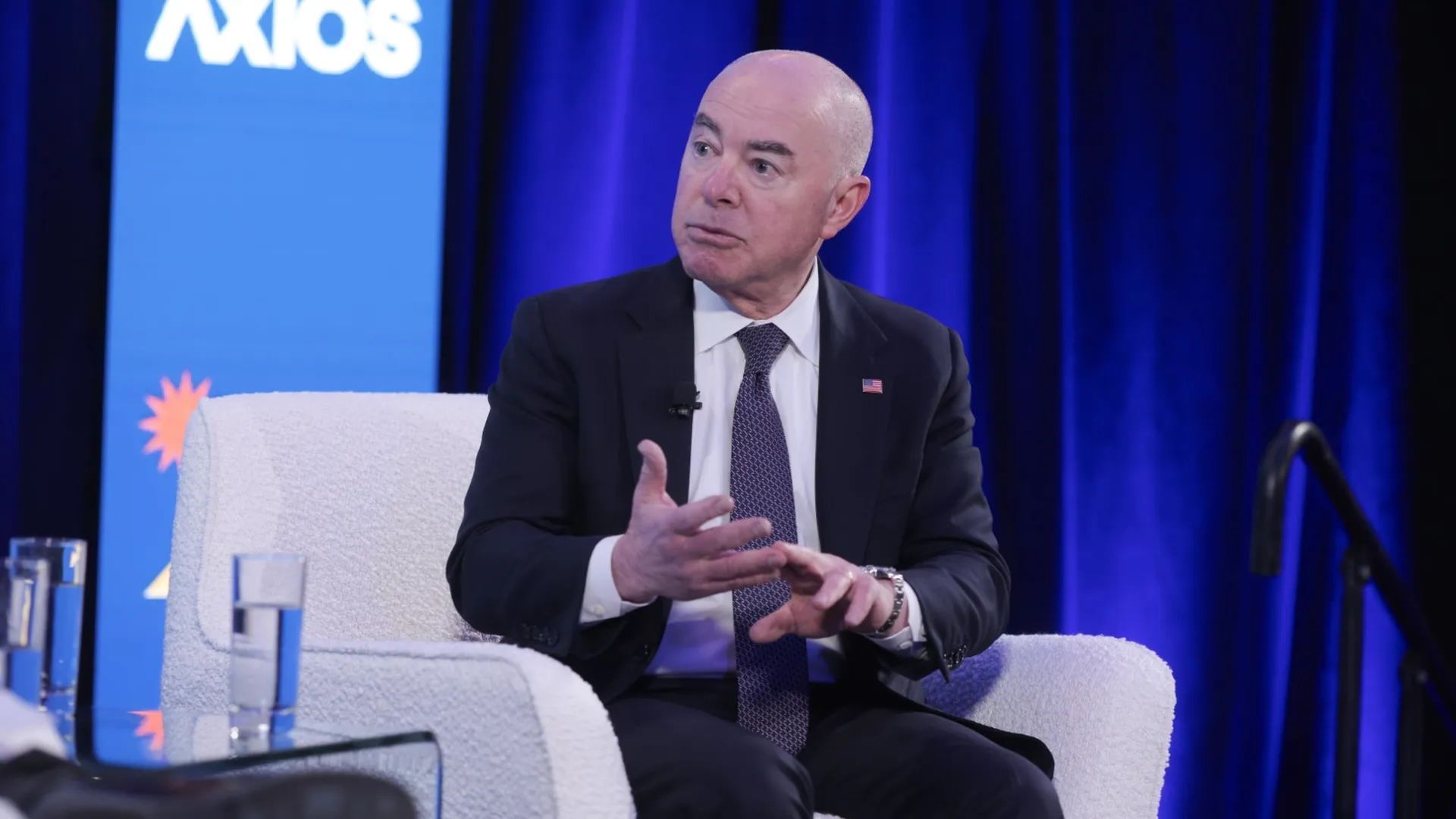
The Homeland Security Department is launching DHSChat, an internal chatbot designed to allow about 19,000 workers at the department's headquarters to access agency information using generative AI.
Why it matters: It's the latest in a series of experimental projects for the agency under Secretary Alejandro Mayorkas, who spoke with Axios yesterday during a visit to San Francisco.
Context: DHSChat follows earlier generative AI projects that focused on more quickly detecting fentanyl and locating missing children.
- The new chatbot, Mayorkas said, is at an early stage. "I wouldn't want to communicate hubris," Mayorkas told Axios. "I think that humility is required. I'm sure we'll find some flaws and we'll address them as we go."
Between the lines: The department intends to keep the chatbot away from sensitive personal information.
- That includes Social Security numbers, medical records, and personal information about refugees, asylum-seekers, or individuals seeking relief through the Violence Against Women Act.
- Additionally, DHSChat can't be used for classified information or other especially sensitive categories of information involving critical infrastructure.
Mayorkas credited his department's newly created AI Corps for helping quickly build the product.
- The agency launched a recruitment drive at a Bay Area event in February, with a goal of bringing on 50 people with industry expertise. The agency has hired 39 people, with six or eight more in the process of being hired, Mayorkas said.
The big picture: Mayorkas is coming to the end of a tumultuous term that saw him impeached by the House, where Republicans were unhappy with the Biden administration's border policies. (The Senate later tabled the impeachment, saying it was unconstitutional.)
- Among the many questions the transition raises is whether the AI and other tech projects launched under Mayorkas will survive into the new administration.
- "I hope so and it's my intent to communicate to the incoming administration the value of the investment in AI that we have made," Mayorkas said, adding that he would like to see further use of AI, including to more easily access criminal reports.
Yes, but: The incoming Trump administration has vowed to toughen border policies with mass deportations. It's also promised massive cuts to federal employment steered by a new, Elon Musk-led advisory agency.
Another key question is whether the new Trump administration will be as attuned to the risks of AI, including those around bias and civil liberties.
- "I actually am confident that they will be as invested in the safeguards as are we, because those safeguards are key to the success of generative AI writ large," Mayorkas said. "I hope they appreciate that."
Asked whether tech companies — and their workers — might be wary of working closely with the Trump administration on immigration issues, Mayorkas noted that some companies have been reluctant even with Democratic administrations.
- He said it depends on policy specifics: "I would expect that if there is a policy like family separation, and I do hope that it's not implemented again, but that there may be a reluctance to take any part in that by some."
What we're watching: Mayorkas said he isn't sure what's next for him when his tenure ends in January.
- "I'm sad to leave the department," he said. "I care deeply about its mission and its people... We'll see what the future brings."
2. Mayorkas calls for more money to track drones
/2024/12/17/1734401188107.gif?w=3840)
Mayorkas also said yesterday that a preliminary investigation of suspicious drone activity in New Jersey has found no evidence of a specific threat, but he urged Congress to give the agency more money and authority to defend against threats.
The big picture: Waves of reports of mystery drones in the sky in states including New Jersey, New York and Virginia have raised public concern. Lawmakers have urged they be investigated.
"We know of no threat," Mayorkas told Axios, adding that various agencies, led by the FBI, are investigating.
- "Thus far, we haven't seen any true cause for concern," he said.
- Pentagon spokesperson Maj. Gen. Pat Ryder told reporters earlier in the day there is no evidence "the reported drone sightings pose a national security or public safety threat or have a foreign nexus."
The latest: Four federal agencies — the Pentagon, FBI, DHS and FAA — doubled down last night on declaring that there are no credible threats from drones flying over civilian airspace.
- "We assess that the sightings to date include a combination of lawful commercial drones, hobbyist drones, and law enforcement drones, as well as manned fixed-wing aircraft, helicopters, and stars mistakenly reported as drones," the agencies said in a joint statement.
Mayorkas noted that there are thousands of registered drones flying each day in the U.S, but said it's unclear what is causing the spike of sightings.
- "They might be more visible now, I'm not exactly sure," he said, adding that some people are also mistaking small aircraft for drones and that the online chatter is further intensifying the situation.
- "I am concerned it is feeding on itself," he said, adding that he understands "people are nervous."
Zoom out: Mayorkas said the scare raises broader concerns about a lack of both resources and legislative authority needed to address the growing threats posed by drones that fly over American airspace.
- "We need Congress to better resource the departments that are involved in this," he said. "State and local authorities need the ability to detect and counter any malicious drone activity with appropriate safeguards."
- Surveillance tools and counter-drone weaponry used outside of the U.S. — at military bases abroad, or on Ukraine's front lines — are different from what's in use here.
- "We don't conduct intelligence on U.S. citizens," the Pentagon's Ryder said. But "if there is a threat, there are certain measures that we can take, some passive, some active, in terms of detection."
Between the lines: While some have suggested problems in communication among federal agencies are contributing to the drone fears, Mayorkas said he isn't seeing that as an obstacle. "It's effective right now," he said.
3. Training data
- TikTok asked the Supreme Court to temporarily block a law that would effectively ban the social media app in the U.S. in January. (Axios)
- OpenAI expanded ChatGPT Search to all users and said it can now be set as a default search engine. (Bloomberg)
- Meta added new features for its Ray-Ban Smart Glasses, including the ability to use the Shazam app to identify what song is playing. (The Verge)
- Meta also named longtime executive John Hegeman as its new chief revenue officer, a role not directly filled after the company's former CRO David Fischer departed in 2021. (Axios)
- Renters in the U.S. spent an extra $3.8 billion last year because landlords are using pricing algorithms, largely from RealPage, per a White House study. (Axios)
4. + This
Theater aficionado and Supreme Court Justice Ketanji Brown Jackson made her Broadway debut Saturday, becoming the first member of the high court to do so.
Thanks to Megan Morrone and Scott Rosenberg for editing this newsletter and Anjelica Tan for copy editing it.
Sign up for Axios AI+
