Axios AI+

May 19, 2026

Mady here after taking a red eye back from the West Coast only to have a verdict and a slew of other AI headlines to cover. More on that news below.
Today's AI+ is 1,205 words, a 4.5-minute read.
1 big thing: In Musk v. Altman trial, the AI industry lost
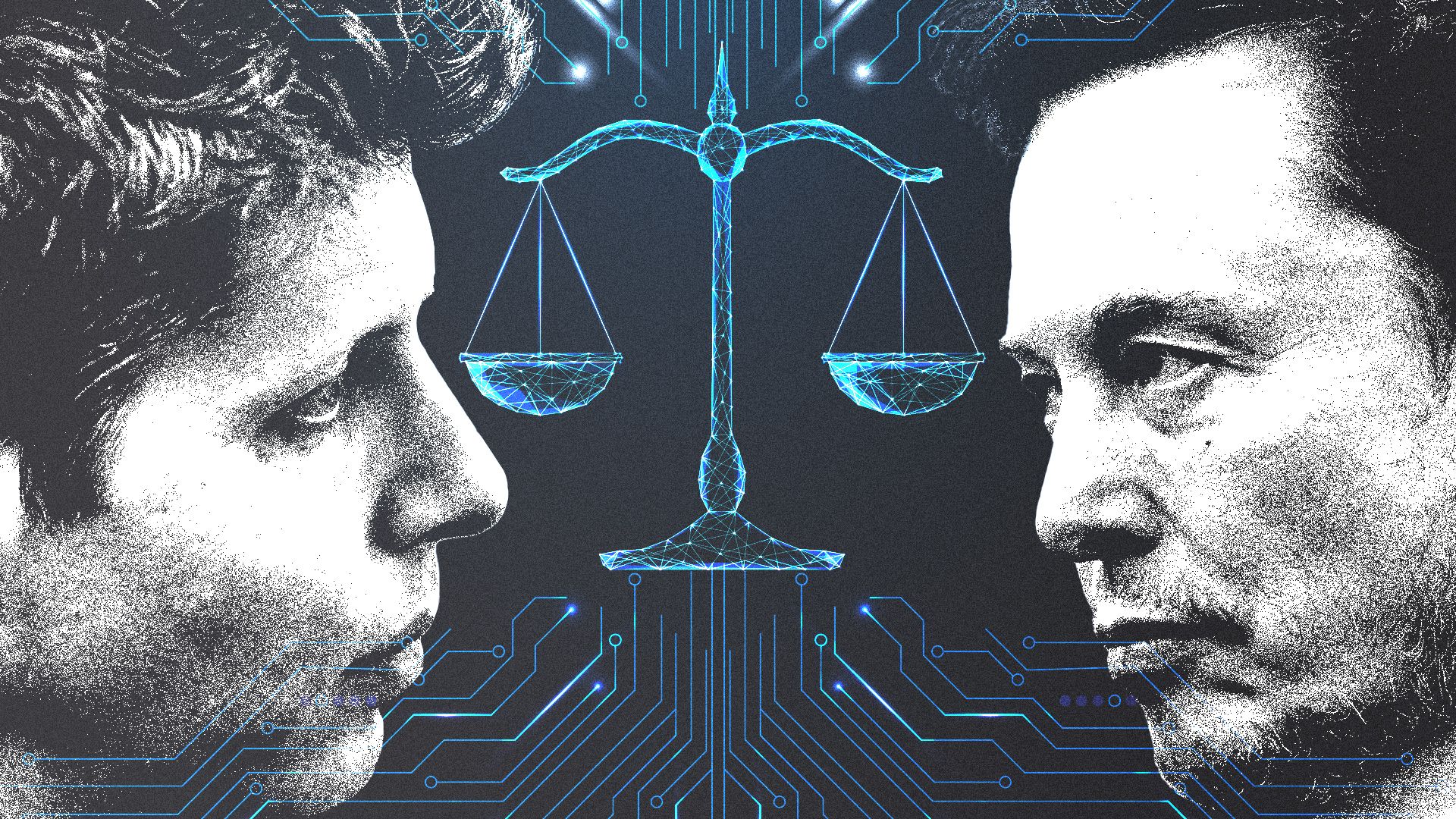
The biggest tech trial of the AI era — which ended anticlimactically yesterday on procedural grounds — revealed a sector consumed by the same power struggles and profit motives its leaders once warned would corrupt artificial intelligence.
Why it matters: The trial cemented a growing public fear about AI: that the people racing to control the world's most powerful technology are driven less by humanity-saving ideals than by money, power and personal rivalries.
The big picture: OpenAI's founders originally positioned themselves as an alternative to Google DeepMind, fearing a single tech giant would monopolize transformative AI systems.
- But testimony and internal documents showed the organization's leaders quickly became consumed by power struggles.
- OpenAI executives worried in 2017 that Elon Musk "could become a dictator" and sent him an email with the subject line "honest thoughts." Musk responded saying "I've had enough" and later suggested the company be folded into Tesla.
- Among the court documents were texts Sam Altman sent during his brief 2023 ouster, including him pleading repeatedly to attend board meetings and being rejected. The trial also confirmed reports that OpenAI met with Anthropic to discuss a potential merger at that time.
What they're saying: "Does anybody really believe that love of humanity is driving any of this? It's power," Anthony Aguirre, CEO of the Future of Life Institute, which focuses on AI governance, told Axios.
- The trial "may be over, but the real choice is still ahead of us: whether AI becomes infrastructure that serves the public, or a set of products that lock us in," Raffi Krikorian, chief technology officer at Mozilla, said in an email.
Catch up quick: Jurors unanimously ruled that Musk's lawsuit against OpenAI, Altman, co-founder Greg Brockman and Microsoft was barred by the statute of limitations.
- Musk's side argued OpenAI abandoned its founding nonprofit mission by accepting billions of dollars in backing from Microsoft and creating a for-profit arm. (Musk originally provided funding, but left the company after founding members refused to give him more control.)
- The trial ended with "a predictable whimper" over procedure, Ray Seilie, a trial attorney with expertise in tech and corporate law, told Axios. He added that the central question posed by the lawsuit went unanswered: how much freedom nonprofits have to restructure after making commitments to donors and the public.
- Musk vowed to appeal, writing on X that the verdict creates "a precedent to loot charities."
Between the lines: The trial exposed how far the industry's leaders have drifted from their original rhetoric about building AI for humanity's sake — for example, by prioritizing the safety and best use cases for AI models over the ability to profit from them.
- The figures in the trial underline the need to pursue alternatives to the current concentration of power among a handful of AI companies and executives, Krikorian added.
- This comes as public trust in AI is nosediving.
Yes, but: Even if neither side came out looking good, Altman still emerges on stronger footing.
- Had Musk won, Altman could have been pushed out of OpenAI again, just as he was in 2023, PitchBook analyst Harrison Rolfes told Axios.
- Instead, OpenAI can keep expanding without the immediate threat of Musk forcing changes through the courts.
The bottom line: The trial showed AI critics another example of "the corrupting influence of large piles of money," Aguirre said.
2. Axios Harris Poll 100: GOP embraces AI over Dems

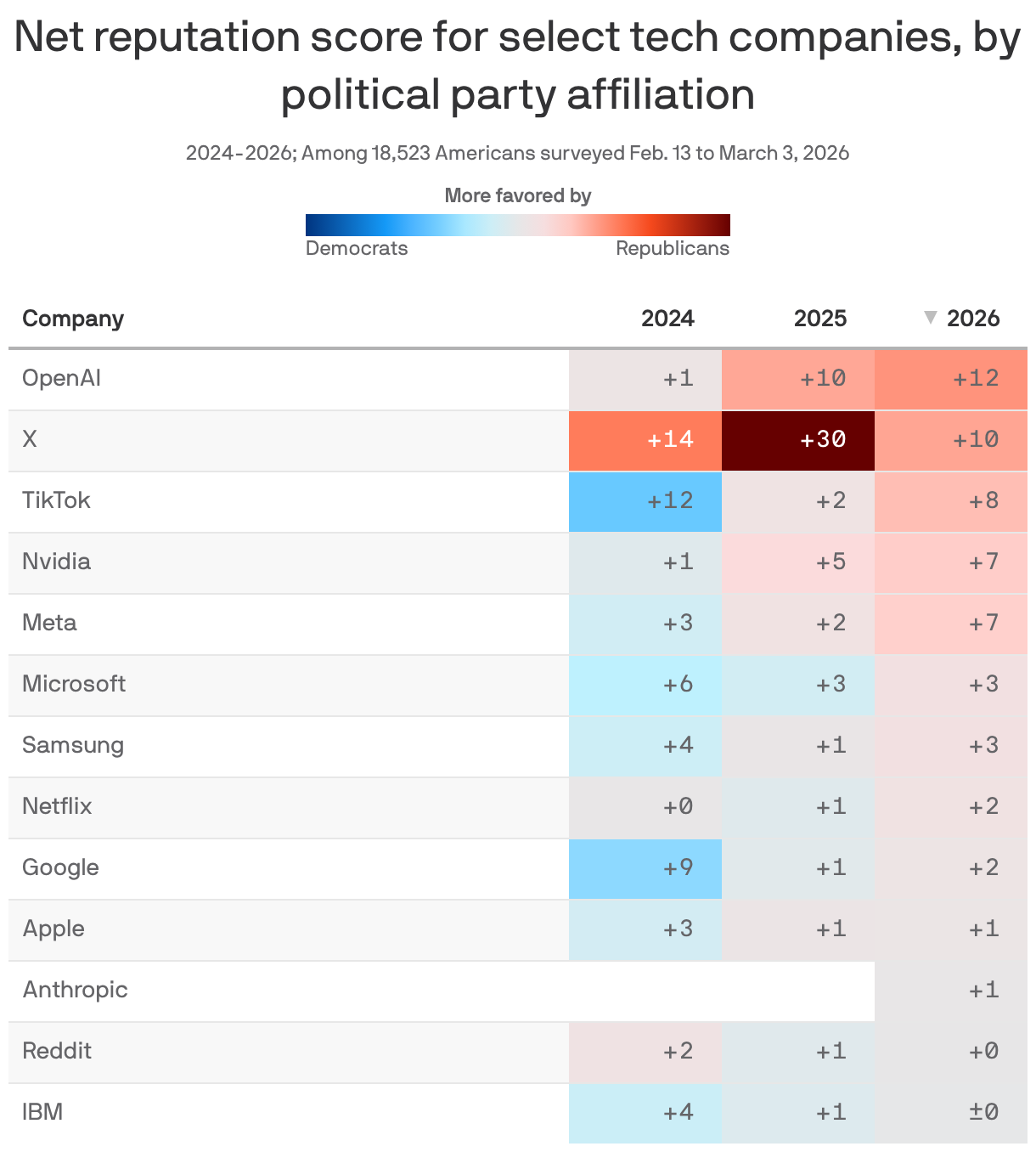
Democrats have become more skeptical of AI technology and the industry behind it, while Republicans are significantly more likely to trust most AI companies, according to this year's Axios Harris Poll 100 rankings.
Why it matters: This represents a significant shift in just two years, since the White House changed hands and AI advancements accelerated.
- Sam Altman's OpenAI is the tip of the spear. OpenAI's reputational score was just 1 point higher among Republicans than Democrats in 2024, but that gap has widened to 12 points today.
- TikTok, Nvidia, Meta, X and other AI or AI-driven companies also show a widening partisan gap.
Zoom in: AI companies aren't viewed equally — and those with narrower partisan gaps generally received higher reputational scores.
- Dario Amodei's Anthropic ranks No. 15 on the overall top 100 reputation ranking of the most visible brands in America, with a 1 point partisan gap. OpenAI ranks No. 68.
- Anthropic earlier this year infuriated the Trump administration when it refused to lift safeguards that prevent its technology from being used for mass domestic surveillance or autonomous weapons development.
By the numbers: 44% of Republicans say their opinion of AI has become more positive in the past year, compared with just 35% of Democrats.
- 40% of Democrats said they expect AI to greatly or somewhat harm their career opportunities and wages in the years to come, versus 32% of Republicans.
The big picture: AI executives' own predictions of job disruptions are fueling Americans' apprehension. So are concerns over data centers, higher energy costs, AI misuse and federal government overreach.
- At the same time, President Trump's embrace may be reassuring some Americans in his own party.
- Because younger voters skew left, the shift also appears to reflect younger Americans' anxieties that AI is coming for entry-level jobs.
- The Harris Poll found that 42% of Gen Z respondents believe AI will harm job opportunities and wages for people like them, compared with 33% of millennials, 39% of Gen X and 37% of baby boomers.
- Millennials' relative confidence reflects a population already established in their jobs and generally more adept with tech skills than their elders.
What they're saying: "The cultural fault lines are quickly being drawn on whether AI is a benefactor or a 'broligarchy,'" says John Gerzema, CEO of The Harris Poll.
- "In our Axios Harris poll, for a decade we've seen Big Tech more left, more progressive. But if you look at this basket of AI firms, with the exception of Anthropic, they've all shifted to the right as their innovation and market dominance appears unrivaled in the years to come," he says.
3. Training data
- Meta reassigned 7,000 workers to focus on AI just days before the tech company is set to cut 10% of its workforce. (New York Times)
- Alphabet's Google and Blackstone are launching an AI cloud company powered by Google's specialized chips, positioning it as a rival to firms like CoreWeave. (Bloomberg)
- Elon Musk offered xAI employees a $420 payment in exchange for letting the company use their tax returns to train its AI models, but they haven't been paid yet. (Bloomberg)
- Read the juiciest evidence inside the OpenAI trial. (Wall Street Journal)
4. + This
Billionaires are fighting with New York City Mayor Zohran Mamdani again.
Catch up quick: Citadel CEO Ken Griffin has repeatedly voiced concerns about Mamdani filming a video in front of Griffin's home while announcing a tax on luxury second homes.
- Multiple billionaires have said since that they will be looking elsewhere to expand their offices.
- Mamdani released a plan to balance the budget and walked back prior statements about further taxes on the rich.
Thanks to Megan Morrone for editing this newsletter and Matt Piper for copy editing.
Sign up for Axios AI+