Axios AI+

April 15, 2026

D.C. readers: Join Axios Live next Tuesday, April 21, at 7:30am ET for an event looking at how AI and new tech can transform money management, featuring Operation HOPE founder and CEO John Hope Bryant, Rep. Young Kim (R-Calif.) and more. RSVP here.
Today's AI+ is 1,191 words, a 4.5-minute read.
1 big thing: Salesforce takes on "tokenmaxxing"
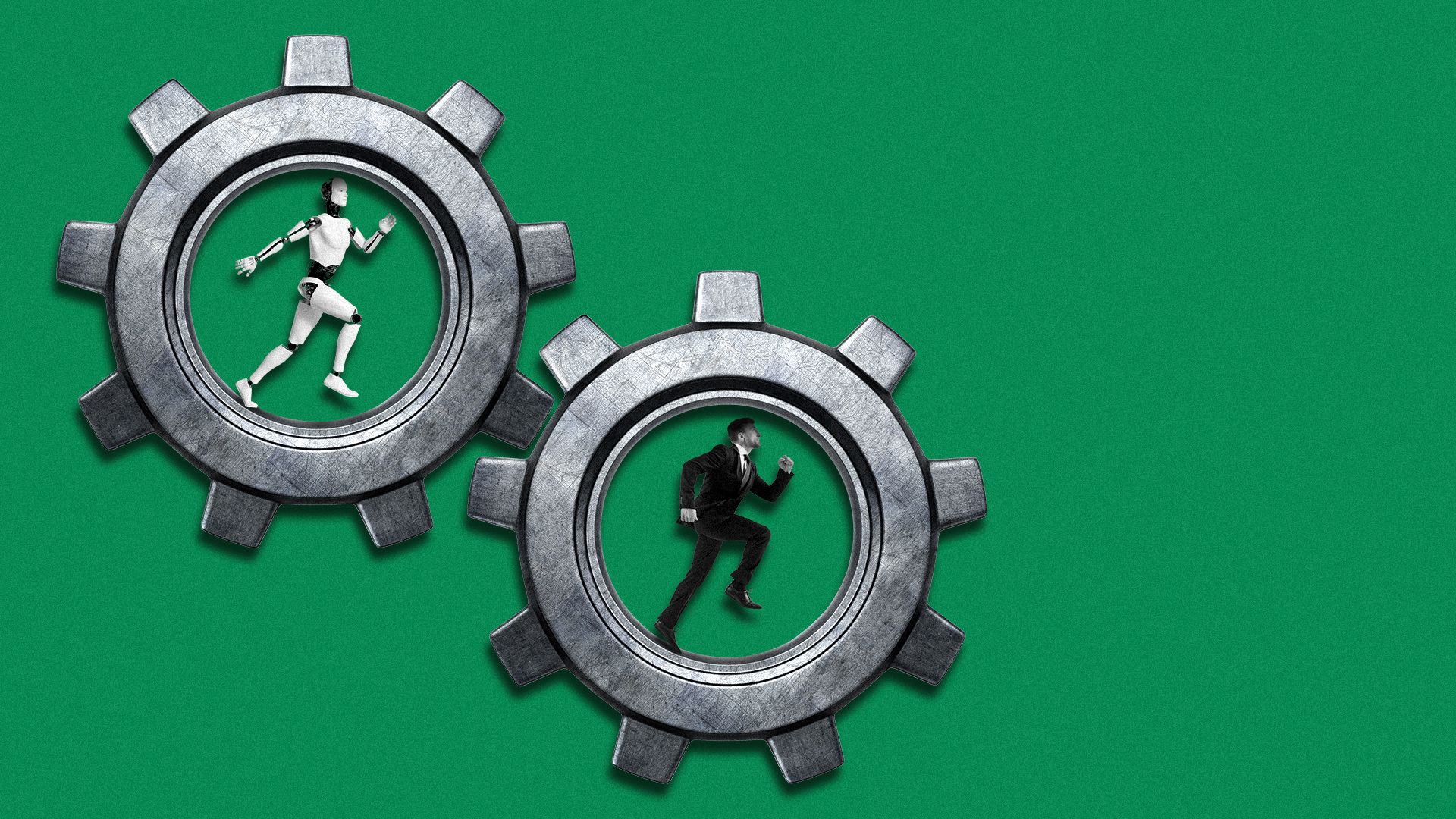
Salesforce is unveiling a new way to measure AI productivity, pushing back on Silicon Valley's fixation on "tokenmaxxing" — the belief that consuming more AI tokens signals real work.
Why it matters: As companies race to prove they're using AI, Salesforce argues raw token consumption is a vanity metric and wants to replace it with one tied to actual business results.
Driving the news: Agentic work units, or AWUs, are Salesforce's new metric, designed to measure output and impact rather than token consumption.
- AWUs translate AI inputs — including tokens and compute — into outputs, or the work completed.
- Salesforce tells Axios that Singapore Airlines uses AWUs to track how long agents take to resolve customer service issues. Williams Sonoma uses the metric to gauge how agents reason through product recommendations.
- It's a complex formula with an output that's unique to each Salesforce customer measuring how much bang they're getting for their AI agent buck, the company says.
By the numbers: Salesforce has seen triple-digit growth year-over-year in AWUs, and has already generated 2.4 billion AWUs across its platform as of Q4, according to metrics shared with Axios.
What they're saying: "I could tokenmax by running endless loops with Claude Code that led to nothing ... but if customers didn't actually get that much work out of it, then what's the point?" Madhav Thattai, executive vice president and GM of Salesforce AI, told Axios.
State of play: The new metric comes amid an obsession with token use in Silicon Valley.
- Meta recently took down its employee-built token leaderboard after The Information reported employees used 60 trillion tokens in 30 days.
- "I can't breathe thinking about how panicked I am," said Brian Alvey, chief technology officer of WordPress VIP, at an Axios event in San Francisco.
- Imbue co-founder Josh Albrecht added that he hadn't shaved in part because he's been so busy shipping new code with Claude.
Between the lines: The pressure is on for technologists who built their careers coding as AI takes over that work.
- But Salesforce argues using AI tokens isn't the best way to prove productivity. Rather, what you do with those tokens is the better measure.
Yes, but: AWUs could end up being another vanity metric. Salesforce designed the formula, defines what counts as a "unit," and controls the benchmarks. Without outside auditing it might continue to be difficult to suss out success.
Salesforce isn't the only organization pushing back on token usage as a productivity metric.
- "Outcome maxxing >> token maxxing," HubSpot CEO Yamini Rangan wrote on LinkedIn.
- Appian CEO Matt Calkins compared tokenmaxxing to the Soviet Union evaluating chandeliers based on how heavy they were, telling Axios tokenmaxxing is silly.
What we're watching: How companies redefine success in AI adoption.
2. Corporate AI adoption is getting real


Companies are starting to talk more about the quantifiable things they're doing with AI: from designing toys to writing marketing copy, according to a new analysis of investor earnings calls.
Why it matters: It was just a few years ago that many companies paid lip service to AI — now they're offering tangible details.
The latest: Nearly one-quarter of the companies in the S&P 500 mentioned at least one quantifiable impact from AI in the first three months of the year — up from 13% in the same period in 2025, according to a report yesterday from Morgan Stanley, which used AI to analyze transcripts.
By the numbers: 42% of tech companies highlighted tangible benefits.
- No surprise there. Vibe coding has upended the industry — and employer demand for software engineers has dropped off.
- In second place is finance, with 40% of companies touting their efforts with AI, up from 15% the year before.
- Communications services ranked third.
The big picture: The pace of AI adoption is crazy fast, happening more quickly than with internet adoption at the turn of the last century. Even as geopolitics and uncertainty are ramping up, AI continues to be the story for investors.
- "Since the launch of ChatGPT in late 2022, AI has emerged as a defining force across markets, reshaping how companies operate, invest and compete," Morgan Stanley equity analysts wrote in the note.
- "As in past cycles, companies across industries are beginning to realize tangible gains through technology diffusion."
Examples noted in the report: Toymaker Hasbro says it is using AI-assisted design to reduce "time from concept to physical prototype by roughly 80%." The company says humans still determine what final products to make.
- Bank of America said using AI "saves us about 2,000 people" who would typically write code. CEO Brian Moynihan spoke earlier this year about letting "headcount drift down," thanks to AI.
- Tobacco company Altria highlighted a 50% reduction in time required to create marketing content.
Reality check: This is still the early stages. 75% of the companies didn't point to quantifiable benefits, per Morgan Stanley.
- And this is a subjective analysis. A similar one from Goldman Sachs, released last month, found only 10% of S&P 500 firms noted AI impact in specific use cases. About half discussed AI "in the context of productivity."
- Analyst Ronnie Walker did find that the vast majority of firms — 70% — were talking about AI, though.
The bottom line: Companies are spending billions of dollars on AI tools, and have a big incentive to promote every little thing they're doing with this stuff.

3. Exclusive: New AI-generated podcast
Anthony Pompliano's ProCap Financial is pushing deeper into AI-powered finance with a fully AI-generated podcast.
Why it matters: Wall Street's research machine generates billions for the biggest firms.
- AI could help competitors targeting retail investors chip away at that dominance.
What they're saying: "I believe that synthetic content is going to become more popular than human-made content over time," Pompliano, CEO of ProCap and entrepreneur, told Axios.
4. Training data
- OpenAI released GPT-5.4-Cyber designed to assist with defensive cybersecurity tasks and be more permissive for vetted users. (Axios)
- Attacks near Sam Altman's house are raising fears of anti-AI rhetoric leading to violence. (Axios SF)
- Hilbert, an AI startup focused on enterprise growth tools, raised $28 million in a Series A led by a16z. (Axios)
- Google launched "Skills" — repeatable, one-click Gemini workflow prompts. Not to be confused with Google's existing learning platform of the same name, or Anthropic's similar repeatable routines for Claude Code.
- You can now ask ChatGPT to match your Starbucks drink to your outfit and buy the drink inside the chatbot. (Axios)
5. + This
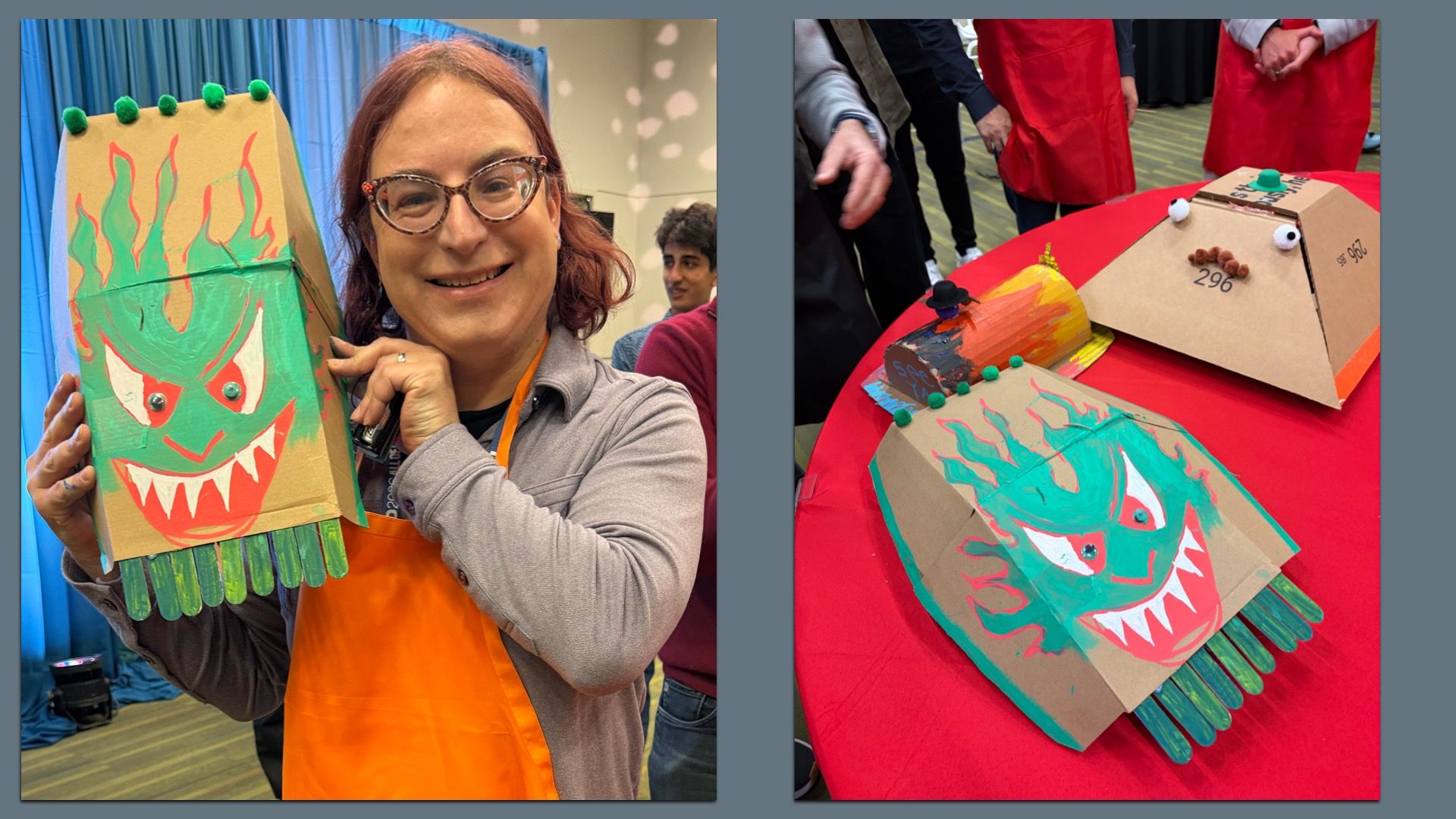
I teamed up with others at TED to build competing cardboard battlebots.
- My team's bot, "Jessica," got an automatic spot in the finals. Judge Simone Giertz declared it to be the best-looking of the bunch.
- I thought Jessica was a shoo-in given that Serve Robotics CEO Ali Kashani was on my team. But alas, the final was declared a three-way tie after none of the bots managed to push any others off the table.
Thanks to Megan Morrone for editing this newsletter and Matt Piper for copy editing.
Sign up for Axios AI+