Axios AI+

April 18, 2025

Good job you! You made it to another Friday. Today's AI+ is 1,008 words, a 4-minute read.
1 big thing: Surprise winner in Google antitrust ruling

/2025/04/18/1744941860070.gif?w=3840)
OpenAI wasn't mentioned once in a judge's 115-page decision yesterday against Google over its dominance of the online ad market — but the ChatGPT maker stands as a key beneficiary of this legal conflict.
Why it matters: The rise of AI is threatening the heart of Google's search business at the same moment that the government is pressing its most sustained challenge to Big Tech power in nearly 30 years.
- That could open the path for a once-in-a-generation power transition in tech, with AI upstarts like OpenAI and Anthropic best positioned to seize the initiative.
The big picture: In previous eras of platform transition in the tech world, massive and lengthy government antitrust lawsuits distracted and hobbled industry leaders at key moments, giving new companies and industries breathing room to gain footholds and grow.
- It happened in the 1970s and early 1980s, when then-dominant IBM fought a grueling court battle with the U.S. while the new personal computer industry began to take off.
- More recently, it happened in the late 1990s, when Microsoft dueled the government in court over its dominance of the browser market — while a tiny new startup called Google began to win over web users.
Now it's Google's turn in the docket.
- The giant already faces the threat of fines and remedies — like being forced to divest itself of the Chrome browser — as the result of its loss last year in another antitrust case over its dominance of the search market.
- With the new ruling, it will next confront a similar process focusing on significant parts of its ad business.
Famously, these cases take forever. Even after the penalty phases are concluded, Google will almost certainly appeal each decision — a process that generally takes several years.
- After that, the company can also appeal further to the Supreme Court.
- Either appellate level might send the case back to the original court for further trial.
This glacial pace might seem like good news for Google, which won't have to change much until all those appeals conclude.
- But the delays also extend the period during which Google executives and employees are distracted and demoralized by the process.
- Every potential acquisition, every new product rollout and every email conversation inside a company handling this kind of traumatic lawsuit unfolds under a cloud.
In Microsoft's ordeal, after nearly a decade of legal infighting, the company mostly prevailed, and today it remains one of tech's most powerful and richest players.
- But those years also saw Microsoft cede the web search market to Google.
- Bill Gates' firm also flubbed any chance it might have had to dominate the smartphone era, which instead got shaped by Apple's iPhone and Google's Android.
Today, OpenAI is playing the upstart to Google the way Google once challenged Microsoft.
- OpenAI's ChatGPT kicked off the genAI era in late 2022, and though Google remains a strong contender in the AI race, it has regularly been outshone not only by OpenAI but by Anthropic and others.
Yes, but: Google insiders tell Axios the company understands the dangers of the moment.
- The chief lesson the company draws from Microsoft's ordeal 25 years ago is that, while Google must defend itself vigorously in court, it must also preserve its ability to act boldly in pursuing innovations in the marketplace.
- In addition, Google sent an email Thursday to employees noting that the court didn't rule against Google on every point of the lawsuit and urging them to focus on their work.
Zoom out: Google isn't the only tech giant facing antitrust nightmares.
2. TSMC to make 30% of advanced chips in Arizona

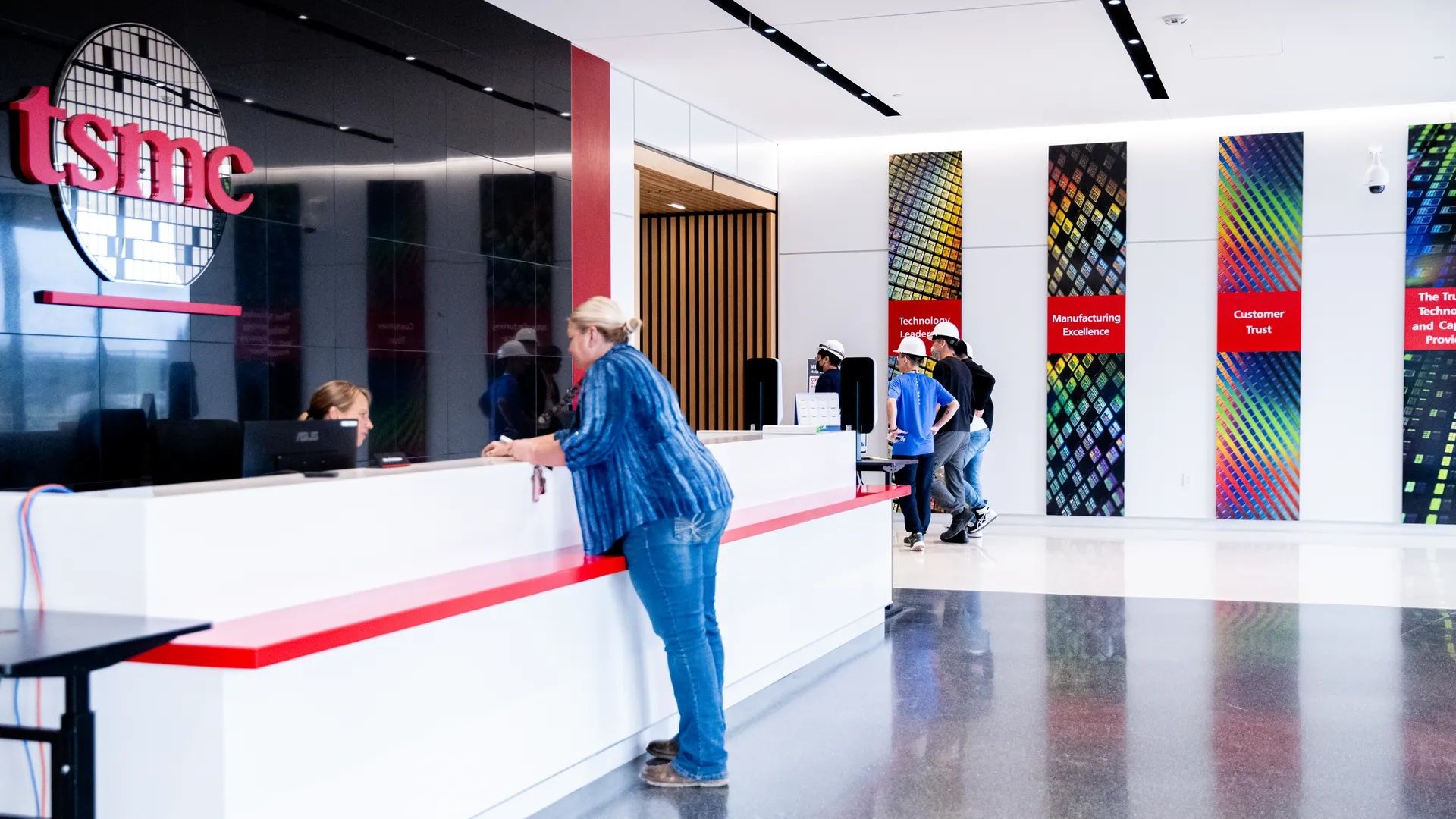
The Taiwan Semiconductor Manufacturing Co. will produce 30% of its most advanced chips in Arizona when its six Phoenix plants are operational, the company announced on an earnings call Thursday.
Why it matters: CEO CC Wei told investors the scope of the company's Phoenix investment will create "an independent leading-edge semiconductor manufacturing cluster in the U.S."
- This is part of TSMC's efforts to diversify its semiconductor manufacturing footprint outside of Taiwan and supports the bipartisan U.S. national security push to increase domestic chips production and accelerate the AI economy.
The big picture: TSMC, the world's leading chip manufacturer, has committed $165 billion to its Arizona operation.
State of play: TSMC's first Phoenix semiconductor factory began production late last year, and construction on the second fab is now complete, Wei said on the call.
- The company plans to begin construction on its third plant — the first in the U.S. that will utilize its most advanced process technologies — later this year, the CEO added.
- TSMC will then build three additional semiconductor manufacturing plants, two advanced packaging facilities and a major research and development center in Arizona. The timeline for those projects has not yet been released.
The intrigue: Wei said TSMC is not discussing a joint venture or technology sharing agreement with any companies — an apparent dismissal of ongoing rumors of a deal with Intel, which also operates in Arizona.
What we're watching: Wei said U.S. tariffs have not yet impacted its customers' behavior, and the company remains bullish on its revenue forecast for 2025.
3. Training data
- Users have discovered a wild — and potentially disturbing — new ChatGPT superpower sharpened by OpenAI's o3 model: Give it almost any photo, and it will figure out where the image was taken. (TechCrunch)
- OpenAI is beta testing a cheaper "Flex" pricing option for API usage of its latest reasoning model that will provide slower processing times and occasional outages during peak usage times. (TechCrunch)
- Chatbot benchmarking site LMArena, which began as a project of a handful of college students, said it has redesigned its site and is forming a new company.
- Google is offering college students free access to its premium AI service, normally $20 per month, through spring 2026. (The Verge)
4. + This

Aiming to take advantage of the fad of portraying one's self as an action figure using ChatGPT, toy company Funko is running Facebook ads pitching its Pop Yourself product, which lets people create personalized plastic figures.
Thanks to Scott Rosenberg and Megan Morrone for editing this newsletter and Matt Piper for copy editing.
Sign up for Axios AI+
