Axios AI+

October 19, 2026

Ina here, looking forward to tonight's Game 2 of the WNBA Finals. It was a new level of loud at Ballhalla on Saturday as the Valkyries grabbed a narrow win over the Atlanta Dream.
Today's AI+ is 1,213 words, a 4.5-minute read.
1 big thing: Bill Gross is building an AI factory for startups

Bill Gross has spent 30 years turning problems, technologies and market shifts into companies — and now he is trying to turn that process into a machine.
Why it matters: In a moment when AI is mostly framed as a force that eliminates jobs, Gross is betting it can help create entrepreneurs and companies.
The big picture: Gross is launching Idealab.ai, a platform that has analyzed more than 17 million sources and generated 1.2 million potential businesses.
- He plans to give all the ideas away — and even help with financing.
How it works: Idealab.ai lets individuals sort through the ideas and narrow them based on what matters to them.
- They can filter by field of interest, geography, size of market opportunity, required capital, team size, degree of automation and other metrics.
- A solo founder looking for a local business can search differently from a university looking to commercialize research or a company exploring new uses for its patents.
- Each idea comes with a business brief, potential customers, competitors, first steps and reasons it might fail.
Catch up quick: Gross says the idea began with an article about a global copper shortage.
- His insight was that almost every source of information contains either a problem worth solving or an emerging capability that could help solve it.
- Those include news stories, research papers, patents, company filings and community discussions.
- Gross built a "Periodic Table of Business Functions," covering 118 jobs involved in running a company.
- "My methodology is to divide everything into a possible problem or a possible enabler to solve a problem," Gross told me.
Between the lines: In many ways, this is Gross trying to turn his life's work into an automated process.
- Gross founded Idealab in the 1990s and says Idealab and Idealab Studio have launched more than 175 companies, including GoTo.com, Citysearch and Tickets.com.
Yes, but: Gross says AI shouldn't make every decision, especially strategic choices, such as how much risk to take.
- "AI is not going to make that one for you," he said.
The intrigue: Idealab.ai will be a real-world experiment in how much success comes from the idea — versus the entrepreneur's zeal, execution and personal network.
- A strong concept may still go nowhere if the founder cannot sell it, recruit people, raise money or get an introduction to the right customer.
- And a mediocre idea may work if the person pursuing it has unusual persistence and access.
Zoom out: Gross wants Idealab.ai to become an ecosystem, not just a database.
- He is courting universities, incubators and accelerators, as well as businesses that can provide the tools and services founders need to build companies.
- Cloudflare is the first announced partner, offering $100,000 in credits to companies started through the platform. Gross hopes it will be the first of many such partnerships.
The bottom line: Gross, who remains CEO of licensing and revenue sharing company ProRata.ai, says he is done starting companies himself.
- Idealab let him start 12 companies at once. His ambition now is to help support 12,000.
2. The AI attack-ad nightmare is coming true
AI is producing reality-bending midterm ads about defaced Bibles, upscale dinners and a board game with a "Death to America" playing card.
Why it matters: The warnings about deepfakes are coming true. Election laws haven't kept pace with a world where campaigns can put words in opponents' mouths and create realistic-looking scenes that didn't happen.
- The Wesleyan Media Project found $137 million had been spent on 220 AI-generated ads through Oct. 11, mostly from Republicans.
- Four states have laws prohibiting certain uses of AI-generated deepfakes in political ads, while 27 more require some form of disclosure about their use.
- No federal law specifically regulates AI-generated political ads.
The big picture: An Axios analysis found numerous political ads partly or fully made by generative AI, sometimes undisclosed.
Georgia Senate: Senate Leadership Fund, a super PAC aligned with Senate Republicans, has run a series of AI-generated deepfake ads depicting Democratic Sen. Jon Ossoff getting beauty treatments.
- The ads mock Ossoff's reported campaign spending on hair and makeup, saying he "talks pretty" but has "an ugly record" and "a lot to cover up."
- Ossoff said in a C-SPAN interview: "It is deeply troubling to see ... deepfake videos used to fabricate political advertising. And it's a slippery slope toward the destruction of truth in political debate, and the ad should come down immediately."
3. ChatGPT traffic rebounds as rivals gain ground


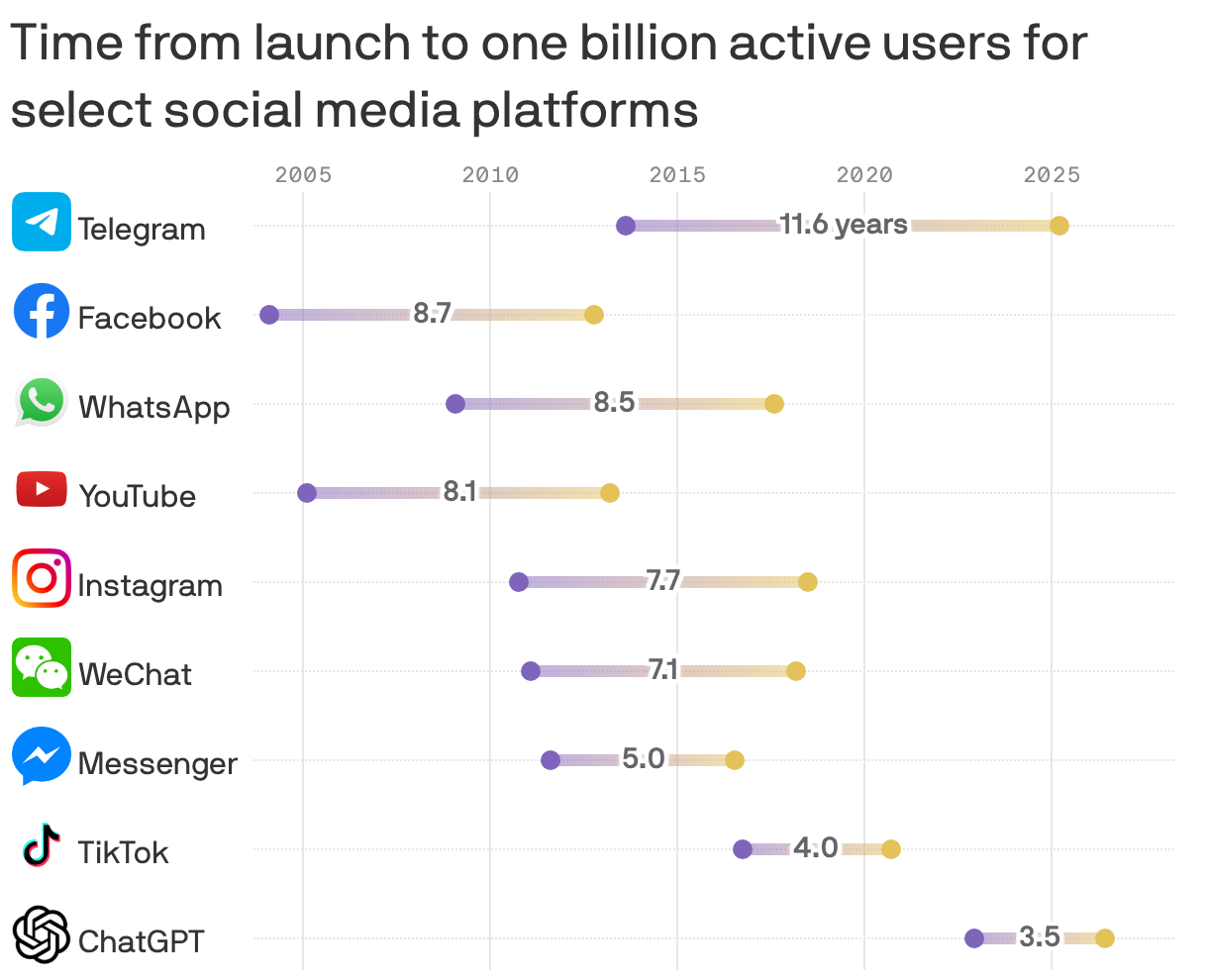
ChatGPT's web traffic rebounded over the past three months after a volatile first half of 2026, according to Similarweb data.
Why it matters: ChatGPT remains the leading AI chatbot by website visits even as competitors erode its market share.
- The summer rebound coincided with Google's Gemini seeing its first traffic slowdown in nearly a year and a half.
Zoom in: September was ChatGPT's strongest month since October 2025 in terms of visits, per Similarweb.
- As of last month, ChatGPT accounted for 57% of visits to eight of the world's largest AI platforms tracked by Similarweb.
- Similarweb's analysis does not include visits to Google's AI Overviews, which are difficult to isolate from traditional searches.
The intrigue: It's unclear why visits surged for ChatGPT in September, while Gemini and Claude did not see similar gains. Back-to-school season could be a factor, considering Claude's largely enterprise client user base.
- ChatGPT's dip earlier this year coincided with major marketing and product expansion efforts from Anthropic and Google.
Zoom out: While ChatGPT's website visits have fluctuated, app engagement remains strong.
More in an AI Deep Dive from our Media Trends Executive:

4. How AI giants will reshape global philanthropy
The AI boom is about to rewrite the rules of global philanthropy, shifting its center of gravity to Silicon Valley, where the IPOs of AI giants Anthropic and OpenAI will create the world's largest charitable organizations.
Why it matters: Rather than massive donations earmarked for renaming hospital wings or university graduate programs, expect the new wave of giving to mirror startup culture: flexible capital, ambitious bets and a search for measurable impact.
Driving the news: Anthropic announced yesterday that it plans to launch a massive benefit fund with 5% of its shares.
Zoom in: The company's pledge — which would amount to $100 billion if it reaches a value of $2 trillion in its IPO — will go to a public benefit fund and is set to grow as its valuation rises.
5. Training data
- In a breakthrough discovery, scientists demonstrated that computers powered by human brain tissue can accurately identify Braille letters. (404 Media)
- Anthropic is quietly pitching lawmakers a draft AI safety bill that limits government blocking of advanced models. (Politico)
- Neocloud and data center executives forecast increased industry consolidation, suggesting there's a cap on viable AI cloud providers. (The Information)
6. + This
What would happen if Punky Brewster, Wednesday Addams, Pippi Longstocking and a few other beloved heroines of TV and storybooks past met up one day?
- Well, someone made it real with AI, although the dialogue needs a little work.
Thanks to Bradley Olson for editing this newsletter and Matt Piper for copy editing.
Sign up for Axios AI+