Axios AI+
November 07, 2024

I'm pleased to announce the first speakers for our upcoming Axios AI+ Summit, which will take place in San Francisco on Dec. 17 — and boy do we have a lot to talk about, from continued concerns around bias and accuracy, to the rise of agents, to the future of AI regulation in a new administration. Our amazing lineup includes Sierra's Bret Taylor and Clay Bavor, GitHub CEO Thomas Dohmke, OpenAI CFO Sarah Friar and more. Request an invite here.
Today's AI+ is 1,158 words, a 4-minute read.
1 big thing: Government efficiency, Musk-style

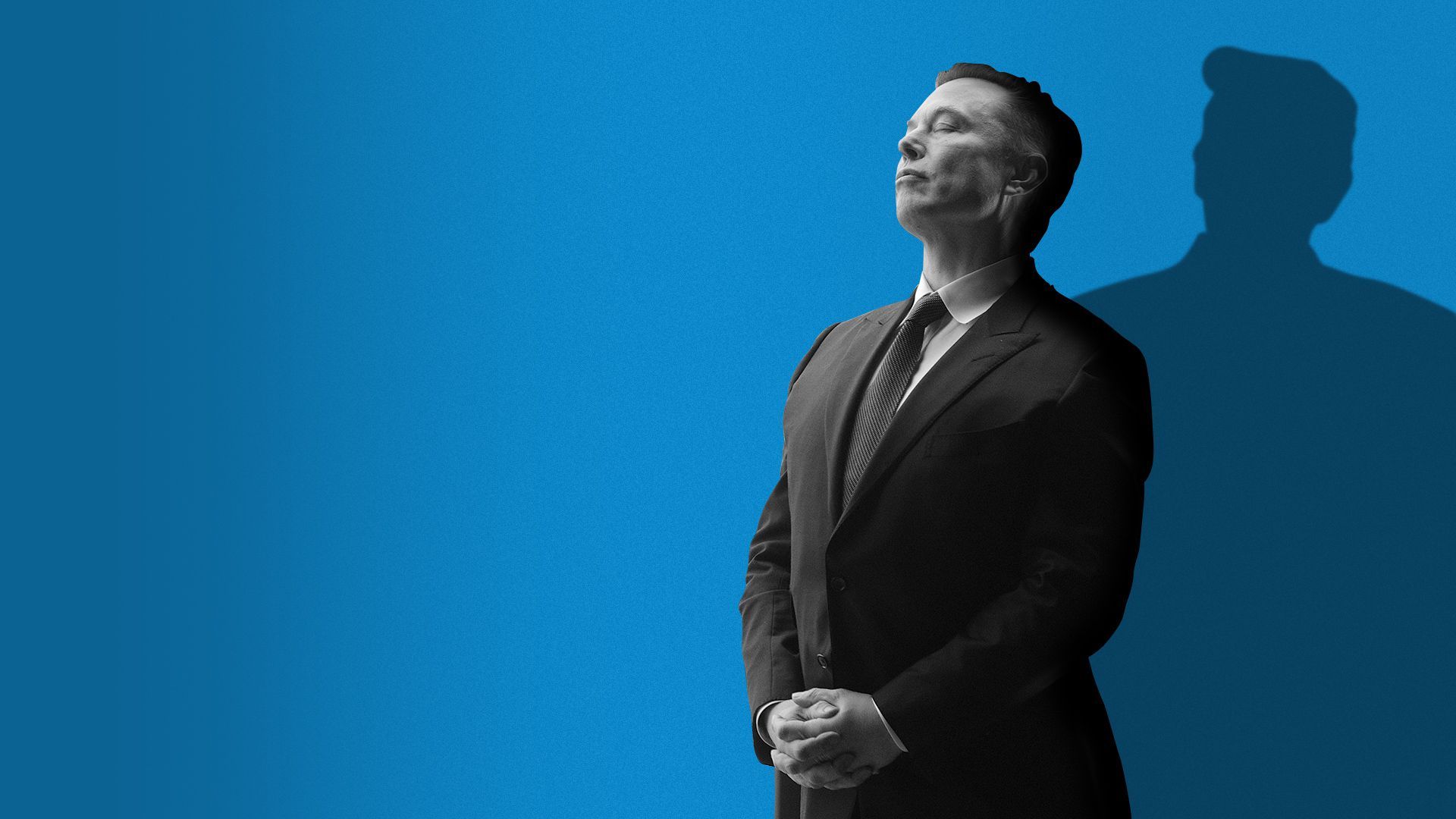
Some Silicon Valley leaders and investors who have long itched to apply their startup toolkit to government see a big opening in the Republican victory Tuesday, with Elon Musk taking charge of a Trump administration federal efficiency initiative.
Why it matters: Many Trump partisans in tech see Musk's takeover and transformation of Twitter as a model for how to go about reshaping the federal government.
- As Trump's wave of swing-state victories piled up Tuesday night, Musk posted a crudely doctored photo of himself carrying a white porcelain sink into the Oval Office, captioned "let that sink in."
- It was a reference to a video he posted the evening he took possession of a newly purchased Twitter.
Flashback: A wave of tech talent descended on D.C. and the federal government 15 years ago when Barack Obama took office, eager to put their web savvy and coding skills to work to make government run better.
- During the first Trump administration, Jared Kushner ran the Office of American Innovation, intended to bring private-sector know-how into government, and many tech CEOs sat on advisory councils organized by the Trump White House.
Yes, but: This time around, the valley-to-swamp project is likely to be different.
- Musk's transformation of Twitter into X was a chaotic and costly affair that alienated many users and strained the service's infrastructure.
- Massive layoffs and waves of resignations succeeded in reducing the company's costs, but revenue plunged, too.
Some CEOs and investors praised Musk's approach as a corrective to what they saw as a runaway sense of entitlement on the part of both tech employees and customers who weren't even paying for the service.
- Musk hasn't yet turned around X as a business, but he has succeeded in transforming its social and political makeup.
- What was once a kind of neutral-ground global town square, where both left and right freely mingled, is now a noticeably more partisan environment in which the owner is also the loudest MAGA voice.
State of play: We don't yet know what form Musk's government-efficiency project will take.
- There is bipartisan agreement that government could always use less red tape and more innovation.
- Trump has long been expected to reinstate a measure he introduced near the end of his first term that would make it easy for his administration to fire roughly 50,000 key federal employees formerly protected as nonpartisan civil servants.
- This "Schedule F" approach could enable big cuts to the federal payroll, shaped by MAGA loyalty tests as well as cost efficiencies. To proportionally match what Musk did at Twitter, however, would require firing a million or more government workers.
- There's just a massive difference in scale between a midsized tech company and the government of a nation of more than 330 million.
Between the lines: Musk is a billionaire who's already busy running a clutch of ambitious companies of his own.
- It's hard to see him wanting to run an agency himself, or even to invest time getting to know the nuts and bolts of government.
- Also, the more he brings to bear his own experience running Tesla, SpaceX and Twitter/X, the more likely he is to trigger colossal conflict-of-interest mines — and several of his enterprises are already doing government business.
Our thought bubble: Both Trump and Musk see themselves as disrupters, and they want to place a big bet on shaking up the bureaucratic status quo.
- If they win their bet, they expect to make government leaner and smarter. If they lose, they could end up just breaking it.
Reality check: It's one thing to cut so many employees at a private social media company that the platform begins to glitch and crash.
- But if Musk-driven "efficiencies" in D.C. end up interfering with essential government services, they could quickly turn unpopular.
The bottom line: The richest man in the world may not depend on a Social Security check or Medicare, but sooner or later, most Americans do.
2. Apple's new iOS 18.2 brings more AI features
/2024/11/07/1730943991141.gif?w=3840)
Apple released the public beta version of iOS 18.2 yesterday, bringing with it a second wave of Apple Intelligence features.
Why it matters: Some of the most visible AI features are making their way into iOS in this release, including Image Playground, Genmoji and ChatGPT integration.
Zoom in: The new features in iOS 18.2 are due for final release in December, Apple has said.
- Image Playground: Apple's image generator allows people to create pictures in one of several cartoonish styles based on text prompts or friends and family from their photo library, among other options.
- Genmoji: Genmoji lets people create custom emoji based on a text description. Genmoji can also be customized to resemble a person in one's photo library.
- Visual intelligence: This feature, somewhat akin to Google Lens, lets people get more information about details within a photo, such as reviews for a location, a summary of text or the ability to add an email address or phone number to one's contacts.
- ChatGPT integration: Starting with this release, Apple Intelligence gives Siri the ability — with one's permission — to summon ChatGPT to answer certain queries. ChatGPT is also an added option for more in-depth modifications in writing tools. People can choose to use ChatGPT for free, with privacy protections and without creating an account, or using a paid account.
Between the lines: The software is available for the iPhone 15 Pro and Pro Max and the iPhone 16 family, as well as iPads that have either an A17 Pro or an M1 or later processor.
Catch up quick: Apple is releasing its Apple Intelligence features in stages.
- It released the first Apple Intelligence features with iOS 18.1. Those included writing help, notification summaries and a clean-up feature to remove unwanted objects in photos. (You can read our Prompt review of these features here.)
What's next: Apple has promised a third wave of features in the first half of 2025, including:
- Broader Siri improvements, such as the ability to ask the assistant to surface information from various Apple and third-party applications and make use of information on the device screen.
- Siri will also be able to take hundreds of actions within various apps for developers who use the new App Intents feature.
- Additional language support, including Chinese, French, Japanese and Spanish.
Yes, but: Apple has said it won't be bringing the features to iPhones and iPads in the European Union due to what it says is regulatory uncertainty over the region's new Digital Markets Act, including a slew of interoperability requirements.
- The company is bringing Apple Intelligence to Macs in the EU — they're a product segment in which Apple doesn't have the same obligation under the DMA.
3. Training data
- The CEOs of Apple, Google, Meta, Microsoft, Amazon and OpenAI all congratulated President-elect Trump on winning this week's election. (Axios)
- OpenAI bought the chat.com domain and immediately redirected it to ChatGPT. (TechCrunch)
4. + This

I have to say, Meta really knows me well. A recent Facebook ad pitched me on Diet Coke and Lego holiday sweaters.
Thanks to Megan Morrone and Scott Rosenberg for editing this newsletter and to Caitlin Wolper for copy editing it.
Sign up for Axios AI+
