Axios AI+

September 03, 2025

After spending much of the summer at home, it's plane time again. At least I got to see the Valkyries best the Liberty last night. Today's AI+ is 1,094 words, a 4-minute read.
1 big thing: Antitrust axe spares Google

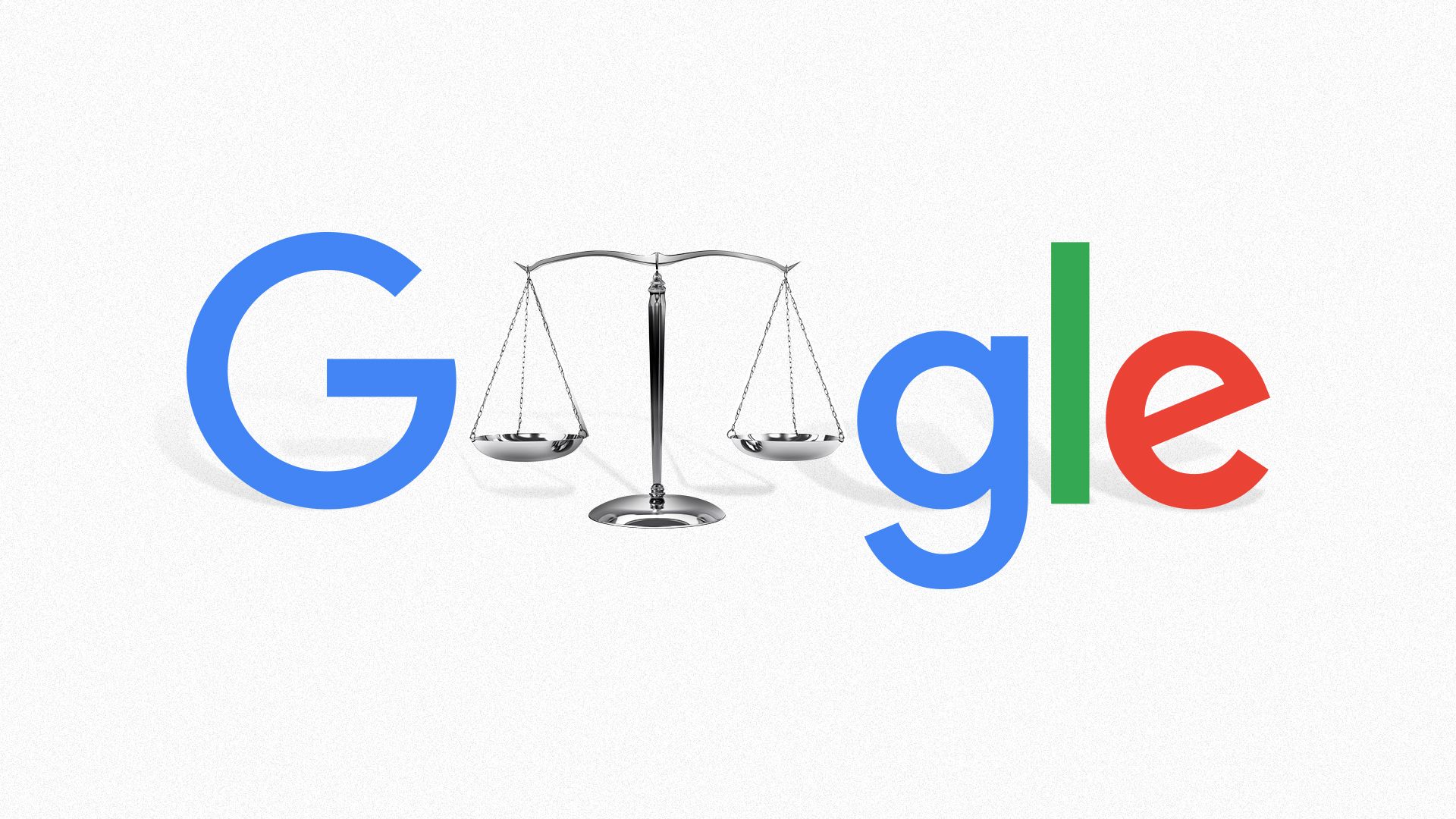
Google can keep its Chrome browser and keep paying Apple and other partners for search traffic, but it will have to share data with competitors, a federal judge ruled yesterday.
Why it matters: The court's ruling repeatedly cited AI's disruptive rise as a key force challenging the industry dominance of Google's search monopoly — and making more decisive government interventions unnecessary.
The big picture: Keeping Chrome is a major win for Google in the landmark antitrust case the Justice Department brought against the company in 2020.
- The decision is also being received as a win for Apple, which will likely continue to reap big profits from Google's payments, and others who have benefited from such deals, including Firefox maker Mozilla.
Zoom out: The court will impose fresh restrictions on Google, including the creation of a technical oversight board, at a time when AI is fundamentally changing how people look things up online.
Zoom in: Federal District Judge Amit Mehta issued the ruling after finding last year that Google violated antitrust law to obtain a monopoly in the online search market.
- Under the ruling, Google can still pay partners for placement and preloading of Google apps but it can't require exclusivity.
- Microsoft, Perplexity, OpenAI or others could still pay to become the exclusive chatbot, search engine or browser for a particular device.
- Google currently pays Apple billions per year to be the iPhone's default search engine — an arrangement that appears to be safe for now.
Yes, but: The judge had the opportunity to more radically transform the tech ecosystem, forcing a rebalancing of market power in web search. That didn't happen.
- Tech companies, including several in the AI space, had hoped a forced sale of Chrome might give them a unique opportunity to buy a significant share of the browser business, which still shapes the flow of users' web activity.
- Perplexity floated a $34 billion acquisition proposal, while Sam Altman reiterated last month that OpenAI would also be interested in buying Chrome were it for sale.
Between the lines: As happened in earlier antitrust battles involving Microsoft and IBM, a court ruling meant to address the dominant player in one era of technology could end up impacting who leads the next era.
- With Microsoft in the late 1990s, the case was meant to address the company's dominance of the PC with Windows, Office and Internet Explorer.
- An initial ruling against Microsoft, later overturned, led to a shift in corporate culture — making Microsoft more cautious just as the mobile revolution hit, opening the door for Apple and Google.
- Today's tech world will be watching Google to see whether the court's new restrictions on the company limit its freedom to maneuver in the AI race.
What's next: Google's planned appeal could take the case to the Supreme Court.
2. Scoop: Sierra nears $350 million deal
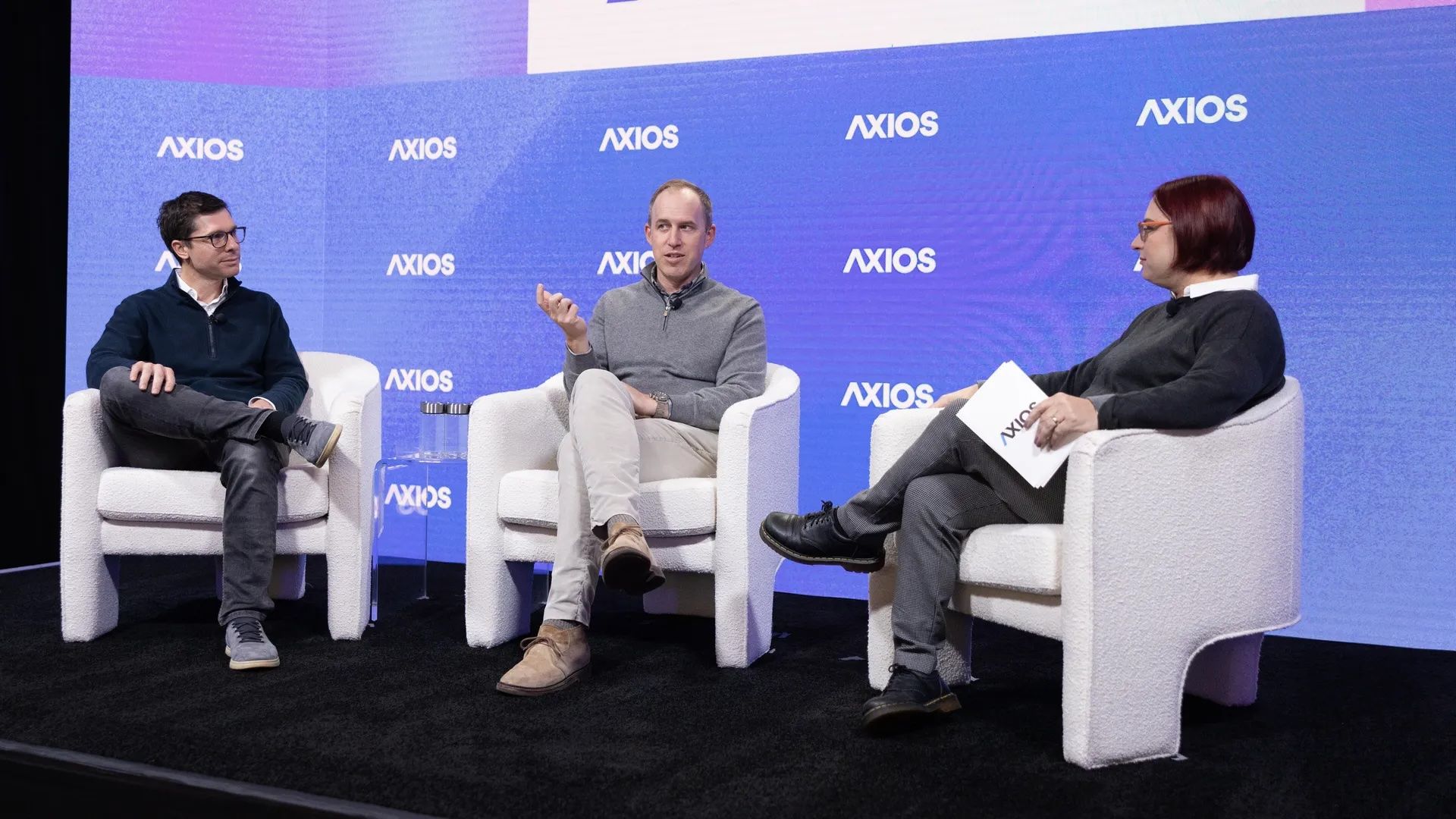
Sierra, which builds custom AI agents for enterprise customer service, is nearing a deal for a $350 million financing round that values the two-year-old startup at $10 billion, a source tells Axios.
Why it matters: AI agents have been hot all year but the industry hasn't yet settled on a clear path for building and deploying them. Sierra is betting on a specialized approach optimized for support and customer service needs.
Catch up quick: The company's founders are former Salesforce co-CEO and current OpenAI chair Bret Taylor and former Google exec Clay Bavor.
- Sierra previously raised $175 million at a $4.5 billion valuation last October.
- The new round, like the previous one, will be led by Greenoaks Capital.
By the numbers: Sierra is on track to exceed $100 million in enterprise annual recurring revenue, per the source.
- The company said in June it has hundreds of customers, 15% of whom have revenue of over $10 billion, and 50% of whom have annual revenue of more than $1 billion.
3. AI skills gap fuels investor concerns


Working professionals are overwhelmed by AI and a majority say learning AI skills is like having another job, according to a new LinkedIn report.
Why it matters: Few have figured out how to use the tools to work smarter and faster, which is causing investors to get antsy.
By the numbers: In a July survey of more than 2,000 U.S. workers, LinkedIn found that employees are increasingly expected to know how to use AI.
- However, 47% say they're not using AI to its fullest capability, and 30% say they rarely or never use AI.
- On the flip side, 31% have exaggerated or lied about their AI skills at work.
Zoom in: Over one-third of U.S. execs say they plan to incorporate employees' AI skills into performance reviews or hiring criteria in the year ahead, per the report.
- However, many workers say they lack the training, resources and time to master and incorporate this technology into their work.
- One-third feel embarrassed by how little they understand AI and 39% feel nervous to talk about AI in professional settings because they're worried they'll look uninformed.
The big picture: Slow adoption is impacting companies' returns on investment, according to a recent MIT study.
- 95% of organizations found zero return on enterprise investment in AI pilot projects despite spending $30 billion to $40 billion on GenAI.
- Notably, companies that purchased enterprise AI tools were far more successful than those that built internal pilots, according to the study.
Between the lines: AI talk has seen a massive uptick in corporate earnings transcripts as executives try to signal to investors they are being efficient and navigating this workforce shift.
- Mentions of terms like "agentic AI," "AI workforce," "digital labor" and "AI agents" during earnings calls increased 779% in the past year, according to recent AlphaSense data.
4. Training data
- Anthropic raised $13 billion in new VC money in a deal that values the company at $183 billion. (Axios)
- OpenAI said it will acquire Seattle-based testing and analytics company Statsig for $1.1 billion, with CEO Vijaye Raji becoming CTO of OpenAI's applications unit. (The Verge)
- OpenAI also shifted several other executives, including product chief Kevin Weil, who will move to the research side of the company to lead a new science effort. (TechCrunch)
- Several more researchers from across Apple's AI efforts are leaving the company, including a key employee from its robotics team. (Bloomberg)
5. + This
Check out the amazing color-matching skills of this parrot.
Thanks to Scott Rosenberg and Megan Morrone for editing this newsletter and Matt Piper for copy editing.
Sign up for Axios AI+
