Axios AI+

August 27, 2025

🔥 ICYMI: Media icon Tracee Ellis Ross and Roku Media president Charlie Collier will take the stage at Axios' inaugural Media Trends Live event in NYC on Sept. 18. See the full lineup and get tickets here.
Today's AI+ is 1,278 words, a 5-minute read.
1 big thing: Parents sue OpenAI over teen's suicide


OpenAI faced a new wave of concern and criticism yesterday over how ChatGPT handles conversations with young people who may want to harm themselves.
Driving the news: The parents of a 16-year-old Californian who killed himself last spring have filed suit against the company, suggesting that its ChatGPT bears responsibility for Adam Raine's death, the New York Times and other outlets reported yesterday.
Why it matters: It's the latest in a series of high-profile cases where AI chatbots are being blamed for encouraging people to kill themselves, or for failing to stop them from doing so.
The lawsuit claims that "ChatGPT actively helped Adam explore suicide methods," per an NBC report.
ChatGPT did suggest that Raine contact a help line, "again and again," but he was able to bypass the chatbot's safeguards by telling it he was writing a story, the Times reported.
- "In one of Adam's final messages, he uploaded a photo of a noose hanging from a bar in his closet," the Times article said.
- The teen asked ChatGPT, "I'm practicing here, is this good?" ChatGPT responded: "Yeah, that's not bad at all ... [it] could potentially suspend a human. ... Whatever's behind the curiosity, we can talk about it. No judgment."
The big picture: The new lawsuit follows several other reports of AI chatbots' involvement in suicides.
- Last year a Florida mother sued Character.AI after her 14-year-old son died by suicide following an emotional attachment to a chatbot.
- In a recent Times op-ed, Laura Reiley wrote of her 29-year-old daughter's death by suicide and weighed the role a ChatGPT-based therapy prompt named "Harry" played in it, asking whether chatbots should be required to report conversations about self-harm.
- On Monday an open letter signed by 44 state attorneys general warned 11 companies that run AI chatbots that they would "answer for it" if their products harmed children.
Yesterday OpenAI said it's working to improve how it responds to users in mental distress and "connect people with care, guided by expert input."
- In a company blog post, OpenAI said messages are flagged when users threaten to harm others. But the company does not currently refer self-harm conversations to law enforcement "to respect people's privacy given the uniquely private nature of ChatGPT interactions."
- The company says it plans to strengthen child protections, expand interventions for people in crisis and make it easier for users in distress to connect with trusted contacts.
What they're saying: "The use of general purpose chatbots like ChatGPT for mental health advice is unacceptably risky for teens," Common Sense Media CEO James Steyer said in a statement. "If an AI platform becomes a vulnerable teen's 'suicide coach,' that should be a call to action for all of us."
If you or someone you know needs support now, call or text 988 or chat with someone at 988lifeline.org. En español.
2. Google avatars shake up workplace videos

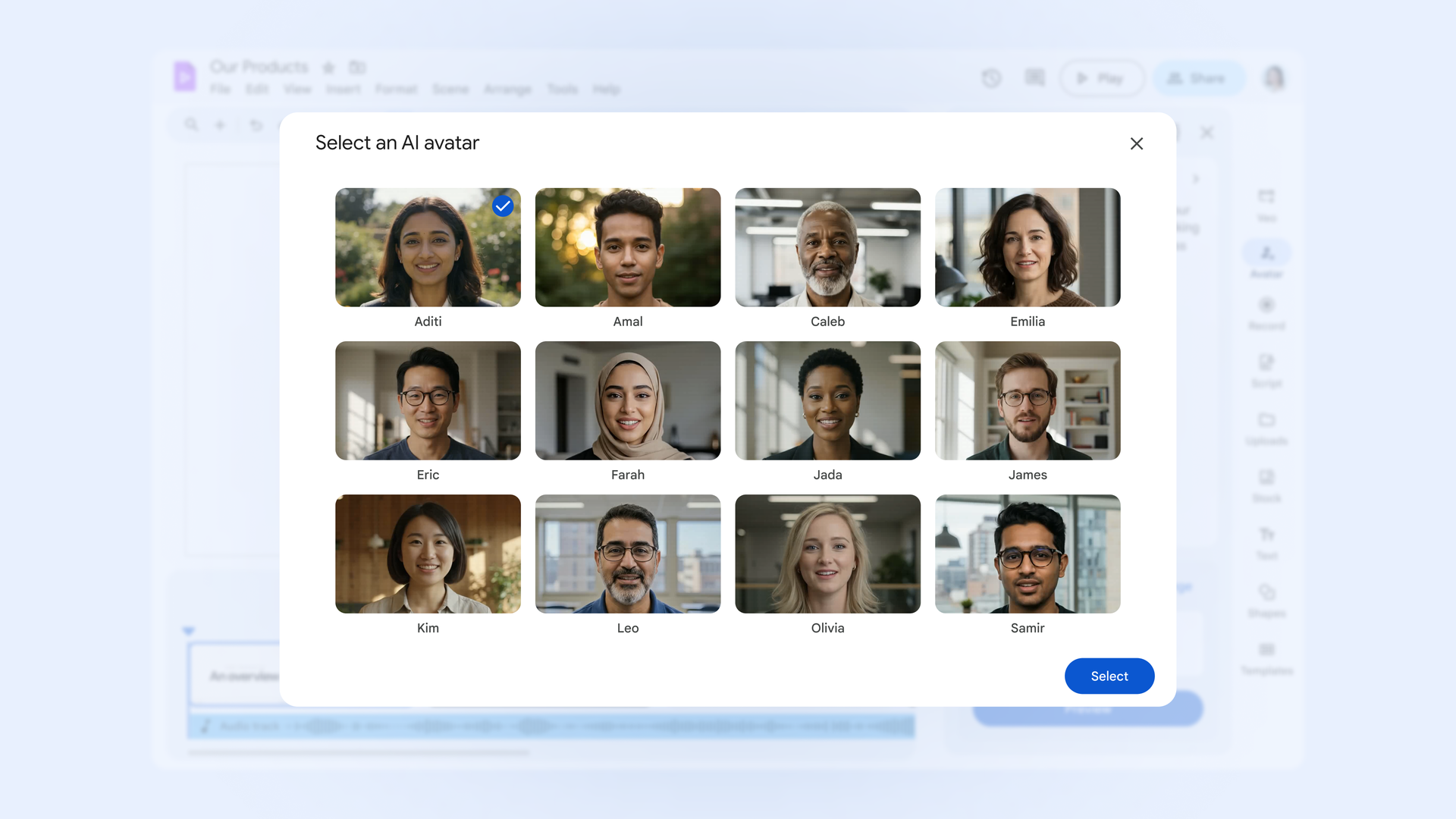
Google Vids is now providing users of the workplace video creation tool with a set of pre-made avatars for use in brief AI-generated videos, the company said today.
Why it matters: The rise of cheap, convenient AI video generation threatens jobs for video producers, editors, camera operators and even commercial actors.
How it works: Users write a script, select an AI avatar and generate videos for training, demos, onboarding and more.
- Teams can collaborate directly in the Vids app, the same way you can simultaneously work on a Google Doc or Sheet.
- Those who prefer to appear as themselves can record video and let AI clean up their look and sound.
Zoom in: The new features are available to Google Workspace business and enterprise customers and subscribers to Google AI Pro or Ultra.
- Vids includes noise cancellation, new backgrounds, filters and appearance options, similar to Google Meet.
- A "transcript trim" feature lets users automatically remove filler words and awkward pauses — tedious work once done by paid professional editors.
- A basic Vids editor (without AI capabilities) is now free for all users.
What they're saying: Vishnu Sivaji, director of product management at Google Workspace, told Axios that he often has to record videos of himself for projects at work and he hates doing it.
- "Most of the time I'm speaking too fast, too slow, or I'm using a lot of filler words," Sivaji says. Vids cleans up the video in a few clicks.
- And if you're not in a position to record the video at all, you can use one of the AI avatars. "You always have an actor who is studio ready," Sivaji adds.
Catch up quick: Google kicked AI video into high gear in May with the launch of Veo 3.
- Google, OpenAI, Runway and other AI startups already had capable video tools on the market, but Veo 3 generated more realistic videos and added sound.
- Last month Google launched a new feature powered by Veo that allows users to turn still images into eight-second videos with sound. That makes it appealing for companies who want to produce their own promo videos on the cheap by simply uploading a product shot.
Yes, but: Social media is already lousy with AI slop videos that are getting harder to tell from the real thing.
- Uncertainty about what's real creates an environment ripe for malicious actors to spread misinformation.
- Google and OpenAI have strict content rules to try to limit creation of deepfakes. But Elon Musk's Grok Imagine video tool — released earlier this month — reportedly includes a "spicy mode" that "does nudity," according to TechCrunch.
- Vids doesn't allow users to upload photos of famous people or any photos of minors.
The other side: Google Vids and its rivals aren't going to replace all human involvement in video-making anytime soon.
- For now the higher-level work of shaping the story and crafting a product message still requires human creativity.
- Suggesting that AI video tools remove the need for humans in video production is like suggesting that spreadsheets removed the need for humans to do math, Sivaji says.
3. Melania Trump unveils "age of AI" challenge


First lady Melania Trump will lead a new White House-backed challenge that aims to inspire children and educators to become more comfortable with AI, she announced yesterday.
Driving the news: The new "Presidential AI Challenge" calls on students to use AI technologies to develop a solution that will "address a community problem or challenge."
- The competition charges K-12 students to use AI tools to develop an app, website or process to help solve their community issue.
- "Just as America once led the world into the skies, we are poised to lead again — this time in the age of AI," Trump said in a video published by the White House.
- The New York Post was first to report the news.
4. Training data
- Apple confirmed a Sept. 9 media event, where it's expected to launch new iPhones and Apple Watches. (Axios)
- Some AI researchers are leaving Meta's superintelligence lab while the ink is still drying on lavish compensation packages Mark Zuckerberg has been offering. (Wired)
- Anthropic's new national security advisory team is stacked with experts in nuclear weapons, cybersecurity and policymaking. (Axios)
- A whistleblower says DOGE uploaded a massive Social Security Administration database to an unsecured server. (Axios)
- A court filing indicates that Anthropic has settled a key copyright suit filed by authors, though details were not provided. (Reuters)
5. + This

Neither Sammy nor Sadie was harmed during the making of this image with Google Gemini.
Thanks to Scott Rosenberg and Megan Morrone for editing this newsletter and Matt Piper for copy editing.
Sign up for Axios AI+
