Axios AI+

May 03, 2024

Ina here. Today's AI+ is 1,236 words, a 4.5-minute read.
1 big thing: News industry divides over AI
Major news outlets are taking opposite approaches toward future-proofing their businesses against the threat of AI — some are opting to partner with AI firms, and others are suing them.
Why it matters: Unlike music and book publishers, news outlets are struggling to present a unified front in their fight for copyright protection, and that could weaken their leverage in negotiations with Big Tech to license their content.
Driving the news: Eight prominent regional U.S. newspapers joined the New York Times and other news organizations in suing ChatGPT parent OpenAI and Microsoft for copyright infringement earlier this week.
- The new suits add heft to the Times' claims. Until now, the Times was the only major newspaper to take legal action against AI firms for copyright infringement. Smaller or newer outlets, like The Intercept, Raw Story and AlterNet, have also sued OpenAI and Microsoft.
Several other large news publishers, including the Financial Times, the Associated Press and Axel Springer, have instead opted to strike paid deals with AI companies for millions of dollars annually, undermining the Times' argument that it should receive damage payments of billions of dollars.
Reality check: The Times has some leverage in its lawsuit because the firms it sued were actively trying to strike a deal with the paper for months.
- The eight newspapers that sued OpenAI and Microsoft this week, and many other news companies, have not been in active discussions with those AI firms about licensing deals at all.
- AI firms may not need to license news content from every publisher, depending on the type and volume of content they need to train or inform their large language models.
The big picture: AI developers like ChatGPT maker OpenAI don't generally share details of the content they used in training their models.
- In most cases, they've simply said they are making fair use of "publicly available" data.
- But many publishers believe they're sending automated tools to scrape copyrighted material that they should be paying for.
Between the lines: News organizations have evolved along different paths in the digital era, leaving many newsrooms with conflicting objectives in negotiating with AI companies.
- Advertising-based news businesses depend on visitors sent via search, and they fear tech companies will use their content to refine AI-based services that will simply give users information without sending traffic.
- Licensing businesses, like the AP, have less to lose in striking a deal with AI firms, as most of their revenue is already derived from deals providing access to their content.
- Older news companies with many decades of content have archives that could be very valuable to AI firms looking to train their large language models, while newer firms that break lots of news could help AI providers deliver real-time data and insights.
What to watch: Right now, figuring out the most lucrative way to partner with AI companies is hard for publishers because there's no marketplace to help buyers and sellers agree on rates.
- Some publishers are looking to partner with companies like TollBit, which is building a marketplace to connect AI bots and scrapers with publishers' verified content for a dynamic fee.
- Fox Corp. is building a similar marketplace tool using blockchain technology.
The bottom line: While the news industry divides its efforts, tech firms haven't waited for payment terms to be negotiated, either in courts or by the market — they've gone ahead and taken the data they need.
2. Exclusive: Inside the AI research boom


China leads the U.S. as a top producer of research in more than half of AI's hottest fields, according to new data from Georgetown University's Center for Security and Emerging Technology (CSET) shared first with Axios.
Why it matters: The findings reveal important nuances about the global race between the U.S. and China to lead AI advances and set crucial standards for the technology and how it is used around the world.
Key findings: CSET's Emerging Technology Observatory team found global AI research more than doubled between 2017 and 2022.
- Roughly 32% of AI research focused on computer vision, which grew 121% in those five years.
- Natural language processing — what large language models do in ChatGPT and other generative AI tools — accounted for another 11% of AI papers and grew 104%.
Research in robotics grew slower than in vision and natural language processing — by just 54% — and made up about 15% of all AI research.
- And AI safety research made up just 2% of all research, despite growing 315% between 2017 and 2022.
The big picture: The top five producers of sheer numbers of AI research papers in the world are Chinese institutions, led by the Chinese Academy of Sciences.
- The dominant narrative for years has been that while Chinese institutions generated the greatest quantity of papers, the quality of those papers wasn't as high and research in the country largely came from applying fundamental advances made by researchers in the U.S., Europe and elsewhere.
- But when CSET researchers narrowed their analysis to highly cited papers, the Chinese Academy of Sciences was still the leader. Google is second, followed by China's Tsinghua University, Stanford and then MIT.
Yes, but: At the country level, the U.S. had the top spot in producing highly cited articles.
"China is absolutely a world leader in AI research, and in many areas, likely the world leader," Zachary Arnold, the analytic lead for the CSET team, tells Axios, adding the country is active across a range of research areas, including increasingly fundamental research.
- The U.S. still has an edge on China in natural language processing. Google and Microsoft were the top organizations in this cluster of research.
- But researchers in China produce more papers on computer vision than other countries in the world. Tsinghua University was the top organization in the world on this topic. China's strategic priorities for AI include autonomous vehicles, manufacturing, surveillance and other applications that require advances in computer vision.
- India — and three Indian institutions, including Chitkara University —was the top producer of AI applications for plant disease detection.
Caveat: The data only accounts for research papers published in English, and doesn't capture scientific work in other languages.
3. Apple earnings top expectations, but sales dip

Apple reported yesterday that quarterly sales dropped 4% from the same period a year ago, but the company narrowly topped expectations for both revenue and per-share earnings.
Why it matters: The iPhone maker is a bellwether for the broader tech industry, given its size and the fact that it is a major consumer of displays, chips and other components.
- The company also announced its board had authorized a $110 billion stock buyback, the largest in company history.
What's next: The earnings report comes ahead of a media event next Monday, at which Apple is expected to debut new iPads. Apple's annual developer conference starts June 10, and the company is likely to further detail its AI strategy there.
- Cook expressed enthusiasm about the AI-related announcements that the company will make in the coming weeks, and said, "We believe that we have advantages that set us apart."
4. Training data
- Microsoft is banning U.S. police departments from using the company's Azure service that connects to OpenAI. (TechCrunch)
- Universal Music Group, which earlier this year pulled its content from TikTok, has reached a deal that will see its artists' music returning to the service, with new protections regarding AI. (CNBC)
5. + This
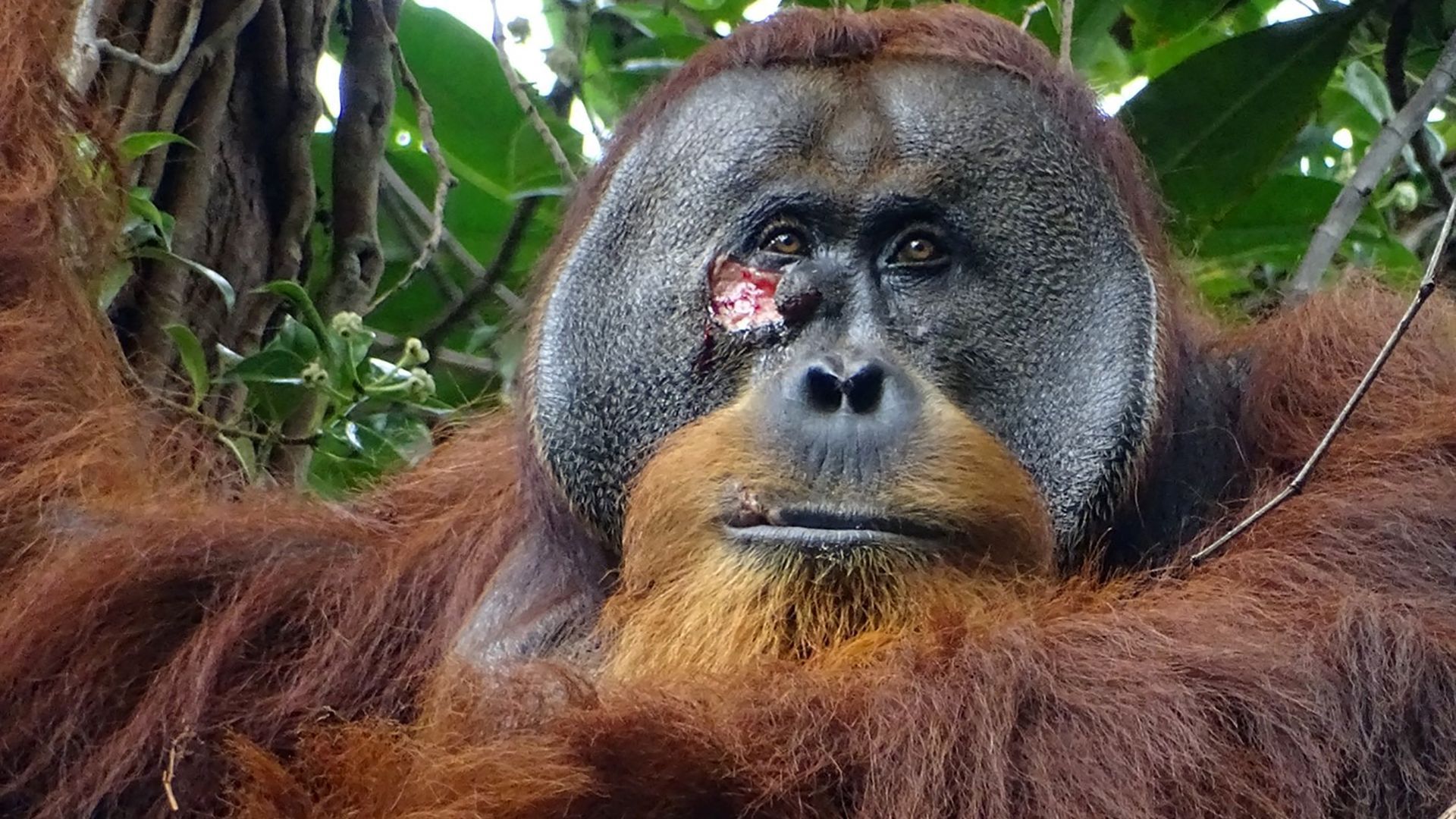
Meet Rakus, a male orangutan from Indonesia who is the first wild animal known to have treated a wound using a medicinal plant.
Thanks to Megan Morrone and Scott Rosenberg for editing this newsletter and to Caitlin Wolper for copy editing it.
Sign up for Axios AI+


/2024/05/03/1714706593720.gif?w=3840)