Axios AI+
July 09, 2024

It's really Ina here, not my digital twin.
Today's AI+ is 1,214 words, a 4.5-minute read.
1 big thing: Digital twin boom

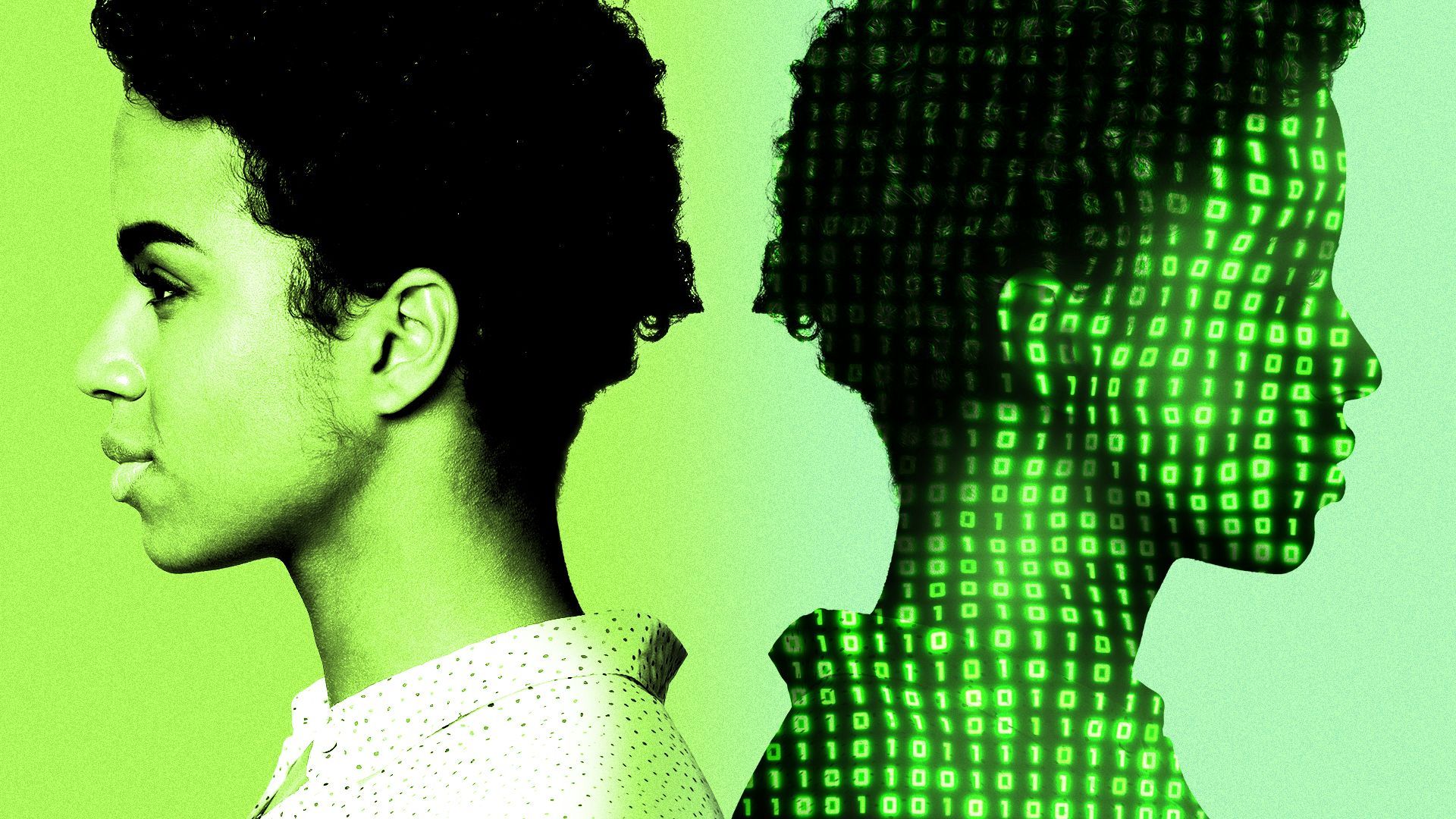
The AI industry sees digital twins — virtual likenesses of a human or an object, built for research — as a powerful practical use for the technology it's spending billions to build.
Why it matters: Tech companies believe they can unlock AI's potential by using digital twin technology to make copies of our physiologies, personalities and the objects around us.
Zoom out: Right now "digital twin" can mean anything from a statistical model of a complex phenomenon, like an organism or a weather system, to a video avatar of a billionaire trained on his speeches and posts.
- The term has recently become shorthand for AI models that promise to reverse disease, go to boring meetings in our stead and comfort our loved ones after we die.
- Digital twins can be an AI model of a person or a part of a person used to analyze large quantities of health data in order to provide more personalized treatment or speed up drug development.
- They can also be an AI model of a thing like earth, a city's topography or your trash bin.
By the numbers: Gartner predicts the market for digital twins will balloon to $379 billion globally in 2034, from $35 billion this year.
- Markets and Markets says the health care industry is driving the growth of digital twin technology, with an estimated market size of $110.1 billion by 2028.
The big picture: The concept of digital twins began in engineering and manufacturing, but expanded data storage and connectivity have lowered the cost of creating and maintaining them, opening new opportunities.
- The technology can seem magical because the models update automatically as new data becomes available.
Zoom in: Veteran tech entrepreneur and LinkedIn co-founder Reid Hoffman created his digital twin, REID AI, with a custom GPT built on two decades of his videos and writings.
- Hoffman told Axios' Mike Allen at an Axios HQ event yesterday (viewable online beginning Thursday) that he wanted to show "the positive things we can do with all these technologies."
- Hoffman previously wrote on LinkedIn that he was curious "how interacting with it might help me think differently, express myself in new ways, or connect ideas that I might not have otherwise."
- Earlier this year, he released videos of himself conversing with the twin, and he sent it for an on-stage interview at a Bloomberg event.
What they did: Hoffman used Hour One to create the video and ElevenLabs for the voice.
- He told Axios that he would only consider letting REID AI "free in the wild" in low-stakes interactions on topics where the AI had "high accuracy."
- "It'd probably be advice to entrepreneurs, because there's a lot of content from me out there," he said.
Yes, but: Most digital twins aren't video avatars, and the everyday utility of this form of AI is likely to emerge in more statistics-heavy applications.
Case in point: A startup called Twin Health creates digital twins of patients using Bluetooth-connected sensors to measure blood pressure and a heart rate-monitoring watch.
- The twin passes this information back to health care providers, but also gives its human tips on diet, sleep and exercise.
- Rather than dispensing generic advice — like Apple Watch reminders to stand up every hour — the twin's guidance is personalized.
- Jahangir Mohammed, founder and CEO of Twin Health, told Axios that people reverse multiple diseases with the company's technology. "People that are diabetic become non-diabetic," he says. "[They] get off medicines."
The bottom line: Like the wider AI boom that's driving it, the digital twin market starts with eye-catching stunts, but promises more important everyday benefits.
2. Weight-loss drugs become AI test case

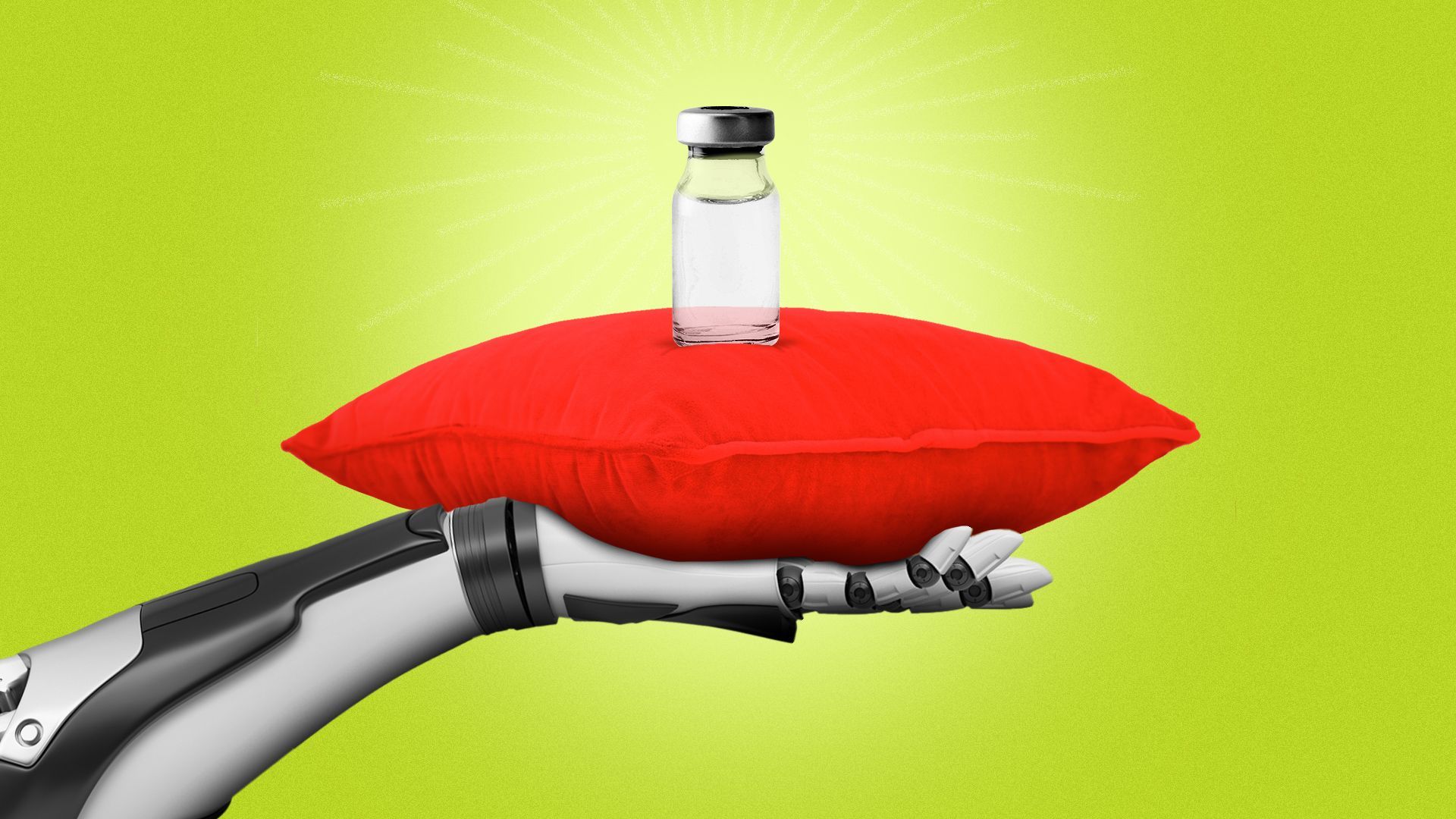
Two of the buzziest technology trends in health care — artificial intelligence and weight-loss drugs — appear to be converging as companies increasingly scope out the potential to capitalize on both.
Why it matters: Some companies tell Axios the explosive demand, outsized costs and wide range of potential of uses for GLP-1s — the category of drugs that includes diabetes drug Ozempic and its weight-loss counterpart Wegovy — make them the perfect test case for AI's potential.
"With any hot space, there's always a lot of noise. It's unavoidable," said Alexander Singh, founder of Alfie Health, an AI obesity care startup that was recently acquired by obesity care platform Knownwell.
- He's among those who argue there's some true value coming that's worth paying attention to.
The latest: A number of companies have announced pairings of AI with GLP-1s aimed at personalizing care for users, or even helping them track down pharmacies that have drugs in stock.
- Google's Verily recently announced plans for the chronic care app Lightpath to use AI, combined with data from devices like continuous glucose monitors, to help manage metabolic disease.
- Dandelion Health announced the creation of a data library to advance insights into GLP-1 drugs.
- Allurion Technologies announced the expansion of its AI-powered weight-loss coach, Coach Iris.
The big picture: With demand from patients and a dearth of providers who are well-versed in treating obesity, AI's ability to parse data and identify which patients will most benefit may be particularly helpful.
- A lot of providers may say, "'Well, I know about GLP-1s. I don't necessarily know how to prescribe, how to do the right follow-up with my patients, how to provide the right care around it,'" Singh said. "That's really where the clinical decision support can help."
Between the lines: Even as Novo Nordisk's Wegovy is already approved for heart conditions and Eli Lilly's Zepbound is eyed for sleep apnea, researchers are clamoring to find other uses.
- "Why do I think that might be really interesting for AI? Because, what does AI do? AI goes where the evidence is, not where we think the evidence should be," said Elliott Green, CEO of Dandelion Health.
Zoom in: Weight-loss app Noom recently announced a voice-to-text and picture-based calorie tracker, and expects ongoing AI updates will allow the company to roll out periodic check-ins with human coaches later this summer.
- That human offering wouldn't be possible without the help of AI, Noom CEO Geoff Cook told Axios.
- "It's basically not possible to do that just by just scaling up because there's just so many more people coming to the program," Cook said.
Our thought bubble: Plenty of companies pitching AI and GLP-1 combos in this reporter's inbox likely aren't bringing much extra value to the table. It will take time to weed out the wheat from a whole lot of chaff.
- But there may be something worth paying attention to in some of these combos.
3. Training data
- Sam Altman and Arianna Huffington explain their Thrive AI Health project, which aims to build a "customized, hyper-personalized AI health coach." (Time)
- The $13.8 billion valuation investors recently gave ScaleAI, which provides human labor to help AI makers train their models, is "almost certainly too high." (The Information)
- Here's what to expect from Samsung at its Unpacked event on Wednesday, including new foldables, an Oura ring competitor and new AI features. (The Verge)
- Etsy, the artisanal e-commerce giant, will require that every item for sale incorporate a "human touch." (CNBC)
4. + This
Our past predictions about the future were wildly off, so here are some new predictions that will eventually seem equally ridiculous. That's my smart brevity version of this 1987 BBC segment, but you should really watch the full video.
Thanks to Megan Morrone and Scott Rosenberg for editing this newsletter and to Caitlin Wolper for copy editing it.
Sign up for Axios AI+
