Axios AI+
October 02, 2026


Mady here coming off of the "Big Brother" finale. Prayers to fellow viewers who are also going to be having withdrawals!
Today's AI+ is 1,250 words, a 4.5-minute read.
1 big thing: Inside the AI industry's grassroots rebellion


A small cadre of elite AI researchers is wielding extraordinary influence inside OpenAI and other leading companies, challenging executives, shaping policy and complicating negotiations with Washington.
Why it matters: As a safety crisis has unfolded across the industry, it's an open question who is doing more to shape the national AI debate — top researchers or the executives they report to.
- The researchers, some of whom are among the most highly paid and sought-after scientists in the world, are outspoken online and have repeatedly clashed with company strategy.
The big picture: The situation has the makings of a grassroots uprising, where any potential deal the companies may strike — with the Trump administration, one another, or even globally — will also have to pass muster with their top scientists.
Behind the scenes: OpenAI, Anthropic and others at the frontier of AI aren't like other companies.
- Many began years ago as idealistic research labs with scientific cultures that prized openness and collaboration.
- To function, and to continue to build better and better models, the companies need highly specialized machine learning researchers and scientists to push the frontiers of what's technologically possible.
The trouble is, the best of those researchers are in extraordinarily short supply.
- Last year's talent wars drove compensation packages into the hundreds of millions of dollars for the most elite, giving top researchers enormous leverage over their employers.
- Perks include favorable vesting schedules for their compensation and largely freewheeling policies that allow them to share triumphs, trash rivals and offer their perspectives about the AI race frequently on X.
Zoom in: OpenAI president Greg Brockman scrapped plans to donate another $25 million to a pro-AI political group that some researchers had openly criticized.
- Researchers and employees say they helped push OpenAI from resisting regulation — and candidates who supported it — toward working more closely with lawmakers in several states.
- The company recently backed a transparency bill in Illinois and, at the 11th hour, an independent auditing bill in California.
- "We have a lot of debate inside OpenAI, and that's a good thing, but what ultimately drives our policy positions is what we're seeing in our own technology and how quickly its capabilities are advancing," an OpenAI spokesperson said.
Yes, but: OpenAI signaled yesterday that there are limits to how much dissent it will tolerate, firing three employees for allegedly mishandling sensitive information.
Friction point: In Washington, the unusual dynamic has frustrated policymakers who see AI companies as inconsistent on regulation — opposing proposals at some points and supporting them at others, sources tell Axios.
Reality check: Executives have also adapted as political backlash to AI has grown and safety incidents have drawn more scrutiny, sources close to the companies say.
- With some level of regulation seen as inevitable, companies have focused on molding the rules as favorably as possible rather than simply resisting them.
Zoom out: It's not just OpenAI. Researchers also complicated Anthropic's efforts to strike a deal with the Pentagon after a clash between the company and senior administration officials earlier this year.
- Employees at OpenAI, Anthropic and Google have signed high-profile letters at pivotal moments between companies and the government, including more than 1,000 who backed the viral "Pacing the Frontier" petition.
- In a remarkable show of internal solidarity, Anthropic researcher Jacob Coxon resigned and publicly blasted the company's safety practices — only to have several colleagues still inside Anthropic endorse his concerns.
The bottom line: In the debate over AI safety and regulation, some researchers have become nearly as influential in setting the terms as OpenAI's Sam Altman or Anthropic's Dario Amodei.
2. Wikimedia's CEO on the AI traffic armageddon
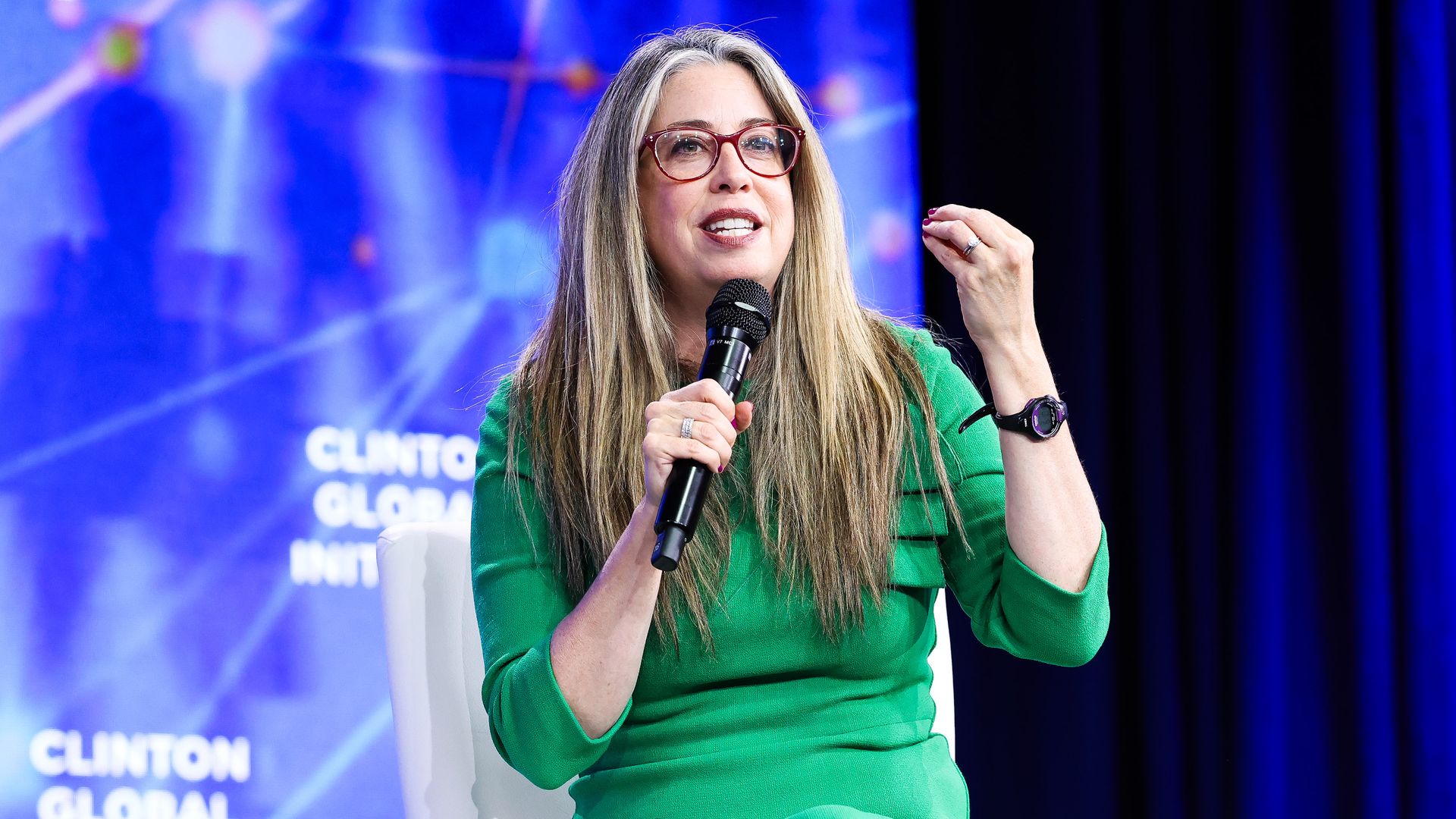
Wikipedia is starting to feel the effects of the AI-driven shift in how people find information, with page views falling 8% in the latest year, new Wikimedia Foundation CEO Bernadette Meehan told Axios.
Why it matters: Wikipedia is a crucial source of information for AI models, but those same models increasingly allow people to get Wikipedia-derived information without ever visiting the site — potentially threatening the ecosystem that keeps the online encyclopedia running.
Driving the news: Wikipedia page views declined 8% in 2025, and while the drop wasn't unexpected, "that doesn't mean that we're sort of starry-eyed about it and not concerned about it," Meehan said.
Follow the money: Even though generative AI systems rely heavily on Wikipedia's vast trove of human-created information, some companies won't pay for it, she said.
- Wikimedia charges large-scale commercial users for reliable, high-volume access to its data. Publicly disclosed enterprise customers include Amazon, Google, Microsoft, Meta, Perplexity and others.
- OpenAI and Anthropic, two of the largest makers of generative AI models, aren't among Wikimedia's publicly disclosed enterprise customers. Meehan noted that Wikimedia has other agreements that aren't publicly disclosed and declined to identify those companies.
- OpenAI and Anthropic declined to comment.
What they're saying: Meehan, a former U.S. ambassador to Chile who took over Wikimedia's top job in January, said the reception from big technology companies has been mixed.
- Some have embraced the idea that companies benefiting from Wikipedia should help sustain it. Others decline to pay for enterprise access.
- "We're not asking for charity," Meehan said.
3. Trump, Big AI go all-in together

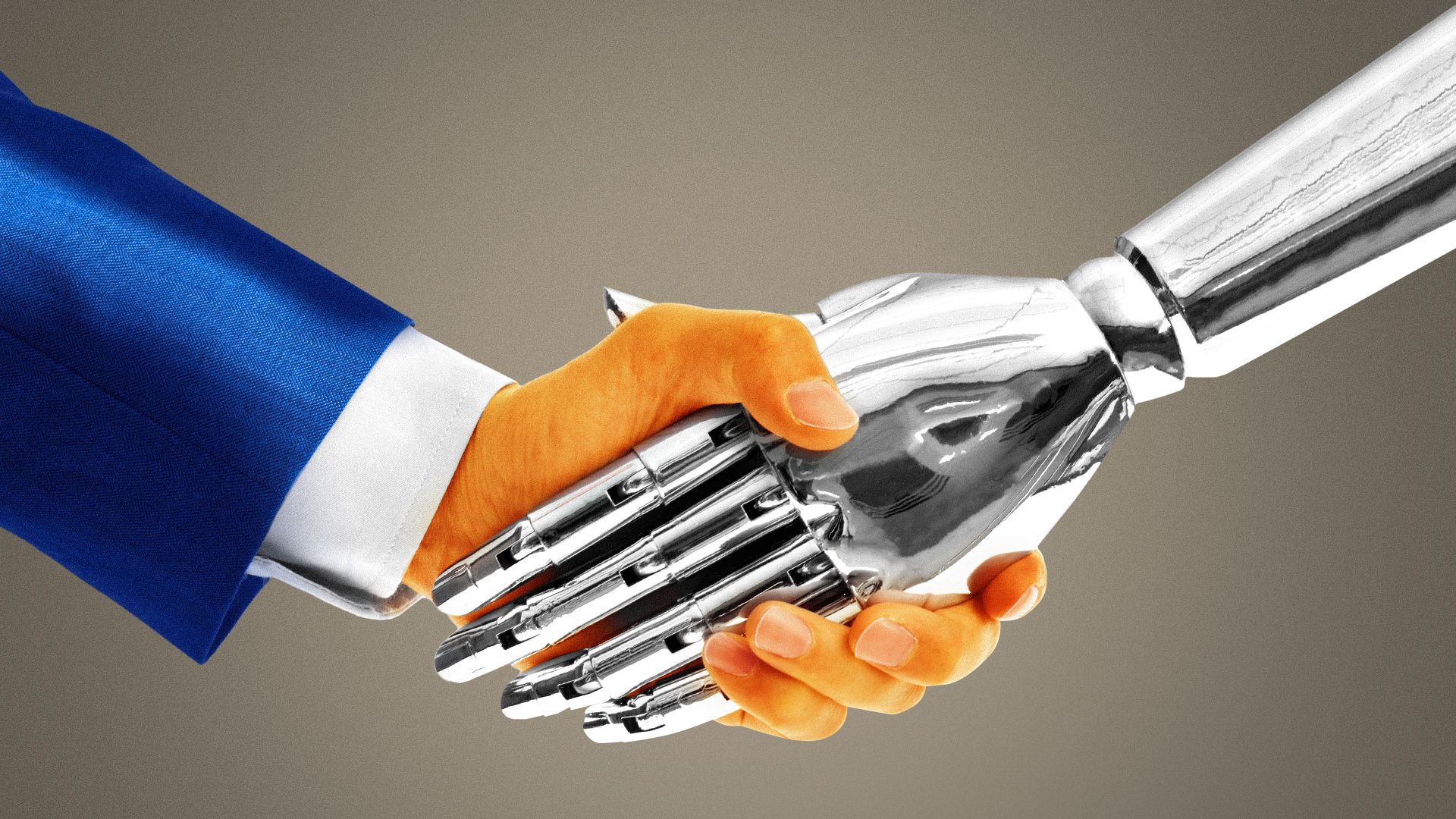
President Trump and the AI industry have co-signed one of the biggest economic and technological wagers of all time.
- If it goes right: A new age of abundance — explosive productivity, staggering wealth and a generational leap in American power.
- If it goes wrong: A catastrophic bust that destroys capital and jobs and, in the words of several involved, threatens widespread human harm.
Why it matters: Neither Trump nor the AI titans have plausible deniability. Their fortunes have become so tightly bound that success will be shared — and failure impossible to disown.
The big picture: Trump and Big AI have fused their futures around four enormous bets.
1. The economic bet: That trillions poured into chips, data centers and power will create a productivity engine powerful enough to fuel a new Industrial Revolution.
- The risk is a historic misallocation of capital on a scale few industries have ever seen.
2. The regulation bet: That Washington can clear the runway for an AI takeoff while leaving the companies largely responsible for policing themselves.
- The risk is that self-regulation fails, forcing Washington to intervene only after damage has already been inflicted.
3. The safety bet: That AI can grow vastly more powerful without becoming vastly harder to control.
- The risk is self-improving AI that evolves faster than its creators can comprehend or contain.
4. The political bet: That Trump and Big AI can become inseparable without making each other even more toxic.
- The risk is that every AI failure, disruption or backlash becomes a liability they share.
The bottom line: Trump and the AI industry are asking the country for a leap of faith at a uniquely fragile moment for both.
4. Training data

- OpenAI fired three safety researchers for sharing confidential information with third-party evaluators, per the Wall Street Journal.
- Anthropic is expected to go public before the Thanksgiving holiday. (Bloomberg)
- Meta claims its data centers are an experiment that could fail in order to gain tax breaks. (New York Times)
Thanks to Bradley Olson for editing this newsletter and Matt Piper for copy editing.
Sign up for Axios AI+
