Axios AI+

June 27, 2024

There's been a lot of discussion about this Toys "R" Us ad made using Sora, OpenAI's AI video engine. Drop me a note and let me know what you think of it.
Today's AI+ is 1,171 words, a 4.5-minute read.
1 big thing: Publishers' Perplexity problem



Recent conflicts between online publishers and AI search startup Perplexity are widening the fight to control and profit from information in the AI era.
The big picture: From disputes over the use of "publicly available" material to train AI models, the argument between information providers and AI companies is now shifting to the creation of summaries, "guide" pages and even verbatim copies of previously published material.
Driving the news: Forbes has threatened Perplexity with legal action for its use of copyrighted story material; the publication says Perplexity reposted it and also turned it into a podcast and a YouTube video.
- Perplexity recently launched a feature that lets users publish its responses to queries as nicely designed web pages and share them broadly.
Traditional publishers are crying foul and accusing Perplexity of outright plagiarism.
- Wired ran a story calling Perplexity "a bulls--t machine," and found the company wasn't obeying websites' rules for what content could be accessed by site-scraping robots. (Perplexity's CEO later said the problem stemmed from a third-party web-crawler, not Perplexity's own bot.)
- Then, Wired reported, "Perplexity Plagiarized Our Story About How Perplexity Is a Bulls--t Machine."
Catch up quick: Perplexity AI is a startup backed by some of the biggest names in tech, including Jeff Bezos, Google's Jeff Dean and former YouTube CEO Susan Wojcicki.
- Its valuation now tops $1 billion, and investors clearly believe in the company's trajectory, but it's nowhere near the size of rivals OpenAI and Anthropic.
- Perplexity's differentiating product is its well-packaged, easily-digestible summaries of complicated news stories in text, audio and video.
The other side: There's nothing new about the aggregation of other publishers' content, and Perplexity can point to platforms like Pinterest that have long offered tools for the attractive recycling of other sites' material.
- Perplexity did not respond immediately to our request for comment.
Yes, but: The speed of AI automation and the thoroughness of the summaries combined with the de-emphasis of links means this new wave of AI-driven aggregation could hit publishers even harder than the rise of search did.
- Microsoft-backed OpenAI has begun opening its checkbook for deals to pay publishers to use their work, and Perplexity has also said it wants to negotiate revenue-sharing arrangements with publishers.
- But such a subsidy could prove fleeting — and it's unlikely to replace all the revenue publishers could lose to AI-driven answer providers.
Between the lines: In the AI information wars, tech giants are once again letting pugnacious startups push the envelope of accepted industry practice while they hang back.
- The smaller companies have less to lose if a court rules against them, but the deep-pocketed giants are always ready to move in and occupy the terrain that the startups open up.
State of play: Perplexity may look like a unique case for now, but publishers' beefs with the startup sound similar to their complaints about giants like Google and Microsoft/OpenAI.
- Perplexity is being more aggressive, but Google's AI-driven search summaries are also making publishers lose sleep.
The bottom line: Google's choices will determine the fate of publishing more than anything Perplexity can do.
- But publishers will keep taking the fight to fast-and-loose startups because they can't wait to deal with the giants: They know AI's reshaping of their industry's rules and relationships is happening right now.
Go deeper: Making things up is AI's Achilles heel
2. Exclusive: Time inks licensing deal with OpenAI

Time has struck a multi-year content licensing deal and strategic partnership with OpenAI, Axios has learned.
Why it matters: The deal with the Microsoft-backed parent of ChatGPT is part of a broader effort by Time to expand access to its content to younger and more diverse audiences globally.
- The company removed its digital paywall last year, citing the same reason.
Driving the news: The deal gives OpenAI access to Time's archives from the last 101 years to train its large language models and use for responses to user queries in its consumer-facing products, such as ChatGPT, according to a statement Time provided to Axios.
- It also gives the AI giant access to Time's real-time content to help answer user queries as news unfolds.
- Under the agreement, OpenAI will cite Time in its responses to user queries and will link back to the original content source on Time.com, Time said.
Between the lines: The deal also gives Time access to OpenAI's tech and tools to develop new products for its audience.
- Financial terms weren't disclosed, but previous deals that OpenAI has struck have been structured to include compensation for publishers.
What they're saying: OpenAI chief operating officer Brad Lightcap said the partnership supports "reputable journalism by providing proper attribution to original sources."
State of play: It's the latest agreement that OpenAI has struck with a publisher after previous deals with the Atlantic, Vox Media, Wall Street Journal parent News Corp. and the Associated Press.
The big picture: A handful of publishers have chosen to sue OpenAI rather than reach deals.
- The New York Times and several major regional newspapers owned by Alden Global Capital have sued the AI firm for copyright infringement.
3. Google's new partners help AI with the facts
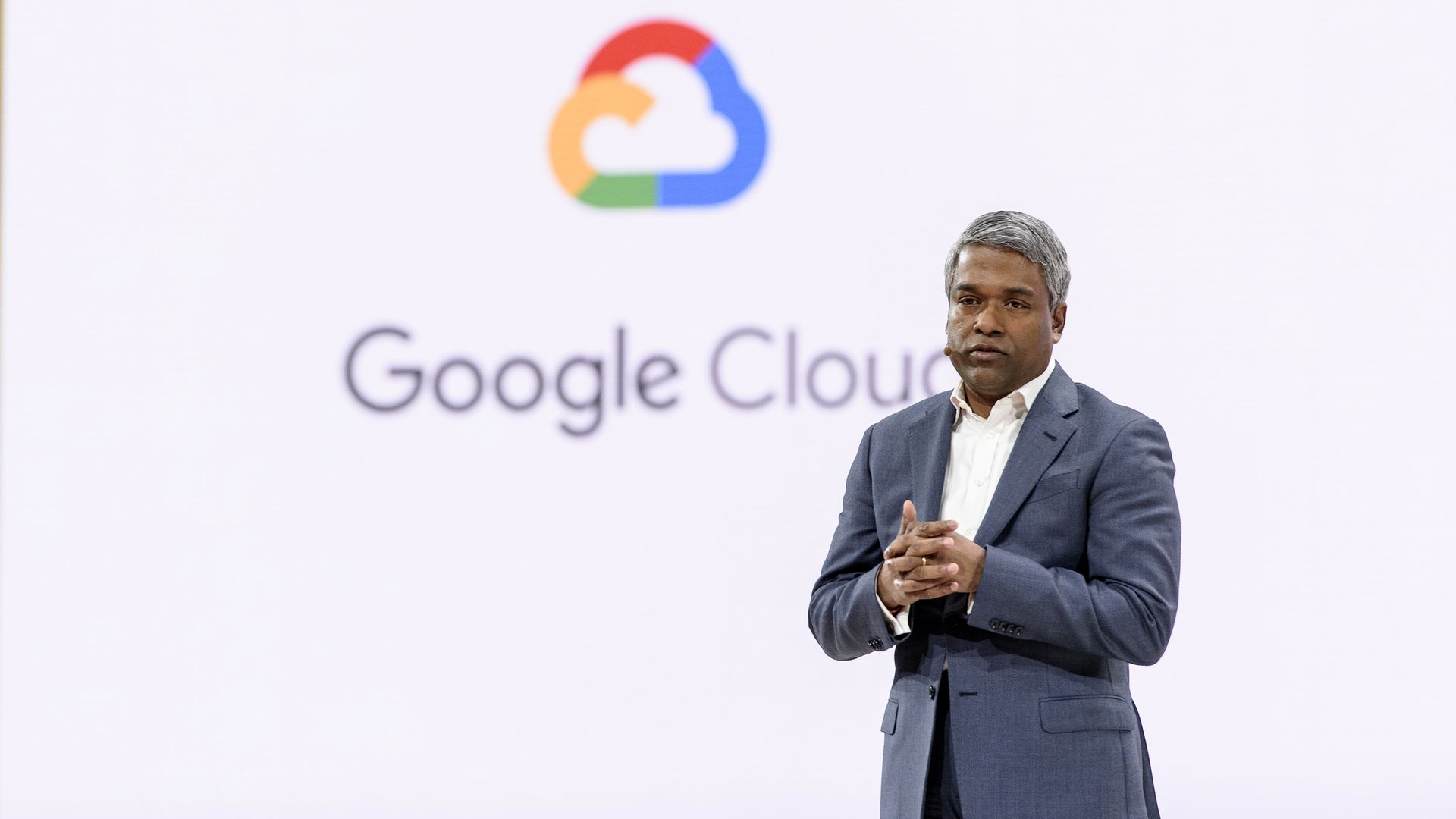
Google is expanding an effort to allow its cloud customers to ground their enterprise AI chatbots in real-world facts, including a new partnership with Moody's to use its financial data.
Why it matters: Generative AI will make up information, but grounding these systems in known factual data can significantly lessen hallucinations.
Driving the news: In April, Google announced an effort to ground Vertex AI results in web search, as well as a plan to allow companies to ground AI systems in their own internal data.
- Now, Google is offering an additional option: using third-party data to help ground AI results. Initial partners in this effort include Moody's, Thomson Reuters and ZoomInfo.
What they're saying: "You can actually trust the model to do a task on your behalf because you have a basis for trusting it," Google Cloud CEO Thomas Kurian tells Axios.
The big picture: The moves come as the major genAI providers seek to prove that their systems are safe and reliable enough for business use.
Zoom in: Google is also offering more ways to make its systems more reliable and predictable. One is a new "confidence score," in which the AI model offers a numeric indicator of how sure it is of the answer.
- Another new feature allows customers to tell the model to focus on finding answers in the documents or other information included in a prompt, rather than from its broad training data.
- "We've taught the model how to guarantee that when it responds, it takes what's in the input prompt as the primary information it needs to pay attention to," Kurian says. "It avoids being distracted by all other training data."
- Google also announced general availability of its low-latency Gemini 1.5 Flash model as well as Gemini 1.5 Pro, which can handle up to 2 million tokens worth of context — enough for two hours of video.
Go deeper: Google drafts search engine to "ground" AI results in truth
4. Training data
- A new report says that AI can both improve and threaten U.S. biosecurity. (Axios)
- YouTube is reportedly offering record labels lump sums of cash to convince artists to let it train AI on their music. (The Financial Times)
5. + This
I'm definitely bummed to see Seattle's Living Computers Museum is shutting down permanently.
Thanks to Megan Morrone and Scott Rosenberg for editing this newsletter and to Caitlin Wolper for copy editing it.
Sign up for Axios AI+
