Axios AI+
October 25, 2024

AI optimists nearly always make two key promises: AI will give us all personalized medical help, and every student will get a personalized AI tutor.
- As Reid Hoffman said onstage Tuesday at TEDAI in San Francisco, "We have a line of sight to a medical assistant and a tutor on every phone, for every person who has access to a phone."
- Over the next three days, AI+'s Megan Morrone will look at the state of play in the industry's effort to make these promises real. Today: the health care picture.
Today's newsletter is 1,259 words, a 5-minute read.
1 big thing: An AI guide through the health care maze


AI is likely to change our interactions with the health care system faster than it transforms the care we actually receive.
Why it matters: The U.S. health care system is a confusing and expensive bureaucracy, and anyone trying to navigate care for themselves and their loved ones is going to welcome help.
Zoom out: AI promoters say the technology will reinvent health care in two main ways.
- They foresee AI supercharging medical research and diagnosis — a process that's already underway.
- They also predict the arrival of individualized medical care delivered by autonomous AI doctors.
That second vision remains hypothetical, thanks to the technology's unreliability, complexity and cost.
- But in the meantime, AI optimists promise it will help us all deal with the headaches of getting and paying for health care in today's maze-like medical system.
- "AI models will soon serve as autonomous personal assistants who carry out specific tasks on our behalf like coordinating medical care," OpenAI CEO Sam Altman wrote last month.
State of play: Early adopters are already using off-the-shelf generative AI as a personal health care assistant.
- Shasta Kearns Moore tells Axios that she uses ChatGPT to help with "navigating the high seas" of caring for her two children.
- Kearns Moore, the author of Medical Motherhood, a newsletter for people raising disabled and neurodivergent children, says she uses ChatGPT to simplify complicated test results, as well as medical and insurance forms.
- She tells Axios that she used it to "politely write an email asking for a doctor's involvement when I didn't trust another doctor to provide quality care to a disabled person," and to help her compose complaint letters.
- "It's great for families like mine who don't have the spoons to be fighting battles on two fronts," she said.
Between the lines: ChatGPT's terms of service say that it's not intended for medical advice, but the burgeoning medical AI field has fully embraced OpenAI's API.
- Othman Laraki, CEO of Color Health, tells Axios that when someone gets diagnosed with cancer today, they can be forced to wait weeks or even months to see an oncologist for the first time.
- Color uses GPT-4o to help doctors and patients cut through some of that health care red tape.
- For example, Color's co-pilot gives primary care physicians access to complex genetics, family history and lifestyle data that can help them assess cancer risk levels without having to refer a patient to a specialist.
- Color focuses on the co-pilot approach rather than building an autonomous agent. "We're not trying to teach it how to be a doctor," he says.
The biggest obstacle to creating an effective medical assistant is finding a clean data set to train models, says Eli Ben-Joseph, co-founder and CEO of Regard, a startup that uses AI to analyze patient data for doctors.
- "An AI system is only as good as the data that you feed it," Ben-Joseph told Axios. "And health care, as a whole, is notorious for having pretty bad data." It's poorly organized, messy and some percentage is still in paper form, Ben-Joseph said.
- Laraki says the other challenge with data is that there's often no consensus on even the most basic health questions, like the right age for a woman to get her first mammogram.
- The data also changes all the time, says Ben-Joseph: "Every year, your insurance plan changes a bit."
Even so, both CEOs believe that in the future, autonomous agents could help navigate finding a doctor and coordinating insurance coverage, and also provide care to some degree.
Reality check: Kearns Moore says that while ChatGPT is not a full solution to the health coverage maze, it's the "next best thing."
- "Is this better than a knowledgeable and skilled human case worker who wants to help navigate you through the system? Absolutely not," Kearns Moore writes in her blog. "But it is very helpful for learning more about the system, just in case you don't have one of those."
Our thought bubble: As AI agents take over work on both sides of the health coverage game, acting on behalf of both patients and providers, the process of getting and paying for care could become an even more opaque and confusing bot versus bot interaction.
2. Scoop: Meta strikes AI deal with Reuters

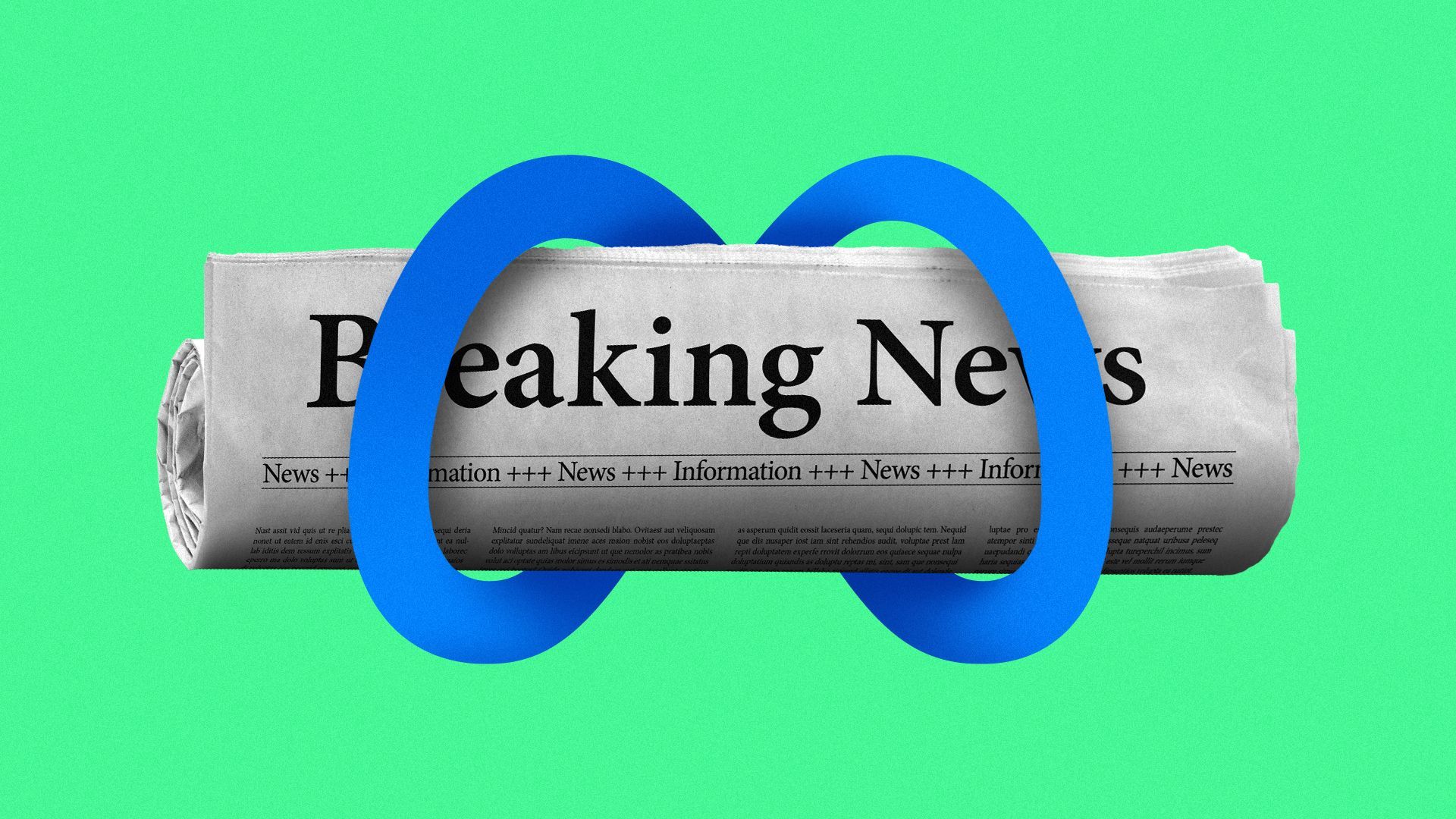
Meta has struck a multi-year deal with Reuters to use its news content to provide real-time answers to user queries about news and current events directed at its AI chatbot, sources familiar with the agreement told Axios.
Why it matters: It's the first news deal Meta has brokered in the AI era.
- Meta has backed away from news content in its platforms' main feeds amid regulatory scrutiny, but news content may prove harder to avoid with AI products that respond to users' requests.
Zoom in: Beginning today, users of Meta's AI chatbot feature in the U.S. will have access to real-time news and information from Reuters when they ask questions about news or current events.
- Meta's AI chatbot is integrated into the search and messaging features on Facebook, Instagram, WhatsApp and Messenger.
- Answers to user queries about news will cite Reuters' stories and link out to its coverage.
- Reuters will be compensated for access to its journalism, a source said.
Between the lines: It's unclear whether the partnership includes a licensing component that would allow Meta to use Reuters' journalism to train Meta's large language model, Llama.
Catch up quick: Meta, then Facebook, made tens of millions of dollars' worth of deals with publishers to use their content in its now-defunct News Tab in 2019.
- It cut that funding, and significantly reduced the amount of political content in its feeds, following the 2020 election.
- While other AI companies have been making deals with news firms, Meta's appetite for news deals for its AI assistant was unclear until now.
- Reuters has been a fact-checking partner of Meta's since 2020, but it was never part of Meta's News Tab efforts.
3. Google unleashes its AI text watermarking tool

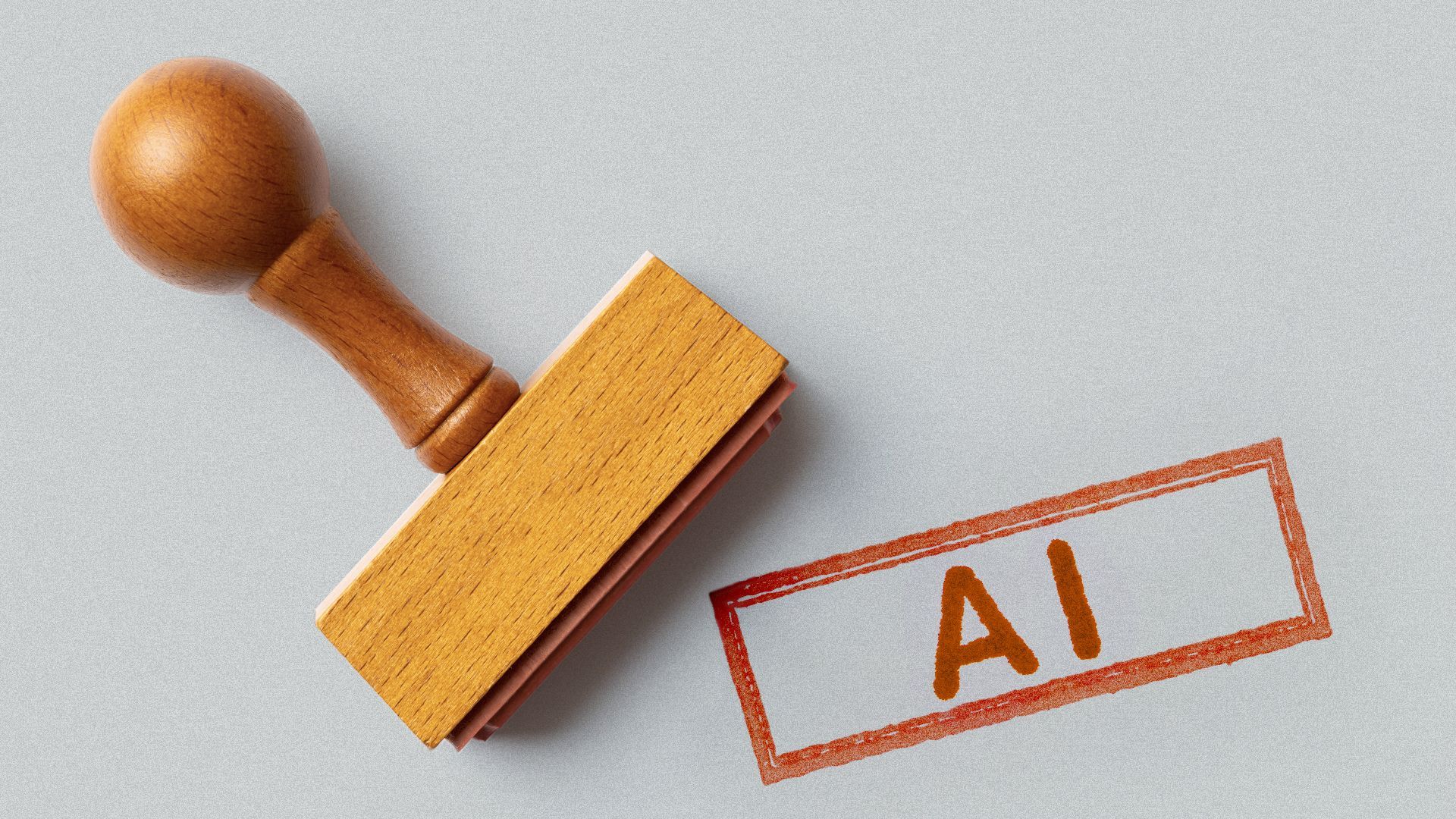
Google DeepMind is open-sourcing its tool for identifying AI-generated text, and detailed a real-world evaluation of it in a paper published Wednesday.
Why it matters: AI-generated text is fueling plagiarism, copyright violations and misinformation, prompting calls for a way to determine whether material was created by a human or an algorithm.
The big picture: A range of tools exist for watermarking images, which contain ample information — pixels with different hues and shades — that can be adjusted in ways that can be identified later.
- But there aren't a lot of ways to change a text without altering its meaning.
How it works: Google DeepMind's new SynthID-Text tool marks text as it is generated by a LLM (as opposed to changing the text after it is produced, which is how image watermarking works).
- The watermark influences the model's choice among equally likely options for words in a particular order that acts as a key.
- That key can then be used to detect whether a text has been watermarked.
4. Training data
- Google will make AI information more visible in Google Photos to show when someone has used tools like Magic Editor, Magic Eraser or Zoom Enhance to edit a photo. (The Verge)
- In response to the suicide of a teenager who was using Character.AI, Common Sense Media published a parents' guide to AI companions and relationships. (Axios, Common Sense Media)
- Chicago has an AI robot that will help recycle aluminum cans. (Axios Chicago)
- OpenAI outlined its approach to national security after the Biden administration called AI a national security priority. (OpenAI)
5. + This

Ina is off today, enjoying Hawaii, and Meg and Scott are only a little bit jealous. Really.
Thanks to Megan Morrone and Scott Rosenberg for editing this newsletter and to Caitlin Wolper for copy editing it.
Sign up for Axios AI+
