Axios AI+

May 21, 2026


SpaceX IPO paperwork, Nvidia earnings and rumors that OpenAI will file to go public within weeks all hit yesterday afternoon. Check on your AI reporter friends. Today's AI+ is 1,176 words, a 4.5-minute read.
Join Axios and The Race on June 4 and 5 in Monaco during F1 weekend for an exclusive conversation on AI, innovation and global business leadership. Register your interest here.
Situational awareness: The Trump administration will provide $9 billion in grants to quantum computing firms, with IBM receiving $1 billion. Shares of IBM rallied 5% on the news.
1 big thing: Anthropic is paying SpaceX $15 billion per year

Anthropic is paying SpaceX $1.25 billion a month through May 2029 under a massive compute deal signed earlier this month.
Why it matters: It's a massive bill, but Anthropic's revenue is taking off and the company remains compute-constrained.
- It is also a major boost to SpaceX, whose annual revenue is around $18 billion.
Driving the news: Anthropic and SpaceX announced their deal last month, but did not initially provide financial details.
2. How Google plans to win AI

Google is trying to pull off one of the trickiest balancing acts in tech: aggressively disrupting its own products with AI while protecting the businesses that generate tens of billions in profit.
Why it matters: Unlike OpenAI and Anthropic, Google enters the AI race with enormous scale, distribution and cash flow — but also a vast empire it has to defend.
Driving the news: As it has for the past two years, Google used this week's I/O developer conference to focus almost entirely on AI.
The big picture: Public perception of the AI race often swings wildly based on whichever company most recently released a flashy model.
- For a while OpenAI was seen as unbeatable. Then late last year, Google was seen as having pulled ahead. And now many are pointing to Anthropic as having surged forward thanks to Mythos.
- But executives at Google, OpenAI and Anthropic increasingly describe the frontier race as effectively neck-and-neck, with companies making different tradeoffs around cost, speed and computing resources.
- This was highlighted by Google's choice to debut the latest Gemini not with a behemoth version to compete with Mythos but with the faster, cheaper Gemini 3.5 Flash.
- The choice reflects a broader Google strategy: Stay at the frontier, but also prioritize models cheap and fast enough to deploy across products used by billions, rather than chasing benchmark supremacy alone.
What they're saying: "The competition is fierce," Google CEO Sundar Pichai said Tuesday during an on-stage interview with Future Forward's Matthew Berman. "A few labs are really at the frontier and then there's a big gap."
Zoom in: A strong existing business is helping Google invest upward of $180 billion in capital expenses this year — up sixfold from 2022 — without having to constantly raise money in the ways its rivals do.
- Plus, having so many products allows Google to test a lot of things at scale and spread out the costs of developing state-of-the-art models.
- "One of the cool things we get to do here at Google is build technologies that get immediately deployed into multibillion-dollar products," Google DeepMind CEO Demis Hassabis told Axios in an interview Tuesday. "It's pretty, pretty exciting, and I would say pretty unique."
Yes, but: Adding AI everywhere risks not only making the products more complicated for users, but disrupting Google's highly lucrative business model.
- If people get the answer they want from search directly, they may be less likely to click on an ad.
- Letting people ask questions of YouTube videos could mean fewer people are watching the full videos — and the ads within, potentially making YouTube less attractive to creators in addition to less lucrative to Google.
- Meanwhile, ads within chatbots are still in the experimental phase, though Google announced some new tests at I/O and OpenAI is also charging forward, saying it sees AI ads as a $100 billion business by 2030.
The bottom line: Google is betting it can do what few incumbents manage: reinvent its core products fast enough to survive the next platform shift while still funding the transition from the old business.
3. AI mega-cap IPOs tempt retail buyers

SpaceX released its IPO filing yesterday. OpenAI is working on an IPO prospectus that could be filed soon and Anthropic is expected to follow, giving public market investors the first opportunity to invest in the biggest AI companies in history.
Why it matters: Just because you can doesn't mean you should.
What they're saying: "Nothing ever" would convince Tyler Gardner, a former portfolio manager and forthcoming author, to buy these IPOs.
- Doing so would be the "biggest gift you can give to the insiders" and private market participants who were already invested, Gardner added.
- As retail investors get access to these companies and buy in, they will "drive up valuations," creating more runway for institutional investors to sell their shares and take profits, he said.
- That's more likely since this round of AI investors has been locked in these companies for years waiting for them to go public. After what's typically a six-month lockup period, these early investors can sell, which can send stocks tumbling, as was the case with CoreWeave's IPO.
Read five more reasons finance experts say you shouldn't buy into these IPOs.
4. Nvidia earnings show AI demand is still roaring
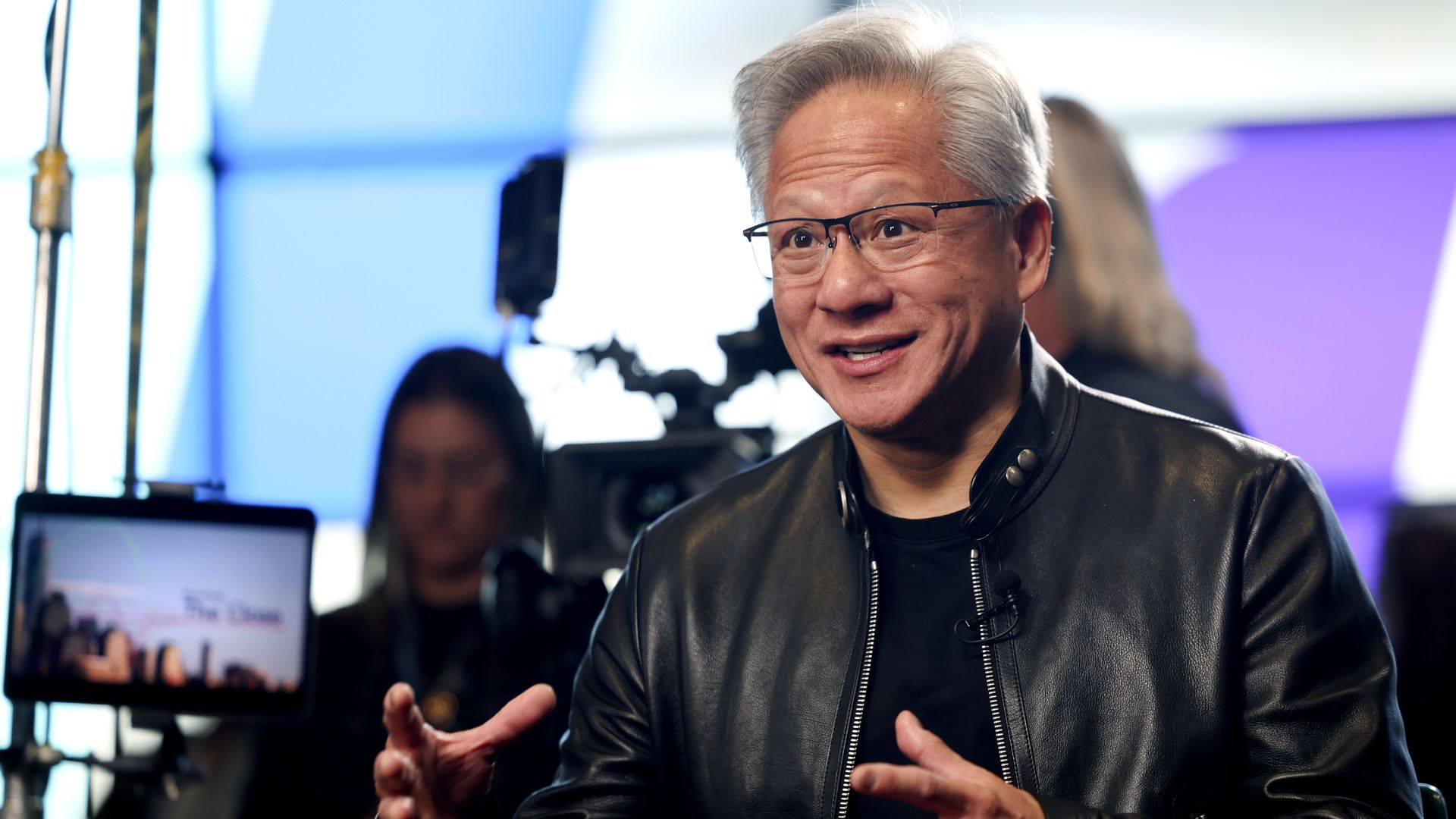
Nvidia topped analysts' earnings estimates on the top and bottom lines, with quarterly revenue coming in at $81.6 billion, ahead of estimates.
Why it matters: The world's biggest company again signaled that its AI dominance is expanding.
- Nvidia delivered the results within a new reporting framework, which could reflect an expansion of the business beyond chips.
Zoom in: The earnings report was restructured to better reflect "future growth drivers," according to the release.
- The company will now report two market platforms: data center and edge computing, with data center revenue being reported across two submarkets: hyperscale and AI clouds, industrial and enterprise (or ACIE).
- The restructuring could show Nvidia is "moving just beyond selling GPUs" and organizing its business to prove it, Paul Meeks of Freedom Capital Markets told Bloomberg Television.
- It could also address concerns that Nvidia relies on a small customer base by making its revenue drivers clearer.
What they're saying: "Nvidia is no longer a chip company," Dan Newman, CEO of Futurum Group, told Axios.
- "It's just one of these names you wanna own and forget about it," Adam Johnson, portfolio manager at the Bullseye American Ingenuity Fund, told Axios.
- The latest earnings could give investors yet another reason to hold onto this stock for the long haul.
5. Training data
- Elon Musk's SpaceX prospectus shows the company isn't the financial juggernaut some assumed. (Axios)
- GitHub said 3,800 internal repositories were breached. (Bleeping Computer)
- Meta is laying off thousands more workers, but CEO Mark Zuckerberg told employees he does not anticipate more companywide cuts. (Reuters)
- And speaking of layoffs, Intuit is cutting 17% of staff, saying it wants to focus more resources on AI. (TechCrunch)
6. + This
It was also a big day for math. OpenAI says that an unreleased general-purpose model made a breakthrough on an open problem that had stymied experts for decades.
Thanks to Megan Morrone for editing this newsletter and Matt Piper for copy editing.
Sign up for Axios AI+
