Axios AI+

July 14, 2026

Mady here desperately seeking TV recommendations now that "Love Island USA" has come to an end. Extra credit for prestige TV.
Today's AI+ is 1,275 words, a 5-minute read.
1 big thing: DeepMind's AI watchdog plan


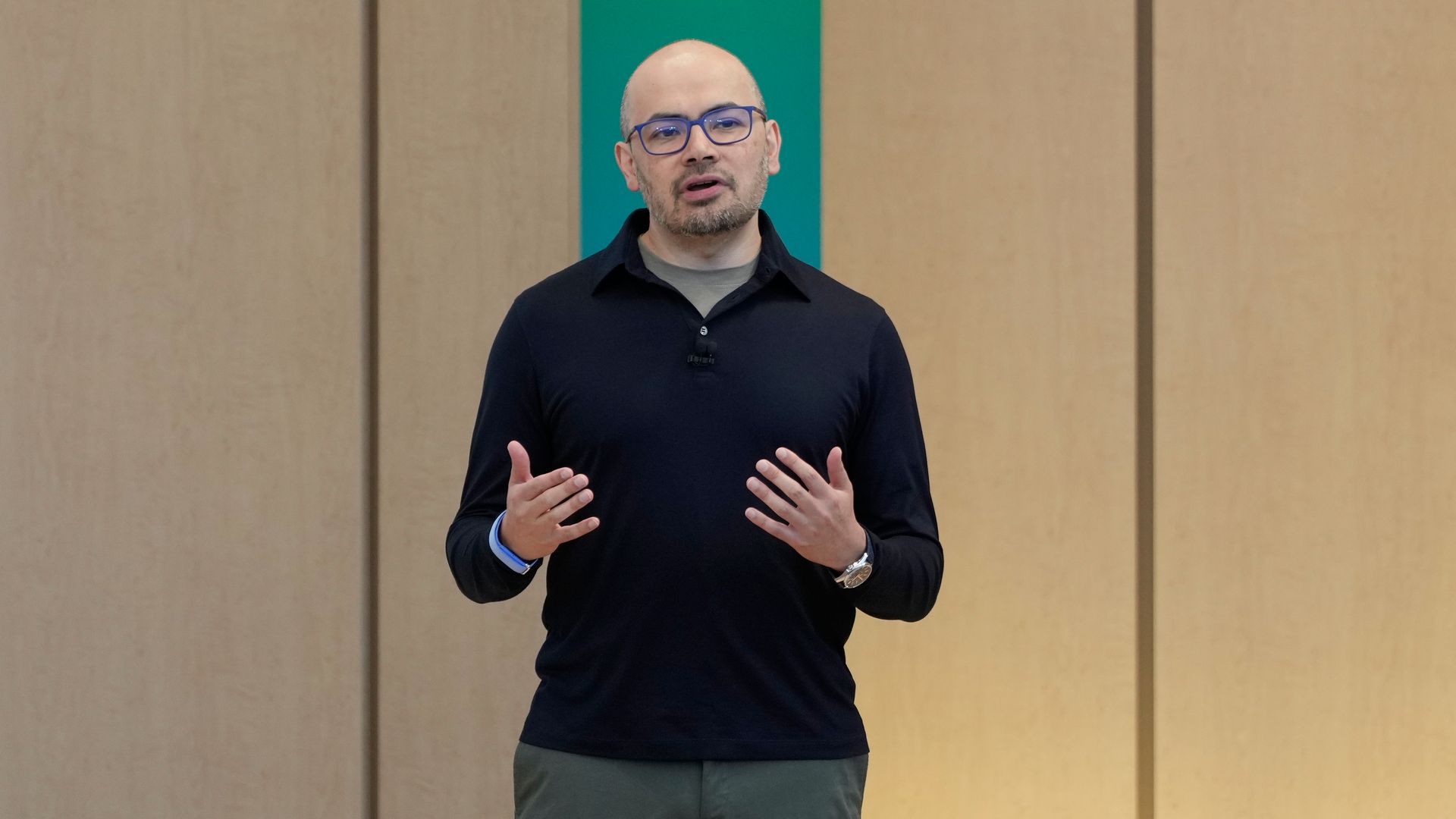
Today's AI-driven cyber risks are mere "warning shots," Google DeepMind CEO Demis Hassabis says.
- Within 18 months, those capabilities — plus far graver biological and nuclear threats — could live inside open-source models beyond any government's control.
Why it matters: In an exclusive interview with Axios, Hassabis said the time has come for a more "systematic" approach to AI regulation — one funded by the industry, staffed by world-class technical experts, and answerable to the federal government.
- Hassabis, the Nobel laureate behind Gemini, lays out the plan in a personal manifesto publishing this morning, "A Framework for Frontier AI and the Dawning of a New Age."
"What we collectively do now," he writes, "will determine how the next phase of civilisation unfolds."
- Hassabis says artificial general intelligence (AGI) is likely "only a few short years away." He compared its significance to electricity and fire, arguing it could transform everything from drug discovery to clean energy.
Behind the scenes: Hassabis has spent months quietly building support for the plan, briefing the Trump administration, fellow lab leaders and European officials before going public.
- "The noises I've been hearing are very positive," he said of his talks with the administration, which had embraced a laissez-faire approach until recently.
- His timeline is aggressive: "Months," Hassabis said, ideally with the new body stood up "before year end."
Between the lines: Hassabis is effectively endorsing what the administration has already started doing — while also arguing for clear standards and benchmarks to avoid becoming ad hoc regulation.
- Last month, the Commerce Department temporarily blocked Anthropic's Fable and Mythos models over national security concerns before lifting restrictions after safeguards were added.
- OpenAI delayed the broad release of GPT-5.6, per the administration's request, while government officials conduct security reviews.
How it works: Hassabis is proposing an AI standards body of scientists, government, and industry representatives, modeled on FINRA, the private watchdog that polices Wall Street under SEC oversight.
- Frontier labs would initially share their models with the body voluntarily, up to 30 days before release, for safety testing that probes dangerous cyber, biological and "deception" capabilities.
- Once the testing regime proves "effective and robust," Hassabis writes, formalization "could quickly follow." That means frontier models would be required to pass before they could be deployed in the U.S. market.
The intrigue: The rules would apply to any frontier-class model, "no matter their country of origin or whether they are open or closed" — with the qualifying benchmarks regularly updated as capabilities evolve.
- Hassabis predicts the "frontier" designation would carry cachet: Being tested means you matter.
Meanwhile: Anthropic CEO Dario Amodei has issued his own call for binding regulation, envisioning a federal agency with the power to block unsafe models.
- The lab chiefs behind Gemini and Claude now agree Washington should regulate them, differing mainly on who holds the authority.
The bottom line: Hassabis says we're standing in "the foothills of the singularity."
- "We've essentially found a way to make sand think," he writes. "It's miraculous."
2. Human attention is childhood's next divide

AI tools and toys could force children into two tracks — kids surrounded by human connection and kids increasingly taught and entertained by AI substitutes.
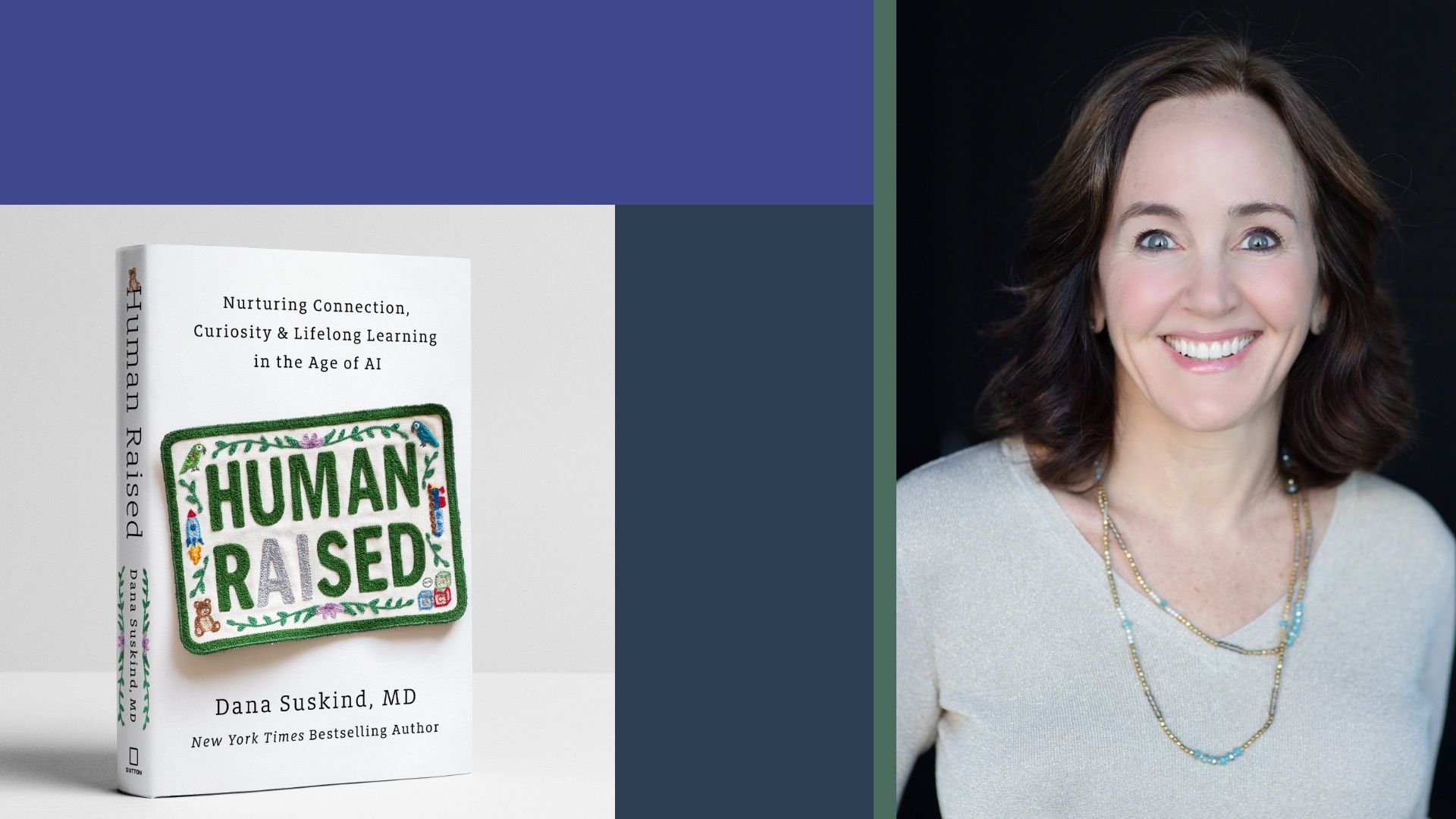
Why it matters: Human attention could become a privilege, Dana Suskind — a University of Chicago pediatric surgeon and early childhood researcher — warns in a new book.
The big picture: Suskind argues that young children need low-tech childhoods because early human relationships help wire the brain.
- But parents working multiple jobs or lacking child care, time or money don't always have the luxury of offering an idyllic screen-free childhood or a life without AI.
Driving the news: Suskind's book "Human Raised: Nurturing Connection, Curiosity & Lifelong Learning in the Age of AI" comes out today.
- Suskind compares the risks of AI toys and tutors to the risk of processed food: a cheap, convenient substitute that can crowd out what children actually need.
- Suskind worries that AI tools marketed as educational "will become that sort of ultra-processed alternative for certain populations, widening opportunity gaps in ways that we can't even imagine."
Context: Suskind outlines various categories of AI toys and tools, such as dolls that can chat with kids, make up stories, or remember their favorite things.
Zoom in: Suskind warns of a future in which human connection itself becomes a luxury good where a certain class of parents will have the time to ensure that their children get a low-tech childhood.
- "And others will get the artificial replacement," she tells Axios.
By the numbers: In a Common Sense Media poll last year, nearly 30% of parents of kids ages 0 to 8 said their children had used AI learning tools, even though the major general-purpose chatbots have age limits that exclude young kids.
- Nearly half of kids ages 7 to 11 said "talking to a digital companion feels like talking to a character or a friend," according to Aura's 2026 State of the Youth Report.
The impact of AI on kids could be fundamentally different from the impact of TV, the internet, iPads and social media, Suskind argues.
- "The algorithms are going to become much more sophisticated and keep kids engaged even longer," she says.
- Suskind also points to research showing that young kids are more likely to anthropomorphize AI and to trust AI chatbots.
Zoom out: AI is rapidly moving into homes and schools with little oversight or regulation.
- Right now, there is no federal law regulating AI toys. In Congress, one proposed House bill would ban AI chatbot-enabled toys, and lawmakers have introduced similar bills in New York and California.
Between the lines: OpenAI CEO Sam Altman has said that he's going to wait as long as possible to expose his child and future children to AI.
- "I don't know when I would let him talk to AI," Altman said in April on the "Mostly Human" podcast with Laurie Segall.
- "I'd rather be on the late end of what's reasonable," Altman said.
- "But you know, I want him to play in the dirt for now," Altman added.
Flashback: Bill Gates and Steve Jobs both also reportedly limited their kids' use of their own products.
- Be suspicious, Suskind says, "if the bridge makers are not wanting to cross their own bridge."
Suskind is not calling for parents to bar their kids from using AI entirely, just not alone and unsupervised. Used well, she writes, it can "ease parents' burdens and enrich children's learning."
- But it's not, she argues, a replacement for human connection.
- "Human connection is not a nice to have. It's a biological necessity," she says.
3. Wall Street warms to Apple's AI strategy



Apple's shares hit an all-time high yesterday, pushing the iPhone maker into pole position among the Magnificent 7 year-to-date.
Why it matters: Apple's recent run — its stock is up more than 20% over the last three months, the best of the Mag 7 — reflects investors' growing appreciation for Apple's cautious approach to the AI boom, as doubts about the frenzy burble underneath the market's surface.
4. Training data
- Reflection and Nebius reached a $1 billion compute deal to "further accelerate open source AI development," giving Reflection additional compute following its deal with SpaceXAI. (Reflection)
- New York Gov. Kathy Hochul (D) will sign a data center moratorium executive order, delaying new construction for up to one year. (Axios)
5. + This
Meta rolled back its AI image generation tool after backlash from users and Hollywood power players.
- I made a video you can watch here about how the entertainment industry could increasingly be AI's gatekeeper.
Thanks to Megan Morrone for editing this newsletter and Matt Piper for copy editing.
Sign up for Axios AI+
