Axios AI+
October 08, 2024

During NPR's "Here & Now" yesterday, I discussed the many ways that generative AI is moving beyond the chat interface.
Situational awareness: AI "godfather" Geoffrey Hinton has won the Nobel Prize in Physics for his groundbreaking work on neural networks and machine learning. Hinton — who has warned that runaway AI could threaten humanity — shares the prize with John Hopfield, a pioneer in the field of associative memory.
Today's AI+ is 1,184 words, a 4.5-minute read.
1 big thing: A "twin" boost for women's health care

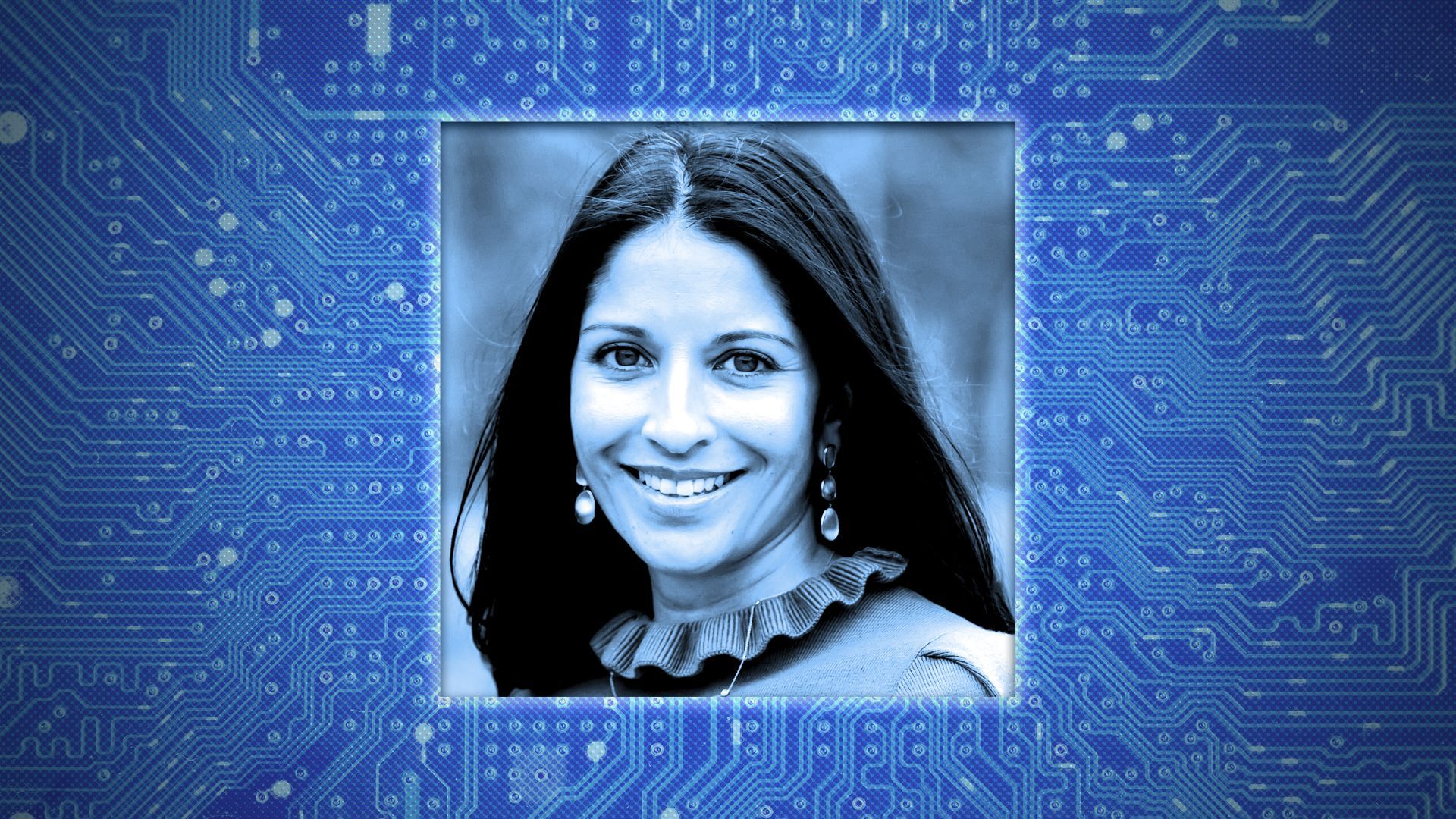
AI, which has often been charged with gender bias, is getting put to work to help provide more equitable care for women.
The big picture: Lisa Shah's interest in AI started purely as a means to an end. As a physician and chief medical officer at Twin Health, a metabolic care startup based in Mountain View, California, Shah is mainly concerned with getting to the root cause of chronic metabolic disease.
- She sees AI as a way to get there — or at least as a good start.
Twin Health's tech provides each patient with a digital "twin" of their unique metabolism created with more than 3,000 daily data points collected through a set of Bluetooth-connected sensors — including a continuous glucose monitor, a heart rate-monitoring watch and blood-pressure sensors.
- The technology is available to both men and women, but Shah sees a special opportunity in using it to redress gender imbalances in care.
Between the lines: Shah told Axios that women do nearly all of the caregiving for the people they love, but are severely underserved when it comes to their own health.
- "They're the caregivers, they're taking care of their aging parents, they're taking care of their children, their spouses," Shah says.
- Women's lack of access to health care comes from their failure to prioritize their own health over the care of others, according to Shah. But the problem is bigger than that.
- "Most of our formative years of our health — particularly metabolic health— women are seeking care for their gynecological organs and reproductive organs."
- "We're not always seeing an internist," Shah says. "We're not focused on our heart. We're not focused on our weight. We're not getting that level of care. So then fast forward and you have a real difference in outcomes for women with heart disease."
How it works: Twin Health uses digital twin technology to gather real-time data and track individual patients' progress to help them avoid chronic metabolic conditions like obesity, prediabetes and Type 2 diabetes.
- The twin passes this information back to health care providers and sends patients personalized nutrition, activity, sleep and other recommendations through the Twin Health mobile app to help with behaviors that can potentially prevent and even reverse metabolic disease.
- Twin Health works with employers and health plans, and individual members don't pay directly for the service.
Case in point: Exactly where a patient is in her menstrual cycle can affect hormones, stress levels, food cravings and other factors that may impact conditions like diabetes. But doctors — and women themselves — aren't always sure where in the cycle a patient is.
- AI is able to incorporate that information with the rest of a woman's health data to give more tailored suggestions.
- Even better, Shah says, is that all of this data is presented to a human health professional (which Twin Health calls "a compassionate clinical care team") to work directly with a patient.
- Every Twin member's care is overseen by a doctor or advanced practice clinician to monitor care and prevent harm.
If you tell your twin that you're having toast for breakfast, it might suggest that you pair that with an egg for more protein. If you tell it you don't like eggs, it will suggest something else equally healthy.
- Shah says the reminders and suggestions simulate empathy and non-judgement, which she says works really well with the female patients she's talked to.
- Women, Shah says, "are also very savvy with the data."
- According to Shah, this is particularly true of busy women working and taking care of families. "Imagine the power of sitting and feeding your little one. And knowing that when you take that chicken nugget or piece of pizza bagel off their plate, you're going to see immediately a rise in your glucose, or you're going to know immediately that that choice wasn't optimal for you."
Yes, but: AI is still health care's biggest wild card, and it remains to be seen whether the hype can truly live up to the promise.
- Since AI is created by humans and learns from data produced by humans, it naturally contains its own biases, despite safeguards.
What's next: Behavioral change is still one of the biggest challenges in health care, Shah says: "We would have solved so many of the world's health care problems if we could figure that piece out."
2. Adobe will let creators digitally sign their work

Adobe is readying a web tool that aims to allow artists and other creators to easily authenticate digital works as their own.
Why it matters: The tool, which enters private beta today and will be made more broadly available next year, is part of Adobe's broader strategy to help authenticate digital content by showing how it was captured or created and indicating any changes made using AI.
Driving the news: The free public beta of the Adobe Content Authenticity web app is planned for the first quarter of next year, and will allow content creators to add credentials to their work.
- Creators will also be able to indicate whether or not they want their content to be used to train generative AI. Adobe is pledging to respect these decisions and said it is working to encourage other companies to do the same.
- Credentials applied using the app can persist even if the content is altered or a screenshot is made, Adobe says, thanks to digital watermarking and other techniques.
- Adobe is also releasing a Chrome browser plug-in that will allow consumers to see credentials related to any content they are viewing.
The big picture: Adobe's overall content authenticity initiative also aims to verify digital images from the moment of capture, in the case of photos and videos, or from the moment of creation, in the case of digital images.
- Adobe and others also use these credentials to note the role that generative AI played in the creation of an image or video.
- The broader effort, which began in 2019, now has 3,700 companies supporting it, including publishers, platforms and hardware makers.
Yes, but: Apple has yet to publicly commit to Adobe's approach. Google has joined the Adobe effort, but has not yet built content credentialing into the Android camera process.
- And detecting AI-created images remains a big challenge.
- Adobe acknowledged there is more work to be done.
- "When we started this, we said, 'This is a 10-year journey,'" Adobe CTO Ely Greenfield told Axios.
3. Training data
- Big news sites have cut back on blocking OpenAI's web crawlers as more media companies make deals with the ChatGPT maker to use their data to train OpenAI's models. (Wired)
- A federal judge ordered Google to open up app distribution on Android, including allowing rival app marketplaces in the Play Store. Google says it will appeal. (CNBC, Google)
- Elon Musk is using the @America handle on X to promote Trump. (Axios)
- Samsung apologized following a disappointing earnings report. (CNBC)
Thanks to Megan Morrone and Scott Rosenberg for editing this newsletter and to Caitlin Wolper for copy editing it.
Sign up for Axios AI+
