The digital twin baby boom

Add Axios as your preferred source to
see more of our stories on Google.
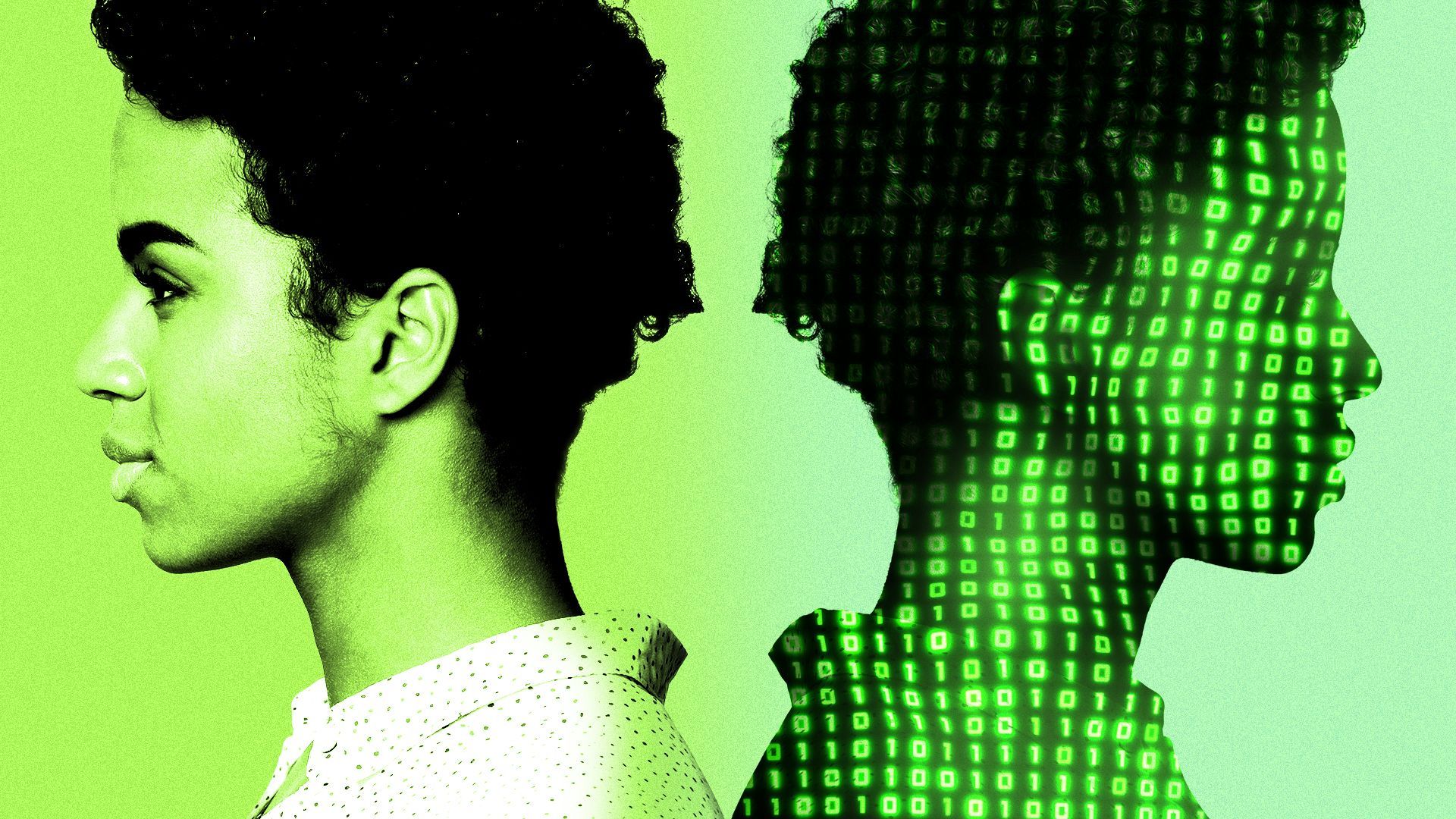
Illustration: Sarah Grillo/Axios
The AI industry sees digital twins — virtual likenesses of a human or an object, built for research — as a powerful practical use for the technology it's spending billions to build.
Why it matters: Tech companies believe they can unlock AI's potential by using digital twin technology to make copies of our physiologies, personalities and the objects around us.
Zoom out: Right now "digital twin" can mean anything from a statistical model of a complex phenomenon, like an organism or a weather system, to a video avatar of a billionaire trained on his speeches and posts.
- The term has recently become shorthand for AI models that promise to reverse disease, go to boring meetings in our stead and comfort our loved ones after we die.
- Digital twins can be an AI model of a person or a part of a person used to analyze large quantities of health data in order to provide more personalized treatment or speed up drug development.
- They can also be an AI model of a thing like earth, a city's topography or your trash bin.
By the numbers: Gartner predicts the market for digital twins will balloon to $379 billion globally in 2034, from $35 billion this year.
- Markets and Markets says the health care industry is driving the growth of digital twin technology, with an estimated market size of $110.1 billion by 2028.
The big picture: The concept of digital twins began in engineering and manufacturing — but expanded data storage and connectivity have lowered the cost of creating and maintaining them, opening new opportunities.
- The technology can seem magical because the models update automatically as new data becomes available.
Zoom in: Veteran tech entrepreneur and LinkedIn co-founder Reid Hoffman created his digital twin, Reid AI, with a custom GPT built on two decades of his videos and writings.
- Hoffman told Axios' Mike Allen at an Axios HQ event Monday that he wanted to show "the positive things we can do with all these technologies."
- Hoffman previously wrote on LinkedIn that he was curious "how interacting with it might help me think differently, express myself in new ways, or connect ideas that I might not have otherwise."
- Earlier this year, he released videos of himself conversing with the twin, and he sent it for an on-stage interview at a Bloomberg event.
What they did: Hoffman used Hour One to create the video and ElevenLabs for the voice.
- He told Axios that he would only consider letting Reid AI "free in the wild" in low-stakes interactions on topics where the AI had "high accuracy."
- "It'd probably be advice to entrepreneurs, because there's a lot of content from me out there," he said.
Yes, but: Most digital twins aren't video avatars, and the everyday utility of this form of AI is likely to emerge in more statistics-heavy applications.
Case in point: A startup called Twin Health creates digital twins of patients using Bluetooth-connected sensors to measure blood pressure and a heart rate-monitoring watch.
- The twin passes this information back to health care providers, but also gives its human tips on diet, sleep and exercise.
- Rather than dispensing generic advice — like Apple Watch reminders to stand up every hour — the twin's guidance is personalized.
- Patients, many of whom are diabetic, are encouraged to log what they eat and get feedback from their twins.
- Jahangir Mohammed, founder and CEO of Twin Health, told Axios that people reverse multiple diseases with the company's technology. "People that are diabetic become non-diabetic," he says. "[They] get off medicines."
The bottom line: Like the wider AI boom that's driving it, the digital twin market starts with eye-catching stunts. but promises more important everyday benefits.
