Axios 2028

November 15, 2026

🍂 Welcome back to our weekly look at the run-up to the 2028 presidential election. 1,689 words, 6½ minutes.
1 big thing: 👀 Vance waiting to reveal 2028 plan
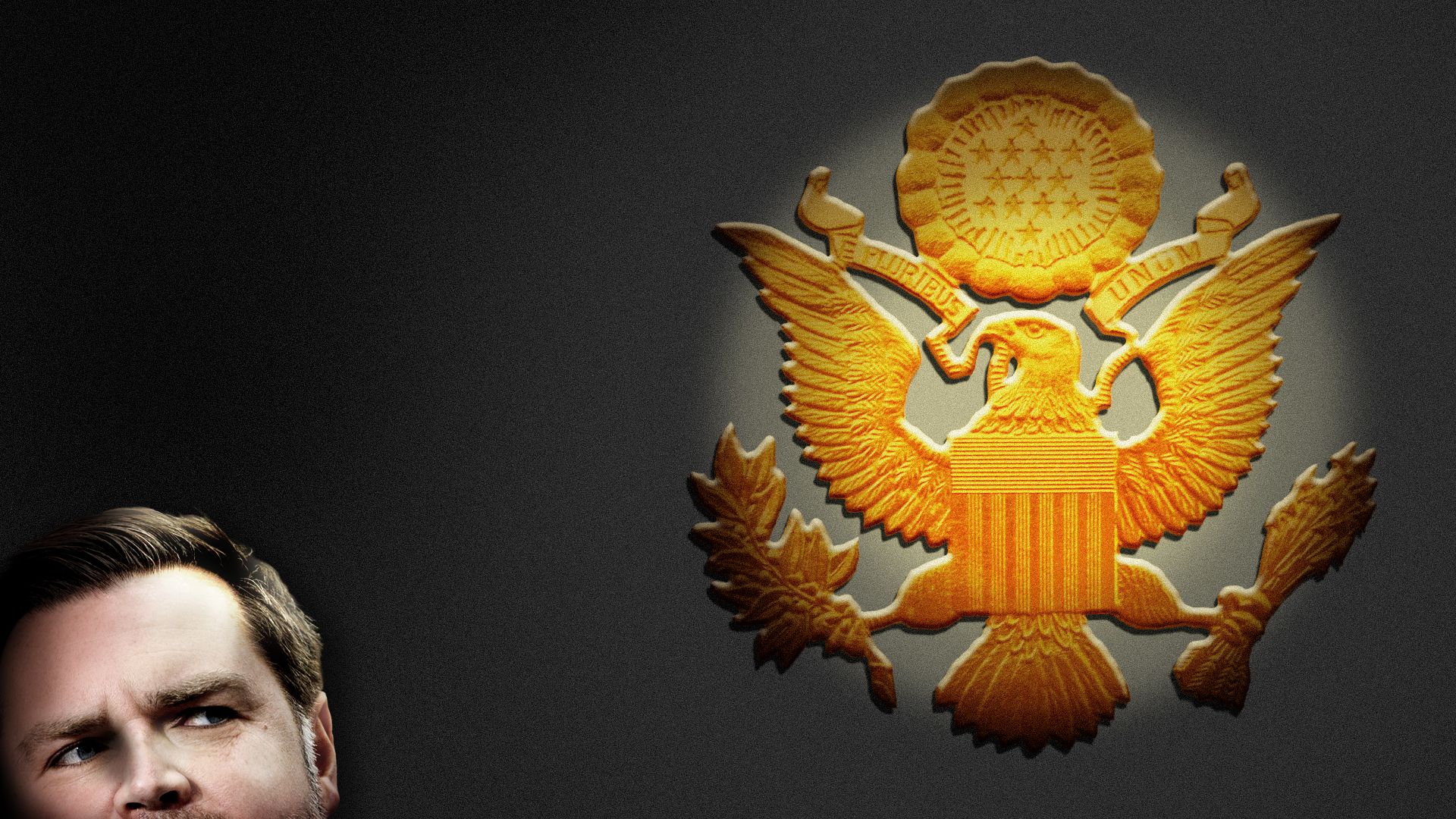
Vice President Vance won't make a final decision on whether to run for president in 2028 until after the new year — and may wait until late spring to announce his intentions publicly, two sources with knowledge of his plans tell us.
🤔 Why it matters: Vance remains the early favorite to succeed President Trump as the GOP's presidential nominee, but the party's midterm losses have complicated his political future and could reshape the 2028 field.
- People familiar with Vance's thinking say he's genuinely undecided about running, and that his decision-making timeline was in place before the midterms. Advisers caution that the timing could change, however.
- Vance is still discussing a potential bid with his family, including his wife, Usha, following the birth of their fourth child, the sources said.
💪 The big picture: Vance allies say the midterm losses haven't changed his standing as the early 2028 GOP front-runner, citing his donor network, political infrastructure and name recognition.
- Vance co-founded the secretive Rockbridge Network, which could anchor his presidential fundraising operation. The group met in Houston after the midterms.
- As Republican National Committee finance chair, Vance has cultivated relationships with major contributors. He has ties to technology donors Peter Thiel, David Sacks and Elon Musk, the GOP's biggest financier.
- Vance campaigned nationwide for the midterms, building relationships with GOP activists and officials who could prove valuable in 2028.
Behind the scenes: Vance's closest political advisers believe he should run in 2028 and that he's likely to do so, according to a person close to the vice president.
But the GOP's midterm losses have given Republicans who want to move on from the Trump administration an opening to argue for a different direction in 2028.
- Vance likely will have to answer for the Trump administration's record in 2028, potentially complicating his presidential ambitions.
- He privately opposed the Iran war, and some Republicans interpreted his post-midterm criticism of the conflict as an effort to distance himself from Trump's decision to attack Iran.
The intrigue: Republicans close to Vance see Trump's continued presence as another reason to delay announcing his 2028 plans.
- Vance is wary that launching a campaign too early could shift attention away from Trump and risk alienating him.
- Trump said that "a lot of people didn't like [Vance's] comments" about the Iran war, but added that he wasn't among them and insisted their relationship wasn't affected.
🐘 Zoom in: While Vance weighs a presidential campaign, a few other Republicans also are doing so — namely Texas Sen. Ted Cruz, who's among those actively preparing for a potential 2028 run.
- Cruz's team has held meetings about a run, according to people familiar with his operation. But many Republicans, including some Cruz allies, doubt he could seriously challenge Vance, particularly if Trump endorses the vice president.
Secretary of State Marco Rubio is viewed by some Republicans as a potentially more formidable rival to Vance.
- 💰 Rubio has attracted support from influential GOP figures, including megadonor Ken Griffin.
- But Rubio repeatedly has said he would support Vance if the VP were to run, and Rubio's workload as secretary of state and national security adviser has left him without Vance's ready-made political operation.
Other potential GOP contenders include former Virginia Gov. Glenn Youngkin, Georgia Gov. Brian Kemp and Florida Gov. Ron DeSantis.
- DeSantis has been particularly outspoken, calling the GOP's midterm losses a near "extinction-level event" and pointing to Florida's Republican victories as a model for rebuilding the party.
What they're saying: A Vance spokesperson declined to comment.
— Alex Isenstadt
2. 🤗 Some Dems' 2028 strategy: MANA

🫏 Some Democrats weighing 2028 campaigns for president believe the midterms proved that Americans have soured on Trump-style, scorched-earth political warfare and want a brand of politics that's nicer and more optimistic. Others aren't so sure.
Why it matters: Democrats' midterm blowout has prompted a debate over the lessons of 2026 — whether voters in the 2028 primary will want their own ruthless fighter after two more years of Trump, or will be itching for a more unifying figure.
Zoom in: That divide was reflected in several potential 2028 contenders' comments around the midterms.
- 📉 Former Transportation Secretary Pete Buttigieg told his supporters that the end of the Trump era "means a politics where we can check the news and actually feel our blood pressure come down a little."
- In his reelection victory speech, Pennsylvania Gov. Josh Shapiro told supporters that "you declared that you could not be more ready for an end of this ruthless chaos and cruelty."
🔥 In California, Gov. Gavin Newsom — who led the successful ballot measure to create more Democratic House seats in response to Trump's redistricting push in red states — boasted that California "fought fire with fire."
- Newsom mocked Democrats who he said would have responded by merely writing op-eds in the New York Times.
- "Donald Trump is not screwing around, nor are we," Newsom said at a preelection rally.
🖼️ The big picture: The midterm results provided an argument for each side.
- Several key victories for Democrats in red states came from candidates preaching decency, or voters recoiling from vicious Republican attacks.
- In Kansas, Sen.-elect Adam Hamilton said one of his campaign's big ideas was "decency" — and that he wanted to become the "best friend" of Sen. Jerry Moran (R-Kan.).
- In Ohio, Gov.-elect Amy Acton told her supporters that "basic decency is on the ballot" after her opponent and Vance defended an attack ad featuring Acton's mother, from whom Acton had been estranged since childhood after accusing her stepfather of sexual abuse.
🤠 Texas Sen.-elect James Talarico, a seminarian and the first Democrat to be elected statewide in three decades, said that "love my neighbor" informed his approach to politics.
- Talarico pressed the point last week: "It's been 10 years of this kind of politics — politics as blood sport, politics as trolling and owning and name-calling, politics as professional wrestling. It tears families apart. It ends friendships, and it leaves us all feeling terrible."
The other side: Other Democrats who won key races embraced something like Newsom's edgier approach by pledging to fight fire with fire, and to not unilaterally disarm against Republicans.
- 🥊 Michigan Sen.-elect Abdul El-Sayed said on the campaign trail that when his opponents go low, he doesn't take the higher ground. He prefers to take them "to the mud and choke them out."
- He added that too many Democrats "tell you they're fighting, only to show up with a strongly worded letter."
Reality check: Hamilton, Acton and Talarico had unifying messages, but they and their allies also ran tens of millions of dollars in negative ads against their Republican opponents.
- In 2008, Barack Obama also had a larger theme of change and unity but ran a campaign that unapologetically attacked his opponents.
— Alex Thompson
3. 🎉 Dems divide over … the celebration
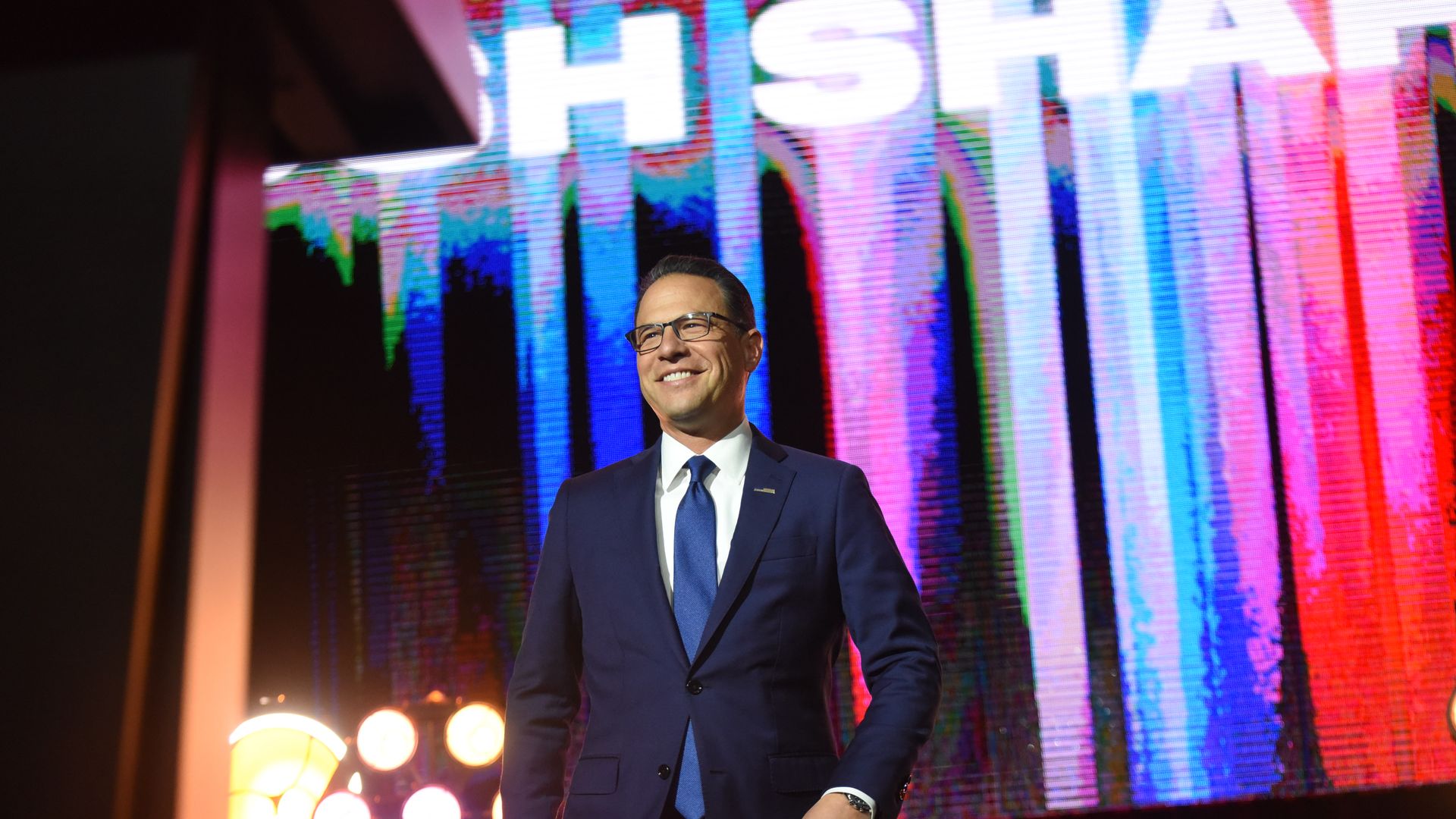
🥳 DENVER — Thousands of Democrats gathered here this weekend for a giddy postelection summit, reveling in their party's historic midterm victories and touting the center-left strategy they say powered them.
- But some progressives saw the event as a lavish, out-of-touch affair bankrolled by billionaires — exactly what Democrats just campaigned against.
- 👎 "I'm all for celebration, but perhaps a fancy retreat does not exactly meet the tenor of the moment," said Josh Orton, president of the liberal group Demand Justice and a veteran of Bernie Sanders' 2020 campaign.
Why it matters: The competing views of What's Next, the buzzy confab held by the influential centrist organization Majority Democrats, offer an early glimpse of the ideological battles over health care, money in politics and other issues that will define the party's 2028 presidential primary.
Zoom in: Democrats in the Mile High City were practically vibrating with happiness, still not quite able to believe they'd won back both chambers of Congress and flipped deep-red states such as Mississippi and South Carolina.
- "The vibes are excellent," Delaware Rep. Sarah McBride, a member of the Majority Democrats, said in an interview.
- "The last high-water mark, we were all in our houses on Zooms," she added, referring to the 2020 presidential election. "This is the first time there's been an undeniable capacity to celebrate widespread wins in the last decade."
- 🥂 Free drinks flowed. Political operatives sported bomber jackets embroidered with the phrase "Majority Democrats." Speakers were immortalized in rock concert–style posters on the walls.
For a brief moment at Denver's Mission Ballroom, the often-in-disarray Democratic Party looked united.
- Several presidential hopefuls downplayed the party's divides in speeches.
- Pennsylvania Gov. Josh Shapiro said onstage that ordinary people don't give "a damn" about "where we fall on some imaginary political spectrum."
- Michigan Sen. Elissa Slotkin quipped in her address that elected officials who were fighting over progressives vs. moderates had "missed the plot."
The other side: But others in the party weren't interested in all the kumbaya.
- Young protesters sneaked into the event and heckled House Minority Leader Hakeem Jeffries (D-N.Y.), shouting "You're a f**king traitor!" while calling for Medicare for All and impeachment.
- Some audience members were palpably annoyed, yelling "Shut up!"
💵 Another flashpoint emerged over high-dollar donors and super PACs.
- Majority Democrats — which is largely funded by a billionaire couple and describes itself as an alternative to both the "activist left" and a "gerontocratic establishment" — is already in the crosshairs of the Lever, a progressive publication.
- Majority Democrats' funding has been the focus of reporting by the Lever. The group tussled with the news site over the Denver event, initially denying it press passes and later blocking one of its journalists from interviewing an elected official.
- David Sirota, founder of the Lever, said the group's actions were "Trump-like attempts at retribution." But there was a silver lining for the outlet: The back-and-forth generated the single biggest influx of new subscribers in its history, he said.
What they're saying: "What's Next was an overwhelming success: It brought together 3,500 Democrats from across the political spectrum to talk about what worked this cycle and where we go next," said Majority Democrats spokesperson Vidhya Jeyadev.
— Holly Otterbein
🙏 Thanks to David Lindsey, Axios managing editor for politics, for orchestrating. Copy edited by Brad Bonhall.
📪 Invite your friends to get Axios 2028 here.
📆 See you next Sunday!
Sign up for Axios 2028