D.C.'s foie gras fight heats up as voting nears

Add Axios as your preferred source to
see more of our stories on Google.
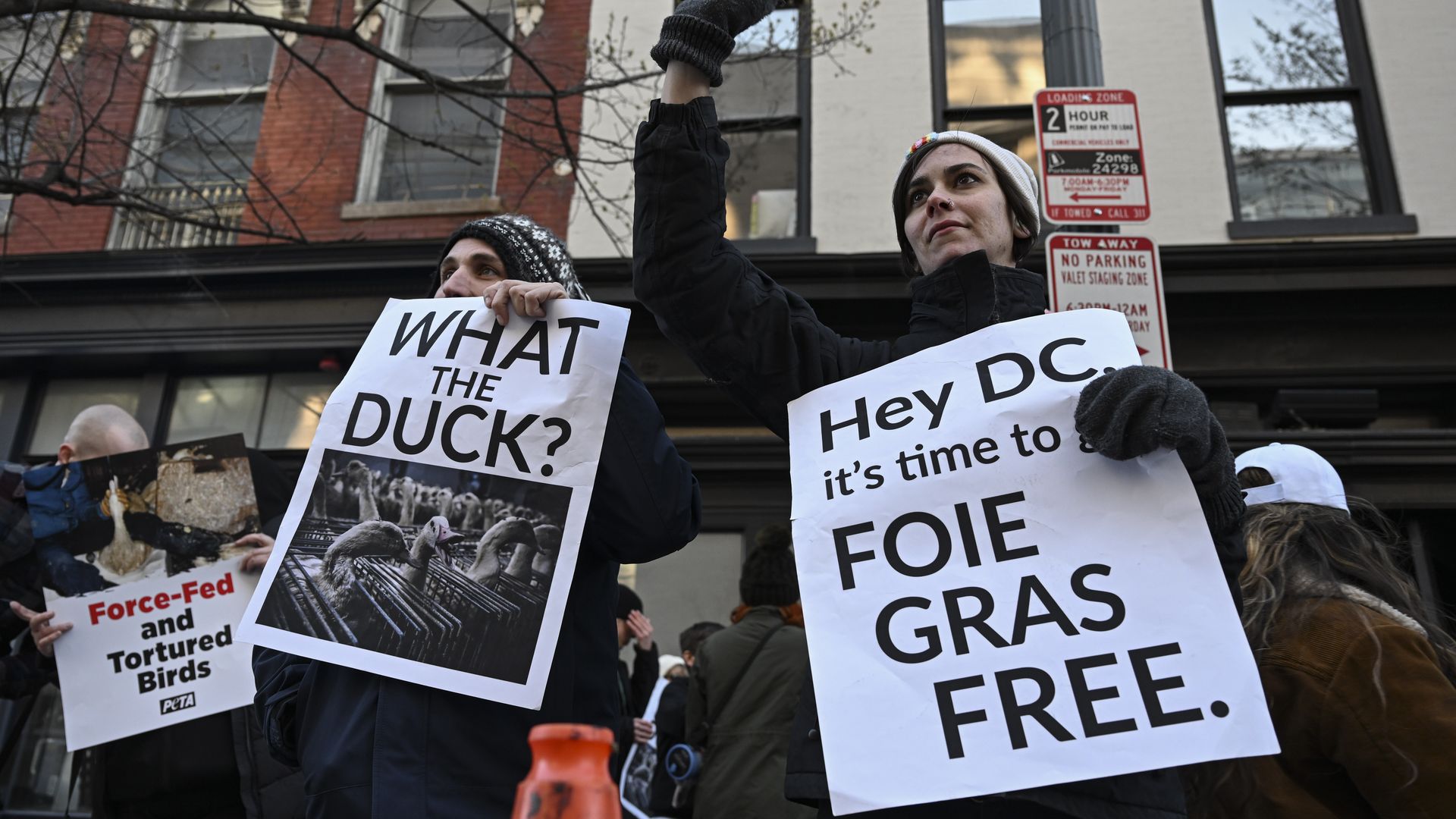
Protesters call for a foie-free D.C. in 2023. The fight has now escalated to the polls. Photo: Celal Gunes/Anadolu Agency via Getty Images
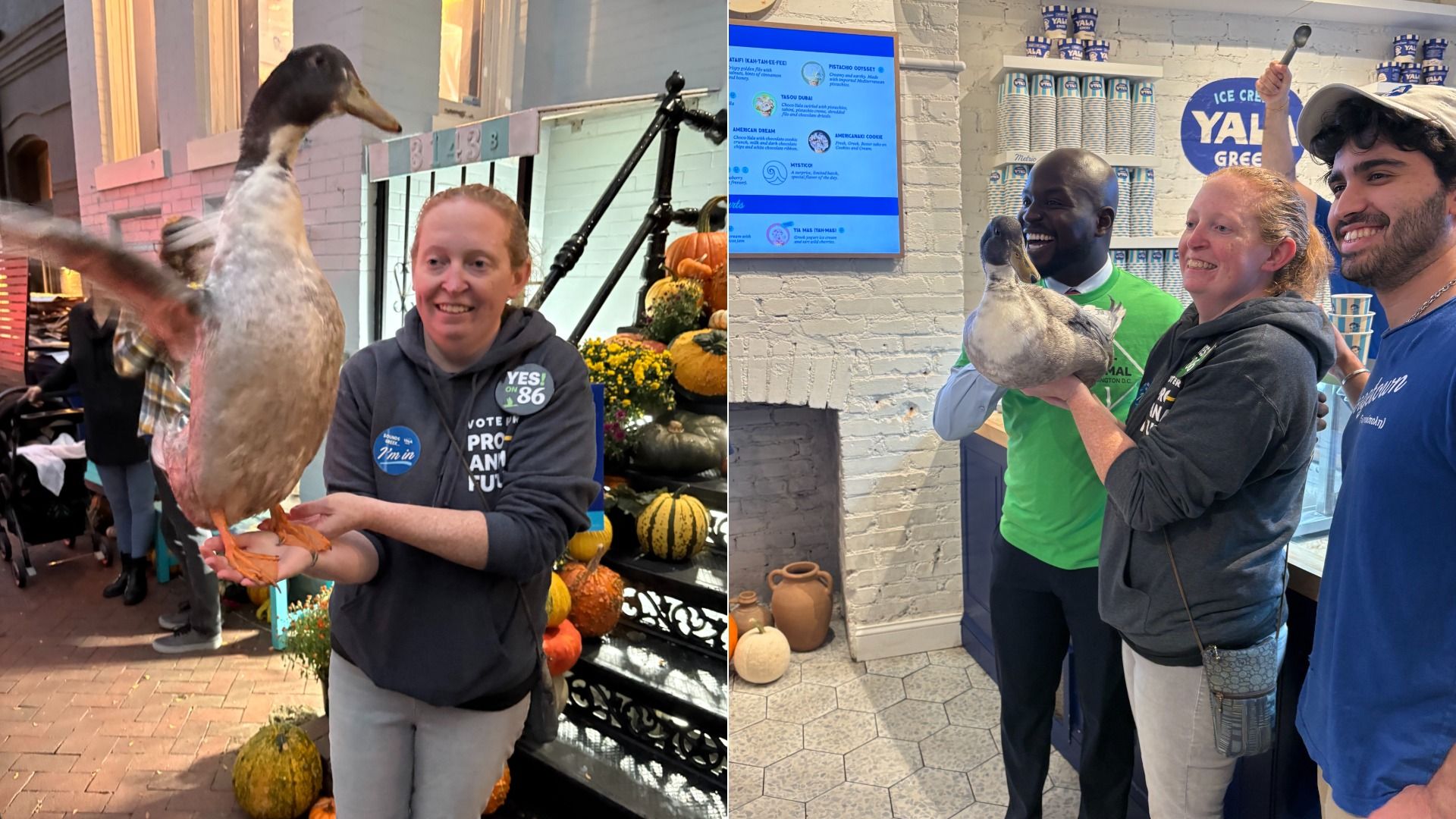
A duck and a politician walk into an ice cream shop. It's not the start of a joke, but the scene in Georgetown last week as activists ramped up their campaign to ban foie gras in D.C.
Why it matters: With early voting starting Monday, D.C. residents will decide whether to 86 the luxury liver from city menus and markets.
- But the fight over foie gras is already spilling into restaurant protests, legal threats and questions about outside influence.
State of play: At Yala Greek Ice Cream, at-large D.C. Council candidate Oye Owolewa joined activists and Olivia Gray, a pet duck turned campaign mascot, to hand out stickers and yard signs proclaiming, "Save the ducks, vote yes on I-86."
- Stickers came with free ice cream, paid for by Owolewa's campaign. A vegan, he came to the cause like many others: led by anti-cruelty messaging, not a bad taste.
- "To be quite honest, I didn't even know what foie gras was," he tells Axios. "I never ate it before. I never thought about it."
- The event was part of a growing push by Pro-Animal DC, which says more than 200 volunteers have joined its effort to ban foie — produced by force-feeding ducks and geese to enlarge their livers.
Follow the money: Pro-Animal DC spent more than $336,000 through Sept. 10, according to campaign finance records.
- Major backers include Oregon-based Pro-Animal Future, which spent around $224,000, and Dr. Bronner's — the "cruelty-free" California soap company, which donated close to $85,000.
Among the expenses: More than $7,700 in Airbnb accommodations, reported as an in-kind contribution from the Oregon organization. Pro-Animal DC tells Axios the housing was for 60 out-of-town volunteers who traveled for a signature-gathering push dubbed "Goosapalooza." Most stayed for the July weekend, though a few remained for a month.
- Organizers collected a record 31,726 valid signatures total to qualify for the ballot.
🍽️ The other side: Butterworth's chef Bart Hutchins, one of the few outspoken culinary opponents, is planning a foie gras tasting menu during election week to protest the proposed ban.
- He says restaurants are outmatched by well-funded activists, while fellow chefs are reluctant to speak out for fear of backlash.
- "They have national donors. They have lobbyists. They have paid canvassers," Hutchins tells Axios. "They are super well organized and financed. We're [chefs] rarely well organized or financed."
The intrigue: Why target a luxury delicacy that few people eat when factory-farmed chickens face more widespread animal welfare concerns?
- "Foie gras, that's what we have the capacity to do at the moment," Pro-Animal DC campaign director Justin Clark tells Axios. "We would rather take on something smaller and save a lot of animals" than lose a bigger, multi-million dollar battle.
Between the lines: Not all animal rights activists agree on tactics — and not all restaurants oppose the ban.
- Pro-Animal DC favors legislation, while the separate D.C. Coalition Against Foie Gras has staged confrontational protests, storming inside restaurants and interrupting a wedding, drawing accusations of harassment.
- The campaign has attracted unlikely allies, including DC Carnivores meat-fluencer James Nance and local chain Busboys and Poets, which has endorsed Initiative 86, even though they don't technically have a duck in the fight.
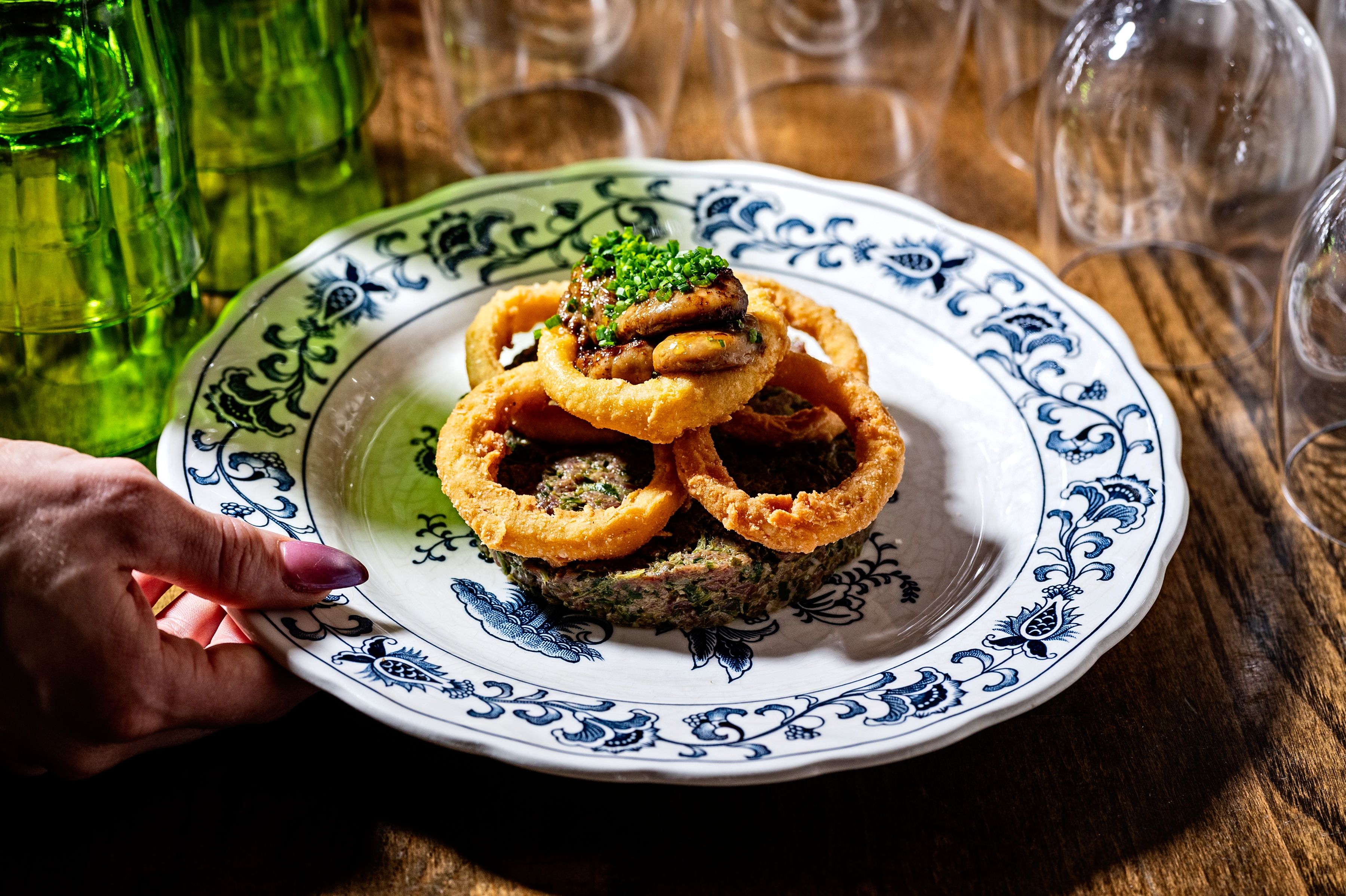
What happens if it passes? The ban would take effect July 1, 2027, with fines of $1,000 to $5,000 per violation — and additional penalties for each day a violation continues.
- Repeat offenders could lose their business licenses. The city's chief financial officer estimates enforcement would cost roughly $314,000 over four fiscal years — not an eye-popping sum, but not insignificant in a budget shortfall.
- "I dare them to get the funding for foie gras inspectors when they can't afford to fix our roads," Hutchins says.
The big picture: Foie gras bans have a history of culinary resistance.
- Chicago chefs staged protest dinners and devised underground "duckeasies" before the city repealed its ban in 2008, just two years after it took effect.
- New York City's 2019 ban has faced years of litigation, while California's statewide prohibition remains in place.
- D.C. diners could simply cross the Potomac for their foie gras fix.
What's next: Hutchins isn't just a foie-loving chef. His Capitol Hill bistro is a favorite haunt of right-wing power players, including Steve Bannon and investor Raheem Kassam of Breitbart, where the MAHA crowd goes to feast on bone marrow and seed oil-free indulgences.
- Now he's considering raising money for a legal fight if the ban passes.
The bottom line: Even if voters approve the ban, Hutchins says he won't voluntarily remove foie gras from his menu.
- "I'll let the city fine me into closing," he says. "I'd rather pick up stakes and move the entire restaurant to Virginia."