D.C.'s economy is down. Taxes could go up.

Add Axios as your preferred source to
see more of our stories on Google.
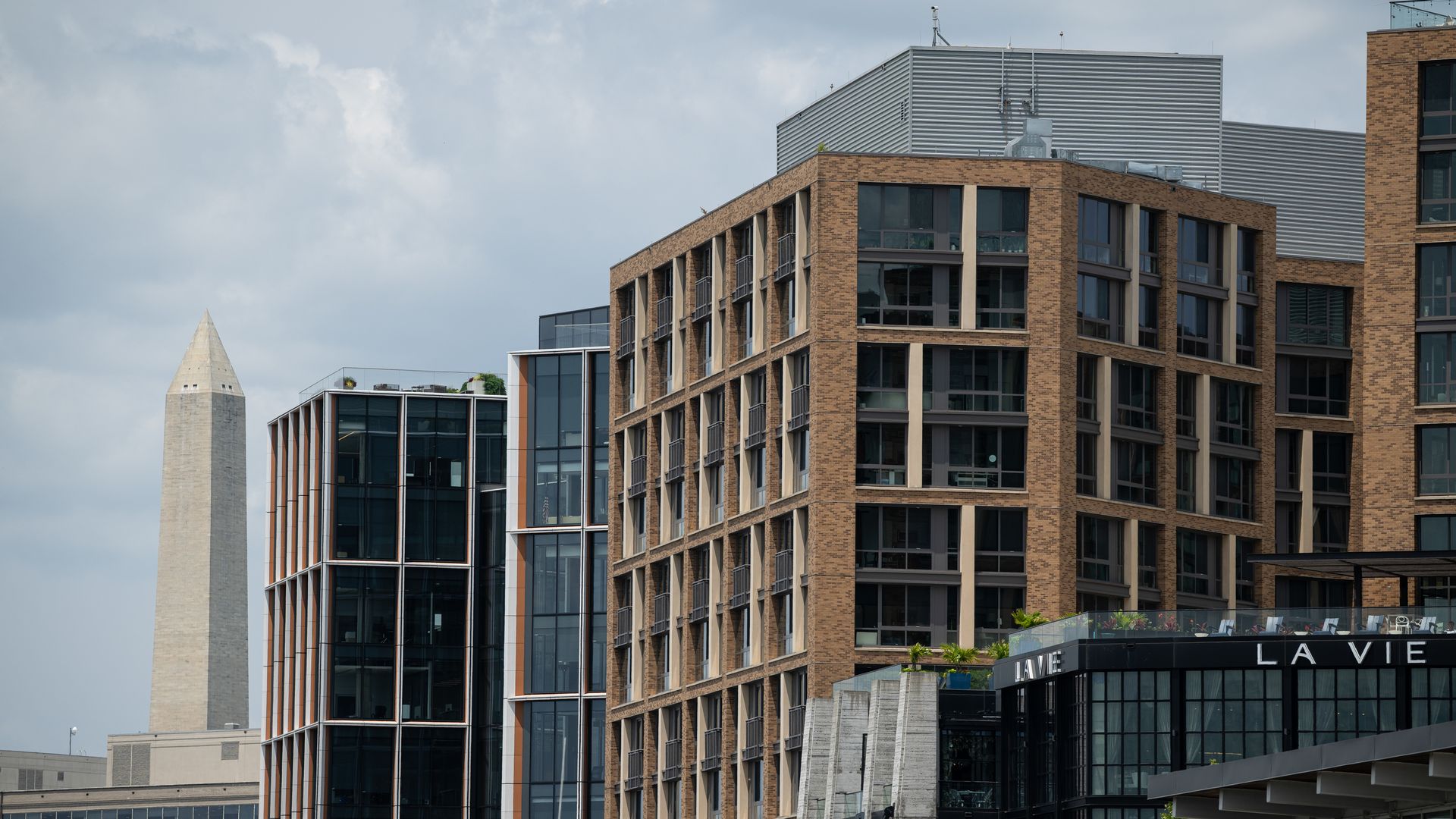
Tax increases could target upscale second homes, like luxury condos at the Wharf. Photo: Graeme Sloan/Bloomberg via Getty Images
D.C. leaders are eyeing a menu of tax increases to make up for a declining economy.
Why it matters: An agonizing dilemma besets a left-leaning City Hall — what to do now, with the 2010s economic boom way over, and with President Trump gutting the city's biggest employer, the federal government.
State of play: The remedies range from taxing stock market gains of the wealthy, a business tax on K Street's lobbying shops and law firms, and a pied-à-terre tax on upscale second homes.
- In one corner, progressives want businesses and the affluent to chip in more to avoid cuts to programs. In the coming years, D.C. could be forced to cut its education budget, not to mention slim down child care benefits and affordable housing subsidies.
- Meanwhile, business leaders say an onslaught of new taxes risks spawning an existential crisis: More companies leave for Virginia, growing industries like tech never move in, and D.C. enters an economic spiral.
"A future of ever more riches is never certain," said former Mayor Anthony Williams, testifying at a D.C. Council hearing over the city's tax policies last Friday.
- Williams — who came across like the wise old sage of D.C. — advised lawmakers to cut government spending "that's going out of control." Activists sitting behind him practically rolled their eyes.
The other side: Nick Johnson, a longtime expert in local tax policy, advocated for a "business activity tax," aka BAT.
- The BAT would close what critics call a loophole benefitting law firms, lobbyists and consultants — many of whom now worry likely-next-mayor Janeese Lewis George will do exactly that to fund her "child care for all" subsidy.
- Supporters include Council member Elissa Silverman, who recently hired a staffer with firsthand experience of New Hampshire's BAT.
Yes, but: None of these ideas may be a shot in the arm.
- Chief Financial Officer Glen Lee said a thorough study is needed to find out who'd get taxed under a BAT (critics also warn of legal challenges). "It might take a long time to realize that revenue," Lee said.
- A pied-à-terre tax? Unlikely until at least 2028.
- And if the city decides to also levy a new tax on capital gains, or rethink it's property tax assessments, or some other idea, the tax office will need more time to process everything at once.
- "We can only handle so many major changes," Lee said.
What's ahead: Council members will likely wait to make final decisions on new taxes until next year, when Lewis George takes the mayor's suite.