A devastating frost is reshaping Virginia wine

Add Axios as your preferred source to
see more of our stories on Google.
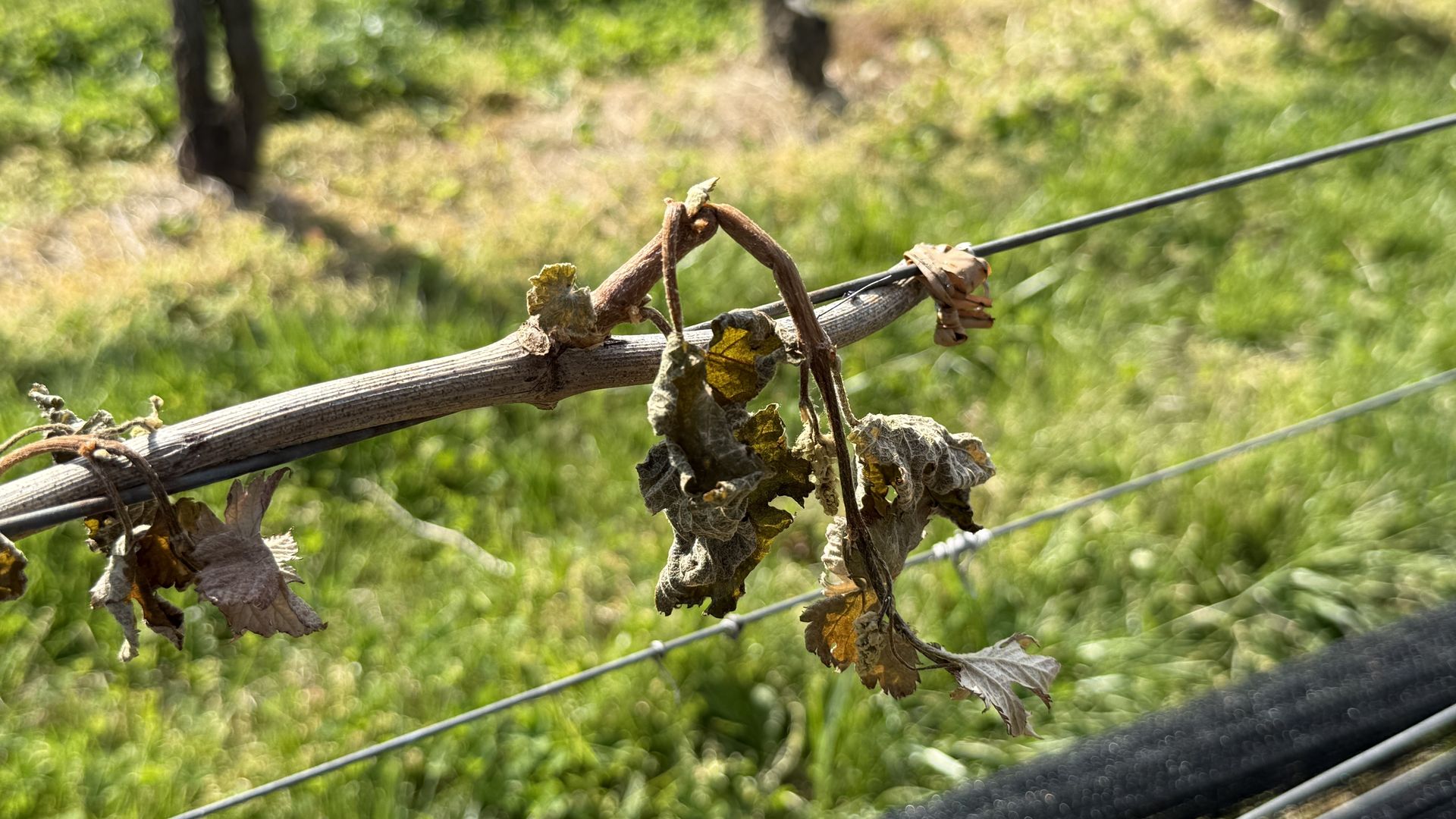
A freeze-damaged vine at Boxwood Estate near Middleburg, which suffered significant losses. Photo: Courtesy Boxwood Estate
It's harvest season in Virginia wine country, but visit some vineyards and you may notice a crucial element missing: the grapes.
Why it matters: April's devastating freeze, which walloped the local apple season, is now reshaping what Virginia wineries make — and what wine lovers will eventually find in tasting rooms, shops and restaurants.
- Expect fewer bottles of some favorite whites, more blends and unusual wines born out of necessity.
- Many wineries have enough inventory from fruitful years to cushion the blow. The real squeeze could come later.
The big picture: A late-April hard freeze sent temperatures into the 20s across much of Virginia just as vulnerable vines were budding, causing widespread losses that resulted in a federal disaster declaration. Then came the drought.
- Some growers lost their entire crop.
- Vineyards at higher elevations tended to fare better.
Zoom in: At Boxwood Estate Winery in Middleburg, one of Virginia's premier producers, winemaker Sean Martin says the estate lost over 90% of its white varietals.
- A typical harvest yields 70-90 tons of grapes for nine wines. This year, Boxwood was left with less than 6 tons.
- Rather than stretch that tiny harvest, Boxwood is putting it all toward one $60 sparkling wine.
- "We just felt that was the best return we could get on the fruit," Martin says of the Crémant.
Reality check: Wineries aren't running dry. Boxwood and other established producers have enough inventory that they won't feel the full sales impact immediately.
- Whites and rosés from this harvest normally wouldn't be bottled until spring; reds could take two years.
- More concerning: Martin estimates about 10% of Boxwood's vines died and will need to be replanted.
Meanwhile, Slater Run Vineyards in Upperville lost roughly 75% of its crop and dropped the remaining fruit from its battered white vines rather than further stress them.
- Slater Run normally makes up to 3,000 cases. This year, winemaker Preston Thomas expects as few as 520.
- With consumers gravitating toward whites and rosés, the winery is turning much of its surviving red fruit into pink wine.
- It's also pulling some whites from its tasting-room menu to stretch inventory through next year.
The intrigue: Grapes that did survive have become hot commodities.
- Hazy Mountain Vineyards & Brewery in the Blue Ridge Mountains normally harvests around 160 tons but expects only 20 this year. Production director Jason Hayman says grapes he recently put on the market were spoken for in about a day versus the typical week.
- "People basically called and said, 'We'll take whatever you have,'" he tells Axios.
- Even less-popular varietals, including Grüner Veltliner and Riesling, sold. Hayman raised prices about 20%, to $3,000 per ton.
Between the vines: The grape scramble could produce some unique wines.
- Growers and winemakers expect more blends and non-vintage wines as producers mix varietals and vintages to fill gaps.
- White grapes are particularly scarce. "People are starving for Chardonnay," one winemaker says.
Yes, but: Wineries have an escape hatch: Buy grapes or bulk wine farther afield.
- The broader wine industry is struggling with falling consumption and excess inventory, making surplus West Coast juice relatively cheap.
- Michael Shaps, who's been making wine in Virginia for 32 years, says some producers are bringing in outside fruit. He's planning to import bulk wine from his French properties, something he also did after Virginia's major 2007 frost.
Friction point: For wineries that've built their identity around Virginia-grown wine, that's not an easy choice.
- "We are a Virginia winery. We always have been, we always will be," Thomas says. Slater Run considered buying out-of-state fruit before deciding against it.
Wine geek tip: Check the label. Enough out-of-state fruit means a wine carries the broader "American" designation rather than Virginia.
- Frost-stricken farm wineries can seek state exemptions from Virginia's usual fruit-sourcing requirements.
Zoom out: The disaster comes as Virginia wine has spent decades building a reputation around its own terroir — and earning more space on serious D.C. wine lists.
- "There's a lot of pride in Virginia wine," Thomas says. "I think Virginia's come quite a long way … finding its identity and staying true to itself."
What we're watching: One disastrous vintage is survivable for established wineries with inventory. Another could be a different story.
- Shaps isn't making wine under his own Virginia label this year, instead selling his grapes to the dozen-plus wineries for which he makes wine.
- "The big question mark is what happens next year if there's another weather event," Shaps says. "A lot of wineries won't survive."
The bottom line: At Linden Vineyards, pioneering winemaker Jim Law has weathered Virginia harvests for more than 40 years. His whites are down by more than half this year, but one bad crop doesn't rattle him.
- The speed of the changes does.
Twenty years ago, Law says, winemakers talked about climate change in theoretical terms. Now, "it's like, whoa. How did that happen so quickly?"
- Law remembers harvesting Chardonnay in gloves and jackets, shedding layers as chilly mornings warmed.
- "Now we start with our T-shirts," he says, "and it's downright hot by lunchtime."