A late frost just crushed Mid-Atlantic wineries' 2026 crop

Add Axios as your preferred source to
see more of our stories on Google.
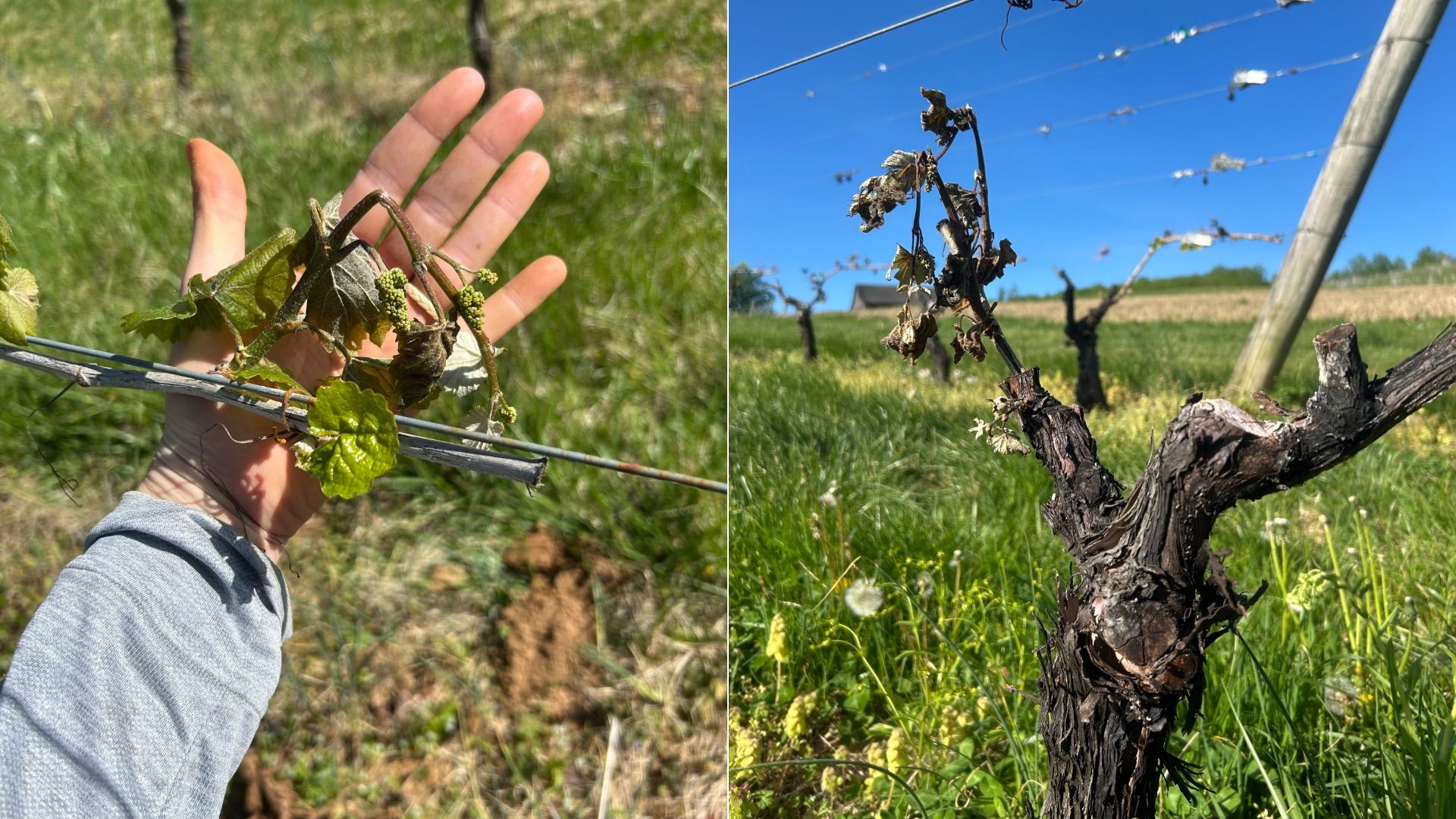
Vines suffering from the frost at Linden Vineyards, which lost up to 30% of their new crop. Photo: Courtesy of Linden Vineyards
A brutal frost just wiped out swaths of this year's grape crop across Virginia and Maryland — dealing a major blow to the region's fast-growing wine industry.
Why it matters: A late-April freeze killed fragile buds, slashing yields for wineries big and small — with millions of dollars in losses and fewer local bottles hitting shelves in the future.
The big picture: An early warm spell pushed vines to bud weeks ahead of schedule. Then temperatures plunged just before Earth Day, causing a devastating late-season frost.
- Early-blooming grapes like chardonnay were hit hardest; later varietals like cabernet sauvignon fared better.
- Virginia's wine industry alone is worth over $8 billion annually, with tourism and hospitality driving much of that impact.
- Smaller wineries with thin margins could feel the pain most.
State of play: Wineries across the region are reporting steep losses. Many are taking to social media to share damage — and urge customer support. A snapshot:
- New Kent Winery near Richmond lost up to 90% of its crop. The Monticello region, lower Shenandoah and Loudoun were particularly hard hit.
- Black Ankle Vineyards in Maryland suffered 100% bud loss across 100 acres, projecting $10 million in lost revenue.
Between the lines: Higher elevations suffered less. For example, Ankida Ridge, a premier winery in the Blue Ridge Mountains, was spared.
Zoom in: Even veterans were caught off guard. "I used to say we were frost-free — not anymore," Jim Law of Virginia's Linden Vineyards tells Axios.
- Law calls himself "lucky" to have lost 20%–30% — a first in 40+ years.
- Across the tight-knit industry, he's hearing from peers who lost everything.
The intrigue: If the region is no longer safe from late frost, it may impact where wine is grown, and what kind.
- Law says he already removed his lowest elevation vines after a previous frost scare, and is considering planting more late-growth varietals like cabernet franc.
Reality check: Vines are resilient, and this isn't the local industry's first shock (cue lanternflies, emerging again now).
- Boxwood Estate Winery near Middleburg lost around 75% of buds, but expects to weather the hit.
- A string of strong recent vintages and existing inventory offer a cushion at the 20-year-old winery.
- That said, vice president Sean Martin tells Axios they're planning to hire fewer workers and put fewer 2026 bottles on the shelf.
What's next: The next few weeks are critical as growers assess whether any secondary buds will produce fruit — though yields will still be lower.
- Industry groups, such as the Virginia Vineyards Association, are evaluating damage across the region, and state officials could step in with emergency support.
The bottom line: Whether losses were partial or total, the message from winemakers is the same: Drink local.
- "We're manufacturing a local product, and we need ongoing local support," says Boxwood's Martin.