Homes Brief
D.C. is warming up to bidets

Add Axios as your preferred source to
see more of our stories on Google.
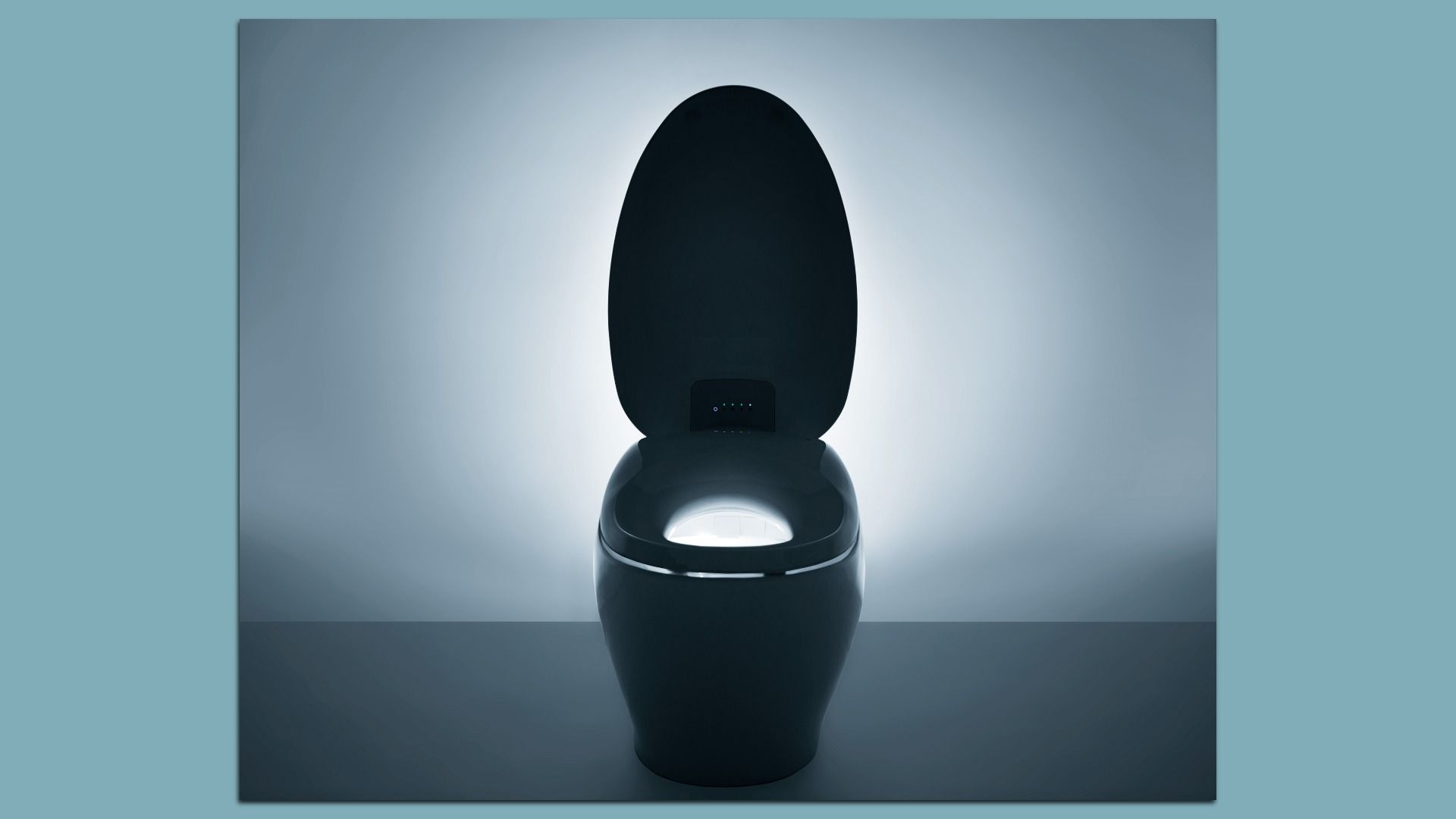
The Neorest NX2 smart toilet. Photo: Toto
In D.C., bidets seem hot right now — and not just because they can warm your bum.
Why it matters: The once-niche bathroom fixture has gone mainstream, with some D.C. homeowners building for a bidet before they even buy one.
What they're saying: "We are now always adding an electrical receptacle behind every toilet, in every project, anticipating that sooner or later toilets will get upgraded," Dale Overmyer, owner of Overmyer Architects in D.C., tells Axios.
- Many clients choose a base Toto model specifically because it can accommodate a bidet seat add-on later, he says. (At his own house, Overmyer recently installed three Ressa by Crosswater toilets.)
The intrigue: D.C. residents eyeing a bidet might soon get a nudge from City Hall. Lawmakers are weighing a bill to make bidets tax-free while slapping a 15% tax on "flushable" wipes to help pay for sewer repairs.
- The push comes after wipes clogged emergency systems during the Potomac Interceptor collapse. Bidets, officials say, are the cleaner (and greener) alternative.
By the numbers: Tushy, one of the leading DTC bidet brands in the U.S., has grown sales at an average rate of roughly 40% per year since 2018, according to CEO Justin Allen.
- In terms of units sold, the U.S. bidet market is projected to grow 30% between 2024 and 2029 nationwide, market research firm BRG Building Solutions, Inc. tells Axios.
Catch up quick: The pandemic was a major inflection point for bidet sales.
- Bill Strang, president of corporate strategy, e-commerce and retail at Toto — a Japanese company that introduced their bidets to the U.S. 40 years ago — calls that time "the great toilet paper panic of 2020."
- Since then, the company has seen a "very high acceleration of growth" in the U.S., Strang tells Axios.
The big picture: Early U.S. adopters included eco-conscious millennials looking to cut down on toilet paper and world travelers who'd had positive experiences with bidets abroad, according to Allen and Strang. But the audience has broadened considerably to include:
- Residents in cold climates who want a warm seat in winter.
- Postpartum women or people managing medical conditions like UTIs or hemorrhoids.
- Homeowners upgrading their bathrooms with spa-like features.
Zoom in: Bidets could be particularly appealing to D.C.'s large immigrant and international resident population, Strang says.
- For example, for the large Muslim community in the metro area, water-based cleansing after using the toilet is a religious practice.
Between the lines: The term "bidet" can cover everything from a simple sprayer attachment on a regular toilet to a fully integrated "smart toilet."
- In Strang's words, a smart toilet is a single appliance in which the porcelain toilet and high-tech "washlet" are built together, instead of adding a bidet seat to an existing toilet.
- These smart toilets can include upgrades like heated seats, adjustable water temperature and pressure, automatic lid opening, and advanced cleaning systems.
Bidet prices vary.
- Tushy's entry-model bidet attachment is $49.99, but Toto's most-tricked-out smart toilet — which Drake gifted to DJ Khaled — is more than $20,000.
The bottom line: "Things get a little bit muddy in Washington, D.C., so it's always nice to have a bidet to rinse off," Strang jokes.
Anna Spiegel contributed reporting.