D.C. escalates crackdown on dangerous drivers

Add Axios as your preferred source to
see more of our stories on Google.
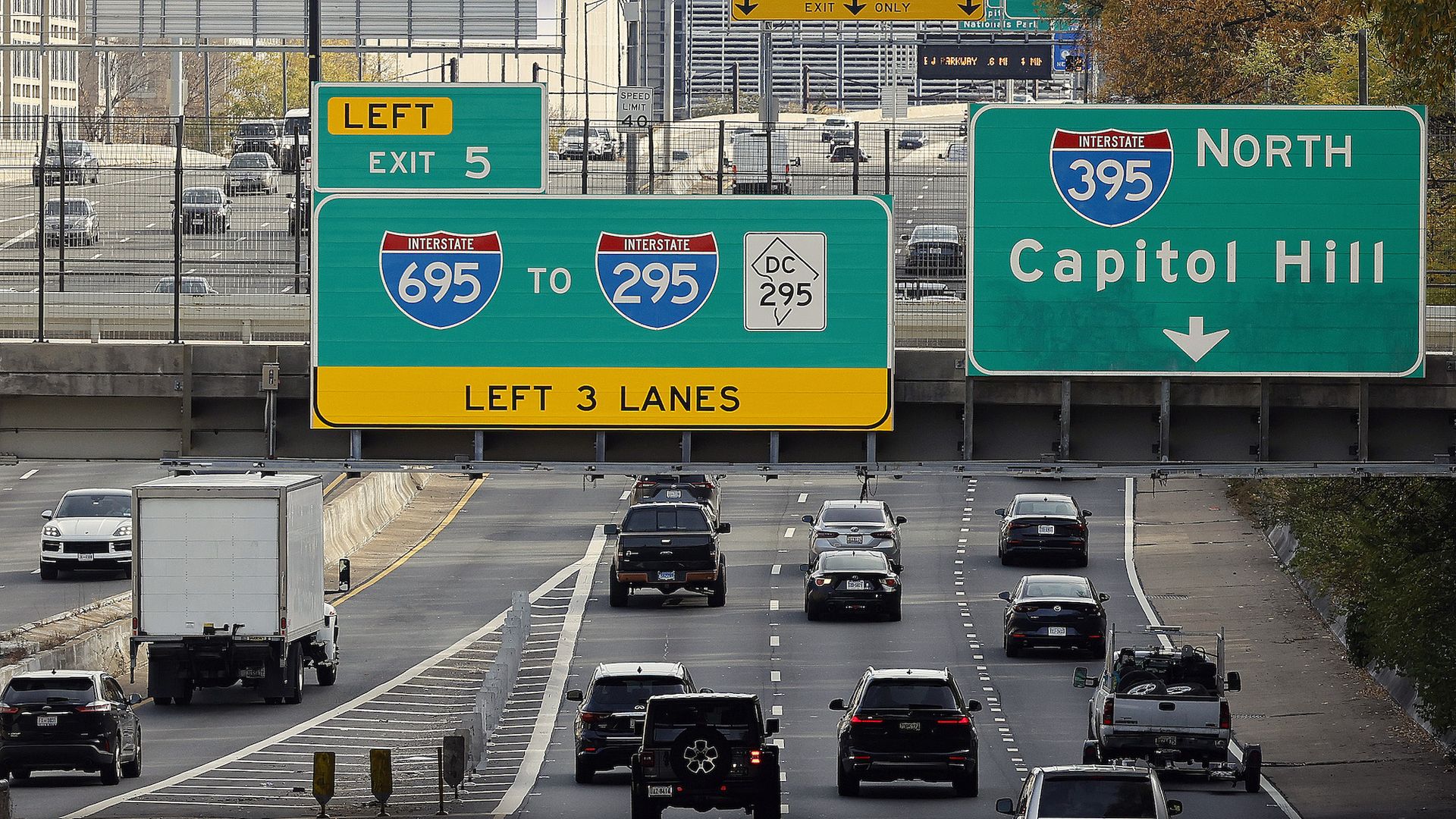
Vehicles travel on Interstate 395 in D.C. Photo: Kevin Dietsch/Getty Images
D.C. is ramping up its crackdown on illegal and reckless drivers with new laws and expanded enforcement heading into 2025.
Why it matters: Traffic deaths are up from this time last year — despite Mayor Bowser's Vision Zero pledge to eliminate such fatalities — and the city has long struggled to hold drivers accountable, especially from neighboring states.
The big picture: Police report 50 traffic deaths this year, tracking toward surpassing 2023's 16-year high.
- Some accidents involve cars with stacks of unpaid fines. In September, a Maryland driver whose vehicle owed nearly $20,000 in tickets struck and injured a 12-year-old girl in a Capitol Hill crosswalk.
- Last year, a driver with more than $12,000 in citations killed three people in Rock Creek Park.
The city is also losing money. The D.C. Department of Motor Vehicles tells Axios that as of October, over 7 million traffic tickets totaling more than $1.6 billion in fines have not been paid to the District since 2000.
- That's up from nearly $1.3 billion last year.
Driving the news: On Tuesday, the D.C. Council passed a bill that gives local authorities the power to tow and impound vehicles with fake, obscured, expired, missing or temporary tags — often associated with reckless driving and illegal activity.
- The act, introduced by Councilmember Brianne Nadeau, gives muscle to the Department of Public Works (DPW) parking enforcement.
- Previously, it was difficult for authorities to hold these drivers accountable because the city's growing fleet of traffic cameras can't identify fake tags, and a plate search doesn't turn up violations with invalid numbers. For a car to be towed, it had to have at least two unpaid fines.
Meanwhile, DPW is also ramping up booting, towing and impounding cars under the new scofflaw program, which reps tell Axios they're growing next year.
- The initiative, launched in April, targets repeat offenders who've racked up at least $3,000 in unpaid tickets.
By the numbers: Under the scofflaw program, the city towed 411 cars that owed nearly $3 million this year. It booted 3,323 cars with $8.7 million in fines.
- Of the 411 impounded vehicles, 132 were released to owners who collectively paid nearly $330,000 in fines. Others were scrapped, auctioned or remain on the lot.
- Virginians were the biggest offenders (185), followed by D.C. (102) and Maryland (77).
The intrigue: DPW tells Axios they're upping their tech game and manpower starting next year.
- They're adding license plate readers and additional staff for 10 "boot teams." They're also expediting processes on their three impound lots, which are regularly at capacity.
Reality check: Enforcement is still difficult. It can only happen on public D.C. streets — private property and anywhere outside the District is off limits.
- And officials can't suspend Virginia or Maryland licenses, even if drivers rack up enormous fines. There's no "ticket reciprocity" in the DMV.
Yes, but: The D.C. Attorney General's Office can help hold out-of-state drivers accountable. Under new road rules the council passed in the spring, the office can bring civil lawsuits against drivers who've racked up egregious fines — regardless of where the vehicle and driver are registered.
- The AG's office tells Axios they're busy identifying drivers with the highest amounts of outstanding fines and longest lists of dangerous driving offenses. They've also hired two new attorneys for the job.
Editor's note: This story has been updated to add new data from the Department of Motor Vehicles.