D.C. can finally sue Maryland, Virginia drivers over unpaid tickets

Add Axios as your preferred source to
see more of our stories on Google.
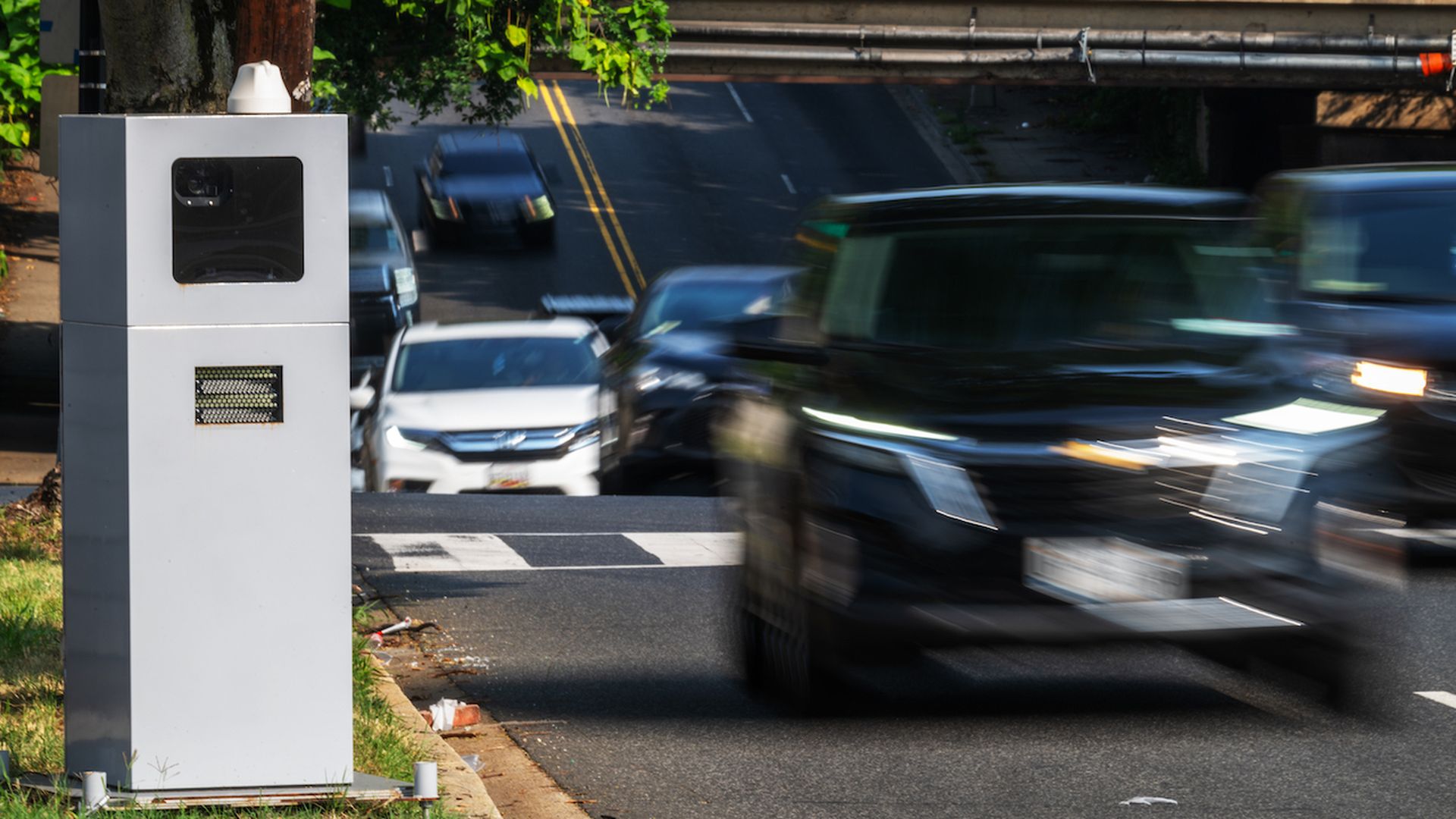
New legislation aims to "give teeth" to D.C. traffic cameras. Photo: Craig Hudson for The Washington Post via Getty Images
A strict set of D.C. road rules goes into effect Tuesday, intended to combat reckless driving, hold repeat offenders accountable and "give teeth" to the city's growing fleet of traffic cameras.
Why it matters: The District has struggled to crack down on dangerous drivers — many with multiple citations — all while traffic deaths are increasing and the city is owed over a billion dollars in unpaid fines.
Driving the news: Last month, a Maryland driver whose vehicle had nearly $20,000 in unpaid tickets struck and injured a 12-year-old girl in a Capitol Hill crosswalk. The car's 94 citations, issued by D.C. cameras, included speeding and running red lights. The driver has since been charged with reckless driving.
- It comes after a fatal crash involving a car with outstanding tickets last summer. A driver with more than $12,000 in citations killed three people in Rock Creek Park.
Catch up quick: The D.C. Council unanimously passed the STEER Act (Strengthening Traffic Enforcement, Education and Responsibility) this year, introduced by Council member Charles Allen.
- Some key initiatives went into effect this week, while others are awaiting funding in the next budget.
How it works: STEER targets reckless drivers and repeat offenders on and off the streets.
- It gives the D.C. attorney general power to bring civil lawsuits against dangerous drivers who've racked up egregious fines — regardless of where the vehicle and driver are registered. That's especially important to D.C. given the daily influx of Virginia and Maryland drivers.
- The DMV can now install "speed governors," devices that can automatically limit speed, inside the vehicles of anyone convicted of reckless driving.
- Victims of auto theft will no longer receive tickets racked up while their car is stolen.
The big picture: Bowser campaigned to eliminate traffic deaths in D.C. by this year as part of her "Vision Zero" initiative, which she launched after taking office a decade ago.
- So far, fatalities are up 11% year to date with 42 deaths — nearing 2023's total, which marked a 16-year high.
- In addition, drivers owed nearly $1.3 billion in traffic fines and penalties to the District last year, per a Washington Post report.
Between the lines: Enforcement is difficult, even with the city's new "scofflaw" towing and booting initiative and a boost in traffic enforcement officers.
- It can only happen on public D.C. streets — private property and anywhere outside the District is off limits — and officials can't suspend Virginia or Maryland licenses, even if drivers rack up enormous fines. There's currently no "ticket reciprocity" in the DMV.
- According to an X post from Allen this month, there are 2,100 cars on D.C. streets with over 40 dangerous speeding tickets.
What's next: A big part of STEER awaiting funding is a new points system that will allow traffic cameras and police to levy points on vehicles for speeding (e.g. two points for speeding between 11-15 mph, five for over 20 mph). Ten or more points within six months will result in booting and towing vehicles.
- The law will also close loopholes that allow people with DUIs to keep driving.
Plus: D.C. could waive the cost of some tickets if the fined drivers complete driving safety courses.
Editor's note: This story has been corrected to reflect that the law has gone into effect. (It does not need further approvals from the mayor and Congress.)