Washingtonians are rushing to get IUDs before Trump's inauguration


Add Axios as your preferred source to
see more of our stories on Google.
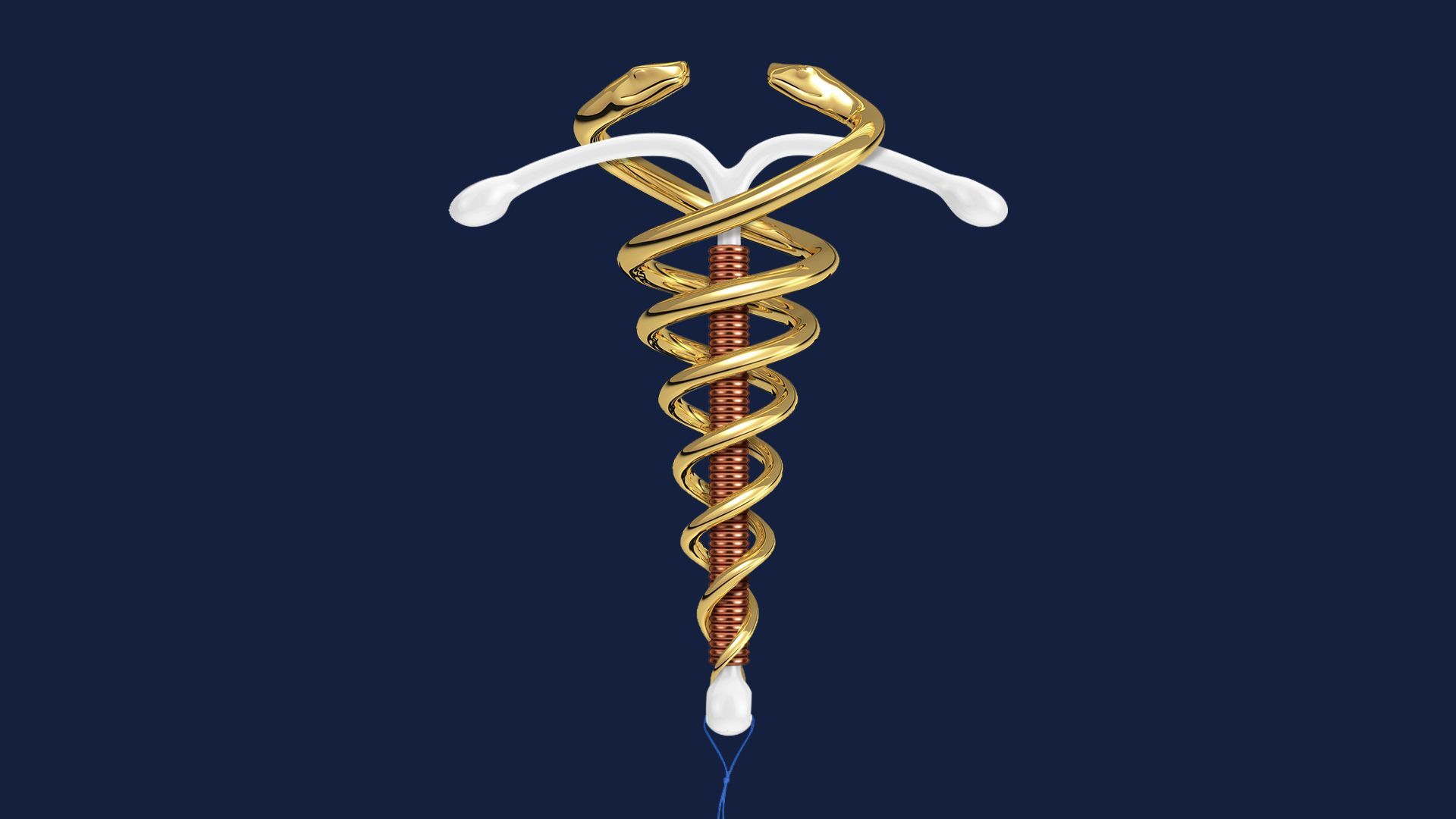
Illustration: Natalie Peeples/Axios
DMV-area patients are increasingly seeking IUDs and backup contraception before President-elect Trump takes office and Republicans control Congress.
Why it matters: Republicans have vowed to restrict abortion care and experts say access to reproductive health care more broadly could erode, especially under a conservative Supreme Court.
- Millions of women of reproductive age could be impacted if the cost of care increases or access to contraceptives is limited.
What they're saying: DMV obstetrician/gynecologist Constance Bohon estimates she's seen a 20–30% increase in the number of Washington patients requesting an IUD since Trump's win, she tells Axios. "We have a very well-informed population here."
- Many patients are purposefully selecting longer-term IUDs, and some are even replacing current IUDs that don't expire for several more years, just for peace of mind, says Bohon.
- Others currently using birth control pills are switching to IUDs, as they're worried access to the pill could be jeopardized under the upcoming administration.
- Bohon is also seeing patients stocking up on emergency contraception pills.
The other side: "President Trump has long been consistent in supporting the rights of states, and the District of Columbia, to make decisions on abortion," then-Trump campaign national press secretary Karoline Leavitt told Politico in a statement in August.
The big picture: This trend isn't limited to the DMV. Google searches for contraception jumped across the country after the election.
- People have also been rushing to delete their digital footprints, including menstrual cycle tracking apps, out of fear the data might be used by law enforcement in states with abortion bans.
- And some are even reconsidering having children altogether.
Flashback: There was a rush for IUDs in advance of the first Trump presidency, years before the overturn of Roe v. Wade. There was another surge just before the Dobbs decision was handed down.
The intrigue: Patients' fear levels regarding their reproductive rights tend to vary based on which DMV state they live in, says Bohon.
- District residents feel "leery," says Bohon. D.C. is currently seen as an abortion "safe haven," but because Congress has legislative oversight over the city, it could try to restrict D.C. reproductive rights.
- Virginia patients "are sitting on the edge of their seats," says Bohon. While Virginia is the only Southern state without a post-Roe abortion ban, it's not constitutionally protected.
- Meanwhile, Maryland patients largely feel "rock solid" about their reproductive rights, Bohon tells Axios, as the state enshrined the right to abortion in its constitution last month.
Yes, but: A hit to reproductive rights in one of the area's jurisdictions could affect physicians' abilities to provide care throughout the DMV, Politico points out.
- While many providers are licensed across D.C., Maryland and Virginia, if a restriction passes in one area, it could stipulate that a physician's license is at risk even if they carry out the procedure in another jurisdiction.
- Meaning that local doctors could stop providing procedures like abortions altogether.