How a prolonged port strike could affect Baltimore


Add Axios as your preferred source to
see more of our stories on Google.
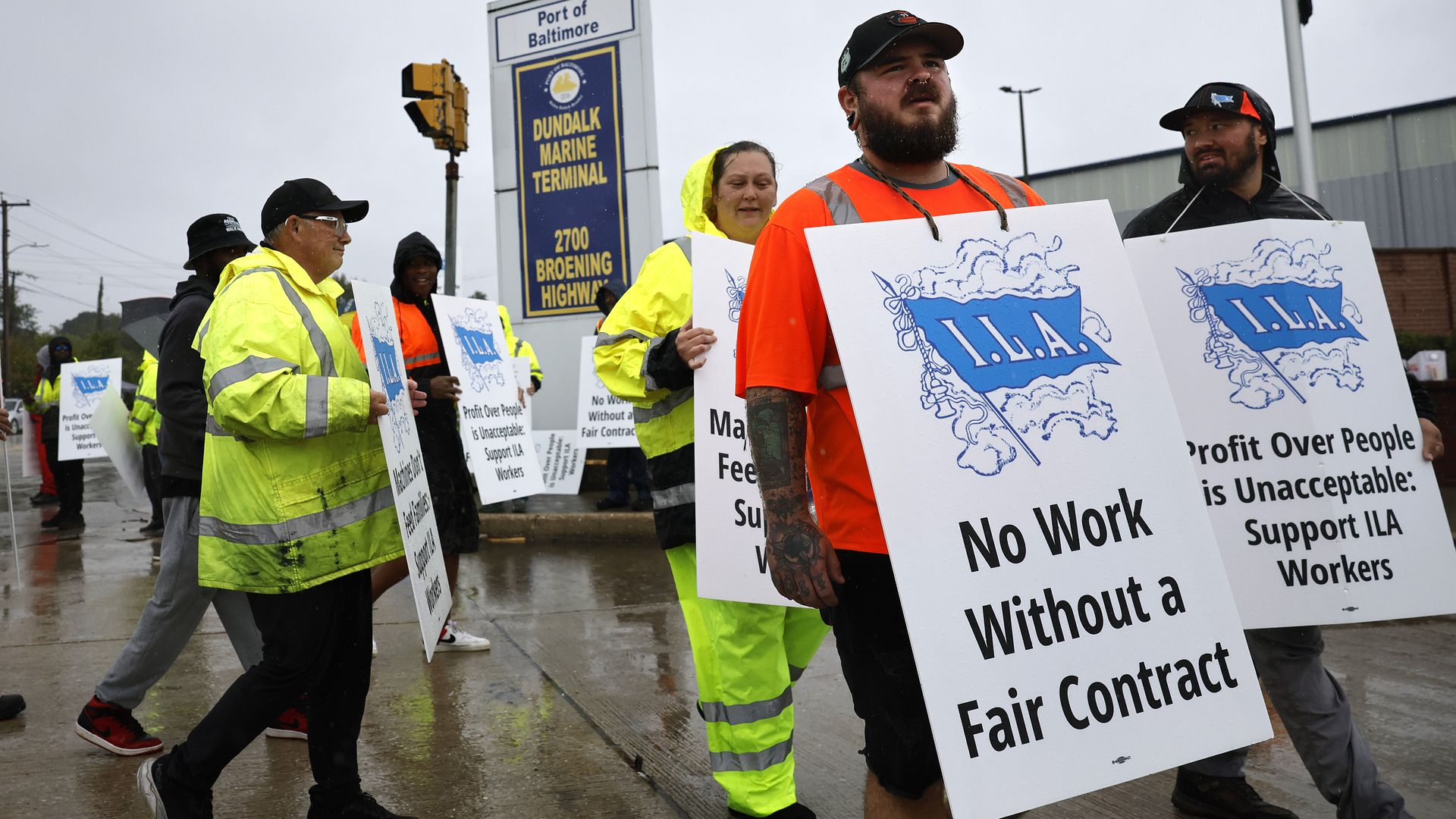
Longshoremen and supporters picket outside of the Dundalk Marine Terminal at the Port of Baltimore on Tuesday. Photo: Kevin Dietsch/Getty Images
Unionized dockworkers are striking in Baltimore and at other major East Coast ports after failing to reach a new labor contract deal.
Why it matters: A work stoppage that lasts more than a few days will snarl supply chains, raising the prospect of higher prices and shortages of everything from auto parts to bananas as the U.S. heads into the holidays — and a presidential election.
The strike shutters the Port of Baltimore just months after it reopened following the Francis Scott Key Bridge collapse in March, which blocked shipping channels, disrupted trade and impacted the local community.
- And it could have economic ripple effects within Baltimore and beyond: The port's private and public terminals were directly responsible last year for over 20,000 jobs and indirectly for an additional 30,000, creating over $5 billion in total income, Maryland Matters reports from a Maryland Port Administration analysis.
State of play: The International Longshoremen's Association, which represents some 85,000 members, said on Facebook that it "shut down" the ports at 12:01am on Tuesday as workers "began setting up picket lines at waterfront facilities up and down the Atlantic and Gulf Coasts."
- The union said it rejected the United States Maritime Alliance's (USMX) final proposal made on Monday, "setting the stage for the first ILA coast wide strike in almost 50 years."
Longshoremen protested outside the Baltimore ports' marine terminals Monday and Tuesday to call for an end to port automation and for higher wages.
- Early Tuesday morning, a dumpster truck tried to cross the picket line and hit a protesting longshoreman, who was then taken to the hospital in an ambulance.
What they're saying: The Maryland Port Administration issued a statement asking both sides "to come together and negotiate an agreement that properly compensates the men and women of the ILA while maintaining cost effective and efficient cargo flows," Maryland Matters reports.
- Meanwhile, union president Harold Daggett said they're "prepared to fight as long as necessary, to stay out on strike for whatever period of time it takes, to get the wages and protections against automation our ILA members deserve."
The other side: The USMX said in an online statement Monday evening it had "traded counteroffers related to wages" ahead of the strike, including a nearly 50% wage increase.
By the numbers: JPMorgan estimates a strike would cost the economy $3.8-$4.5 billion per day.
- The Conference Board is somewhat more conservative at $3.7 billion after a week of strikes.
Zoom out: The situation puts President Biden in a jam. He has the power, under the 1947 Taft-Hartley law, to intervene to either prevent or end a strike, and impose an 80-day cooling off period.
- But that's not the kind of move a president who claims to be the most pro-labor in history can make without serious blowback from unions and their advocates.
- Letting a work stoppage go on longer than a week, however, risks the ire of voters who are still frustrated after years of rising prices.
- On Monday afternoon, the U.S. Chamber of Commerce called on the president to intervene to stop a strike.
For the record: Administration officials, including chief of staff Jeff Zients, acting Labor Secretary Julie Su and economic adviser Lael Brainard, have been in regular communication with both sides to keep the negotiations moving forward, a White House official said late Monday.
What we're watching: Companies have known this strike was coming for months, and many have rerouted shipments to the West Coast or shipped goods early to avoid chaos.
- Still, some industries won't get a pass — particularly for imports and exports of perishable goods like fruits and vegetables.