D.C.'s split with Humane Rescue Alliance shakes up city animal control

Add Axios as your preferred source to
see more of our stories on Google.
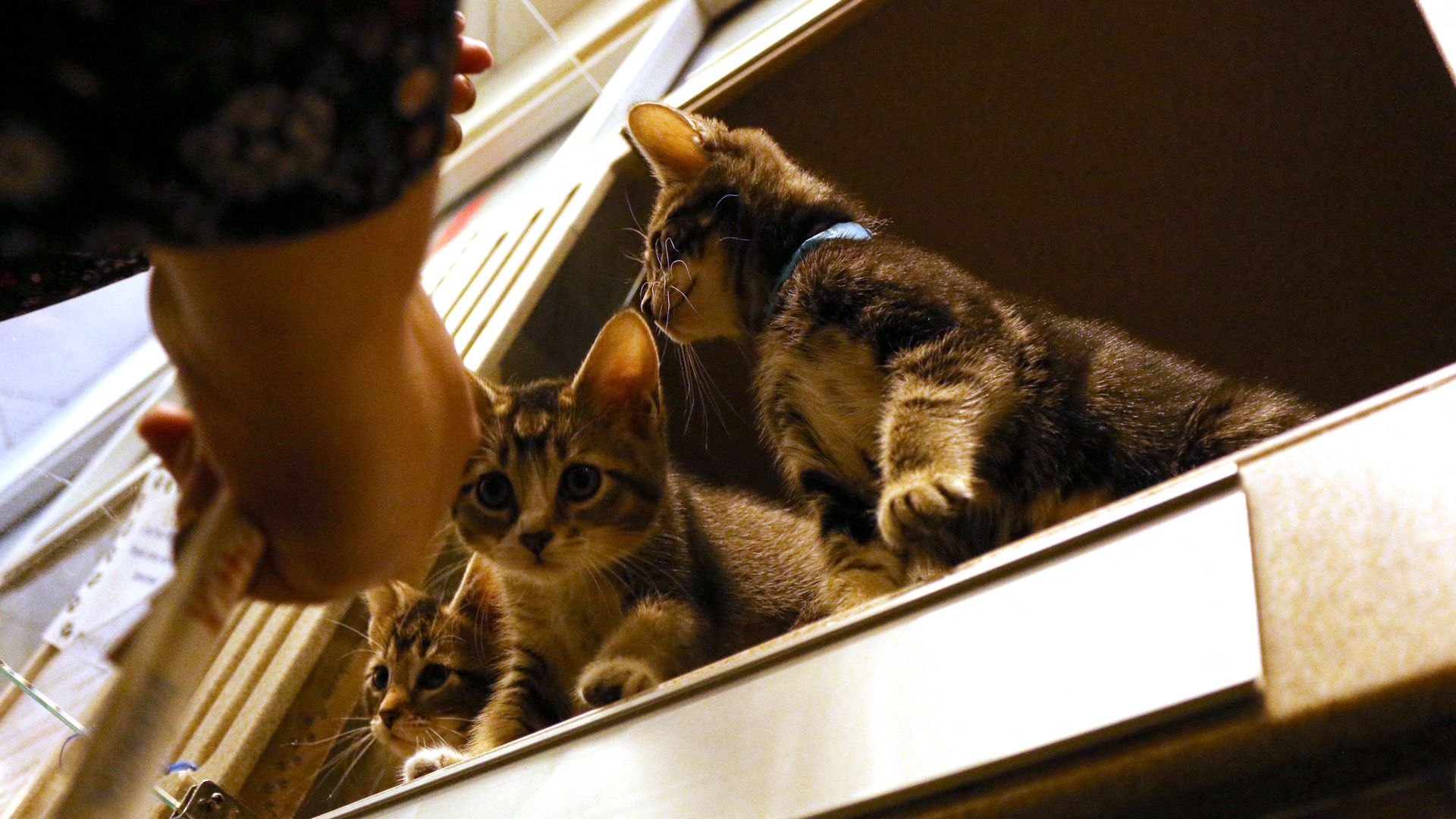
Kittens look out of their pen at the Humane Rescue Alliance shelter in D.C. in 2019. Photo: Anna-Rose Gassot/AFP via Getty Images
The Humane Rescue Alliance said it was shocked by D.C.'s recent decision to end a nearly 45-year contract with the region's largest animal service provider.
Why it matters: The split, effective in January, will mean major changes are coming for animal care and control in the city when DC Health moves critical animal services in-house for the first time in decades.
The big picture: The pandemic and its fallout stressed animal welfare services in D.C. and nationwide. Around 23 million American households adopted a pet during the pandemic, according to Forbes. With return to work, limited pet-friendly housing and rising costs of pet care, surrenders skyrocketed and shelters overflowed.
- HRA reported shelters and fosters at capacity in June and a slowdown in adoptions. According to a 2023 report from Best Friends Animal Society, nearly 7,000 dogs and cats were taken in by D.C. shelters over the year, and 83% were saved.
What they're saying: HRA leaders were "taken aback" by the city's decision to end the contract after nine months of negotiations, Kate Meghji, the provider's COO, tells Axios.
- Meghji says they're in the dark as to why and how the city will assume animal programs, and questions remain about the future of one of HRA's facilities.
- DC Health and the city's veterinary affiliates have not responded to multiple requests from Axios for comment.
Context: The city has operated all of its animal control, care and adoption programs through HRA under contracts since 1980, making it the lone provider for stray, surrendered and feral animals.
- HRA currently operates three campuses in D.C., and covers a spectrum of programs involving animal intake and care, adoptions, humane law enforcement and anti-cruelty work, as well as veterinary clinics.
Zoom in: HRA tells Axios its understanding is that D.C. will assume animal control programs, which include containing and capturing strays and wild animals in residential areas (e.g., the Brookland bear); housing impounded animals; investigating reports of dangerous dogs; and investigating, testing and quarantining potentially rabid animals.
- HRA, meanwhile, will continue its adoption and pet care mission citywide.
The intrigue: The city owns the HRA-operated New York Avenue, NE shelter.
- Animal welfare advocates argue that the building is falling apart and unsafe for humans and animals. The D.C. Council allocated $22.5 million to replace it.
The other side: Advocacy group Volunteers for HRA Reform issued a statement that they are "cautiously optimistic" about DC Health's takeover.
- The group formed this year after several volunteers alleged unsanitary and inhumane conditions at HRA shelters, largely due to understaffing, and that the nonprofit's protocol for euthanizing animals was inconsisted. HRA denied the claims.
The volunteer group lauds the prospect of higher-paid unionized work for staff hired by DC Health, more transparency and possible improvements for animal services overall.
- "Still, there are more questions than answers, and DC Health seems to have taken on an impossibly short timeline to make it happen."
Follow the money: According to 2018 city filings, HRA is contracted by D.C. for $24.5 million over four years.
- In a statement, the nonprofit says it has done this work at a "significant financial loss for decades."
The city contract makes up "only a fraction of HRA's activity," according to the nonprofit. HRA says it plans to continue and, in some cases, expand core programs such as adoption and veterinary wellness services across the city.
- The nonprofit just launched a pet resource center for communities in Wards 7 and 8, as well as mobile veterinary and behavioral care programs.