What to know about tornadoes in the DMV

Add Axios as your preferred source to
see more of our stories on Google.
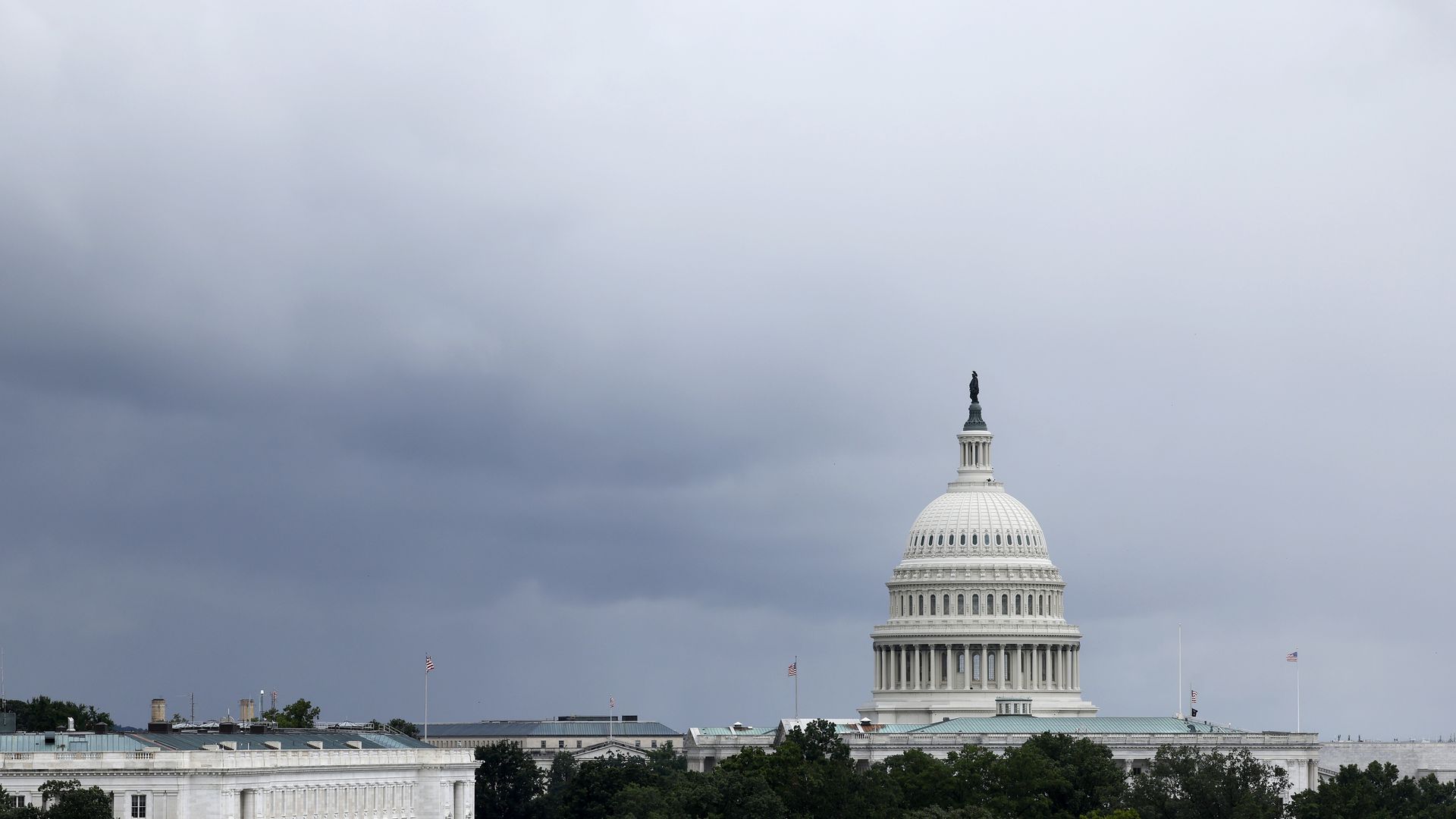
Tropical Storm Debby sparked tornado warnings. Photo: Anna Moneymaker/Getty Images
Washington is better known for political whirlwinds than tornadoes, but as the destructive activity last week indicates, the DMV is at risk.
Why it matters: With a highly active Atlantic hurricane season just nearing its peak, the D.C. area could see more tornadoes to come.
How it works: Tornadoes are often associated with landfalling tropical storms, hurricanes, or thunderstorms.
- For a tornado outbreak to hit D.C., the center of a storm must veer west while rain bands focus in and around the D.C. metro area — exactly the conditions that sparked tornado watches and warnings around the DMV on Friday as Tropical Storm Debby's remnants rolled through, according to Axios' Andrew Freedman.
The big picture: As climate change sparks more severe storms, there could be increased tornado outbreaks in the U.S. Last month, deadly tornadoes struck the Chicago area, which is currently experiencing its second-busiest year for tornadoes after 2011.
- A seven-tornado outbreak touched down in Maryland and Virginia last month.
Reality check: It's a myth that tornadoes gravitate Oz-like to rural plains over urban areas.
- "People think tornadoes can't cross the Potomac, or that they don't touch down where there's a bunch of buildings," says Freedman. "There are videos of tornadoes going up and over mountains. They will occur anywhere the conditions are right."
Flashback: A minor tornado hit the National Mall a few years ago, while a deadly tornado caused widespread damage and injuries, and killed two people in College Park in 2001.
- Another in June injured multiple people in Maryland. Last Friday's tornado took down hundreds of Loudoun County trees.
Threat level: Tornadoes in tropical systems tend to be weak, according to Freedman, but they form and dissipate quickly. "You should take the warnings very seriously."
- Guidelines urge residents to retreat into basements, or if lacking one, go to inner hallways, rooms without windows (e.g. bathrooms, closets), or the center of a room with something sturdy to shield from debris.
Between the lines: While some cities like Charlotte suffer a radar gap that impedes weather warnings, the DMV is extremely well-covered by radars around Dulles, Reagan National, and beyond that can detect the first hints of tornado activity and help warn the public.