Downtown Minneapolis' public bathroom problem

Add Axios as your preferred source to
see more of our stories on Google.
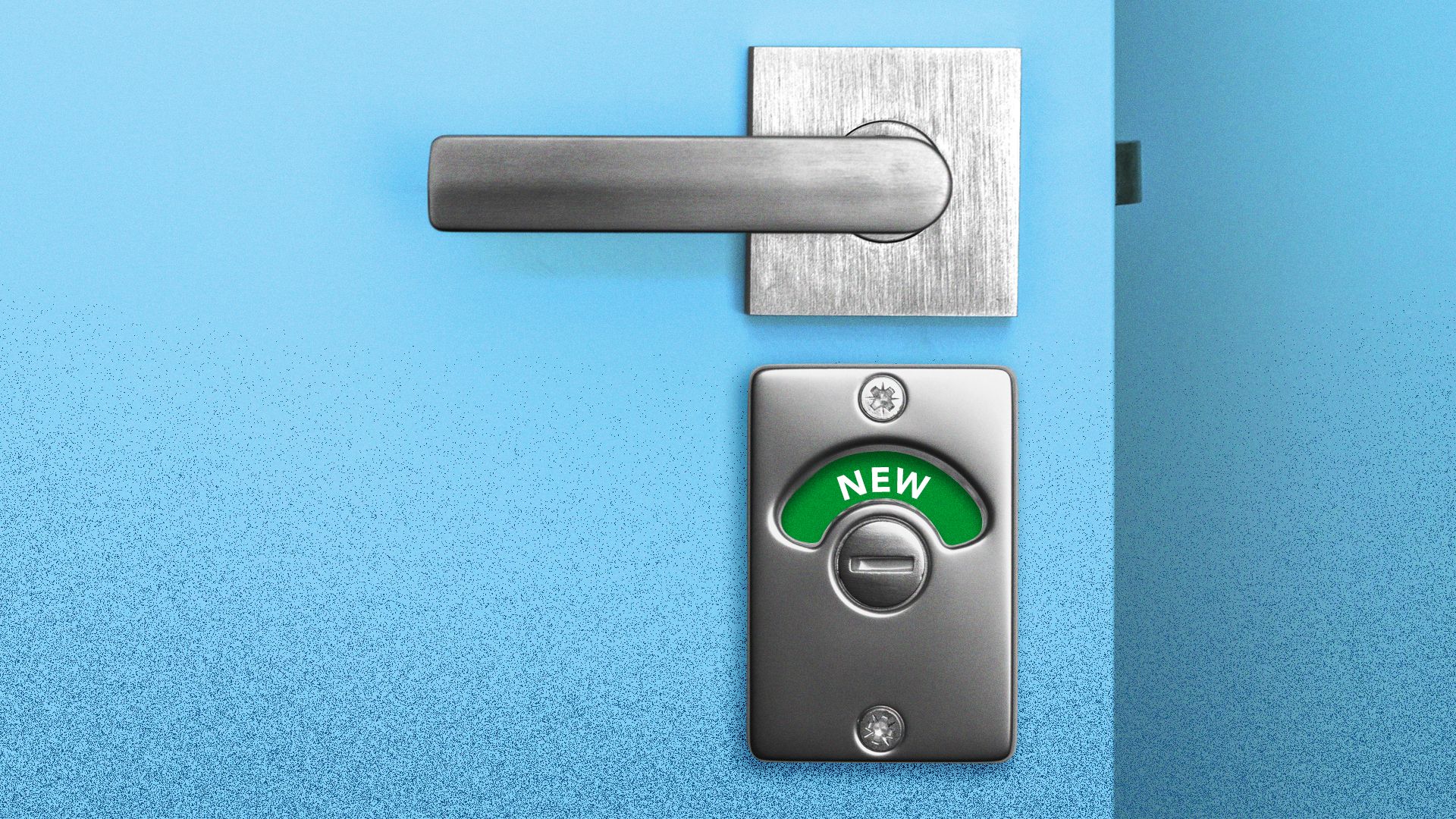
Illustration: Maura Losch/Axios
Downtown Minneapolis has a "leaking" problem: There aren't enough good spots to take one.
Why it matters: The city's shortage of public restrooms isn't only a problem for unsheltered people or touring rock stars.
- For years, downtown boosters have acknowledged a lack of loos makes the area less welcoming for a wide range of people — from people with disabilities to parents with young children.
Driving the news: Minneapolis City Council Member Katie Cashman has proposed $700,000 in annual funding for restrooms in the Nicollet Avenue transit corridor — enough for five to eight "prefabricated, standalone restroom units," per city estimates.
What they're saying: "Great cities have public bathrooms," Cashman told Axios. "We deserve nice things."
How it works: Cashman's proposal calls for bathrooms that would be portable and winter-adaptable, and wouldn't require connections to city utilities or maintenance by city staff.
Friction points: Skeptics have pointed out there are good reasons Minneapolis hasn't already solved this problem.
- More-permanent public toilet models can be surprisingly expensive to install.
- When the Downtown Improvement District (DID) rolled out portable toilets in a 2019 access campaign, users abused them: They would barricade themselves inside, or were "aggressively unclean," MinnPost reported. (The pandemic suspended DID's initiative.)
Yes, but: DID "piloted Port-A-Potties," Cashman said. "This is totally different."
Zoom in: Cashman doesn't name a vendor, but her proposal is modeled on Throne Labs, which provides toilets to Los Angeles, D.C., Detroit and Ann Arbor, Michigan.
- Throne charges up to $84,000 per year to rent and maintain each of its solar-powered pods, city staff found.
- Users get inside via a mobile app or text messaging, though libraries or homeless service providers can hand out tap cards that also grant access. These credentials have a purpose: Throne bans anyone who causes a problem from future use.
The intrigue: With a tight city budget this year, Cashman turned to a unique funding source: the Nicollet Avenue streetcar fund, initially created in 2013 to pay for the as-yet-unbuilt transit project.
- Because if a streetcar can't go on Nicollet… maybe people should be able to! 🥁
This fund still draws in property tax revenue from the Nicollet transit corridor — an estimated $4.5 million in 2026 — which creates what could be an ongoing source of funding.
- However, using this funding source means restrooms would have to be placed within a few blocks of Nicollet — leaving out much of Loring Park, the North Loop and Downtown East.
What's next: The council could take up Cashman's proposal as soon as Monday.