6 takeaways from St. Paul mayor Melvin Carter's State of "Our" City address

Add Axios as your preferred source to
see more of our stories on Google.
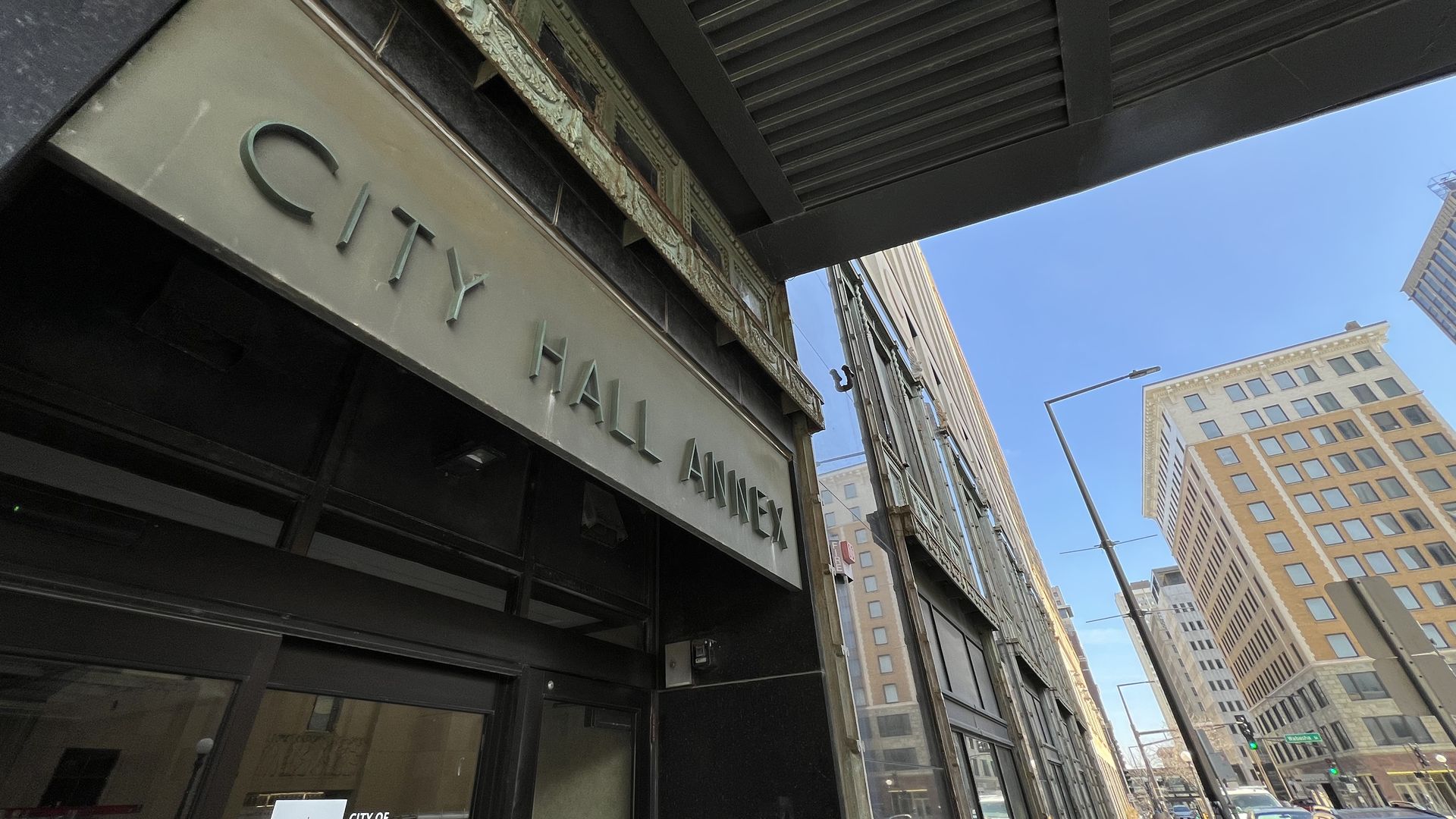
Downtown St. Paul's City Hall Annex. Photo: Kyle Stokes/Axios
St. Paul Mayor Melvin Carter delivered the State of "Our" City Address on Monday. Here are five things you should know:
1. 🏢 St. Paul may close its City Hall Annex, convert the building into apartments, and scatter its workers into leased office spaces downtown.
- Why it matters: Carter said the move could boost foot traffic in St. Paul's skyways and help boost commercial-to-residential conversions seen as key to the future of both Twin Cities downtowns.
- What's next: The city has hired a consultant to study the idea.
2. 🪙 Sales tax medallions: St. Paul will install medallions marking every road or parks project funded by the city's newly-approved sales tax increase, which Carter is branding the "Common Cent."
- Carter likened the medals to the markers for projects built by the New Deal's Works Progress Administration.

3. 🏟️ Xcel Energy Center: St. Paul plans to ask the state Legislature for $2 million in planning money to renovate the city-owned arena. Carter said the building has good bones, but is still a pre-9/11 building that needs to be modernized.
- Minnesota Wild owner Craig Leipold, whose team is the X's chief tenant, was on-hand for the speech.
4. 🤝 Hiring local: The mayor wants to double the number of St. Paul residents working for the city.
- Carter told reporters that eliminating college degree requirements, hiring more youth workers, and maybe introducing an interview requirement for St. Paul residents are all steps toward this goal.
5. 🏘️ Housing reset: Merging several siloed conversations about housing issues, from homelessness to new construction to first-time homebuyer programs is also a top priority.
- A fresh independent analysis of the city's rent control ordinance could be part of that conversation.
6. 🌳 Ash trees: This year, St. Paul will wrap up a 15-year effort to cut down all trees compromised by the the emerald ash borer on city-controlled property. Now, the focus shifts to programs for removing affected trees from private property.