Here are the first projects St. Paul's new sales tax will pay for

Add Axios as your preferred source to
see more of our stories on Google.
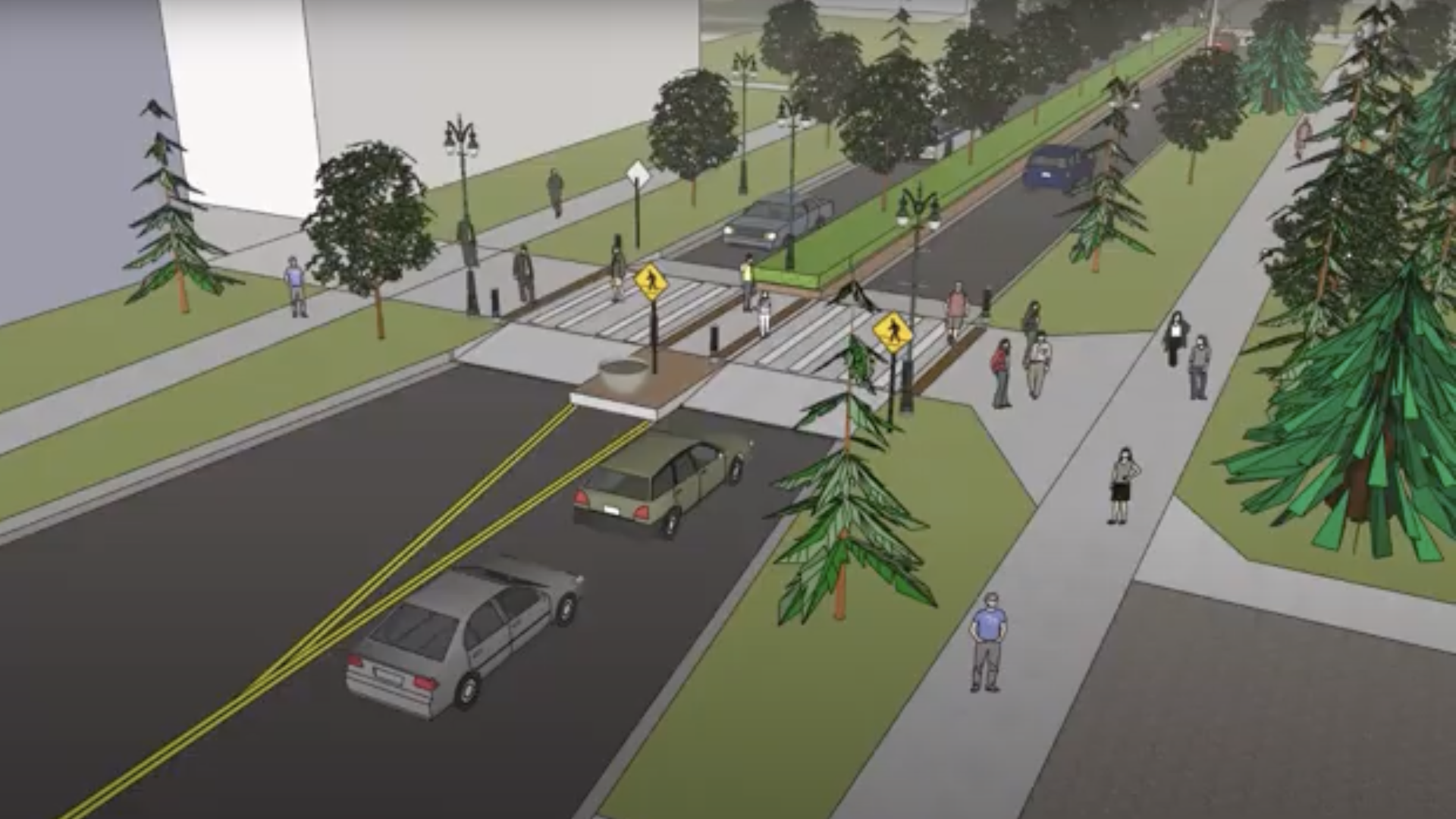
A 2023 rendering of a raised pedestrian crossing proposed for a city-run project reconstructing a portion of Grand Avenue near Macalester College. Image courtesy of the City of St. Paul
St. Paul's 1% sales tax increase takes effect on April 1, and city leaders have unveiled which projects they'll pay for first — including a rebuild of Grand Avenue, plus dozens more improvements to parks.
Why it matters: In exchange for what'll be Minnesota's highest sales tax rate (9.875%), city officials say St. Paul residents and visitors will pay to clear years-old maintenance backlogs that have led to nightmare potholes, worn-out athletic fields, and the visible decay of some park buildings.
What they're saying: "This is a once-in-a-generation opportunity, as [Mayor Melvin Carter] said, not just to fix potholes, but to transform the streets," public works director Sean Kershaw told Axios.
Flashback: St. Paul voters approved the tax increase last fall. Over its 20-year life, it could generate nearly $1 billion.
- Three-quarters of the revenue is earmarked for streets, and the rest for parks.
State of play: Parks director Andy Rodriguez has already lined up at least 75 projects — totaling $30.1 million — to kick off "a full-on revitalization of the parks system."
- Rodriguez supposes the most noticeable projects to begin immediately would be the installation of either artificial turf or new irrigation systems at 11 athletic fields.
- His department's also seeking permission to start repairs on building and pool repairs, new tennis and pickleball courts, and downtown park spaces — plus $7 million for a geothermal heating project at the Como Zoo.
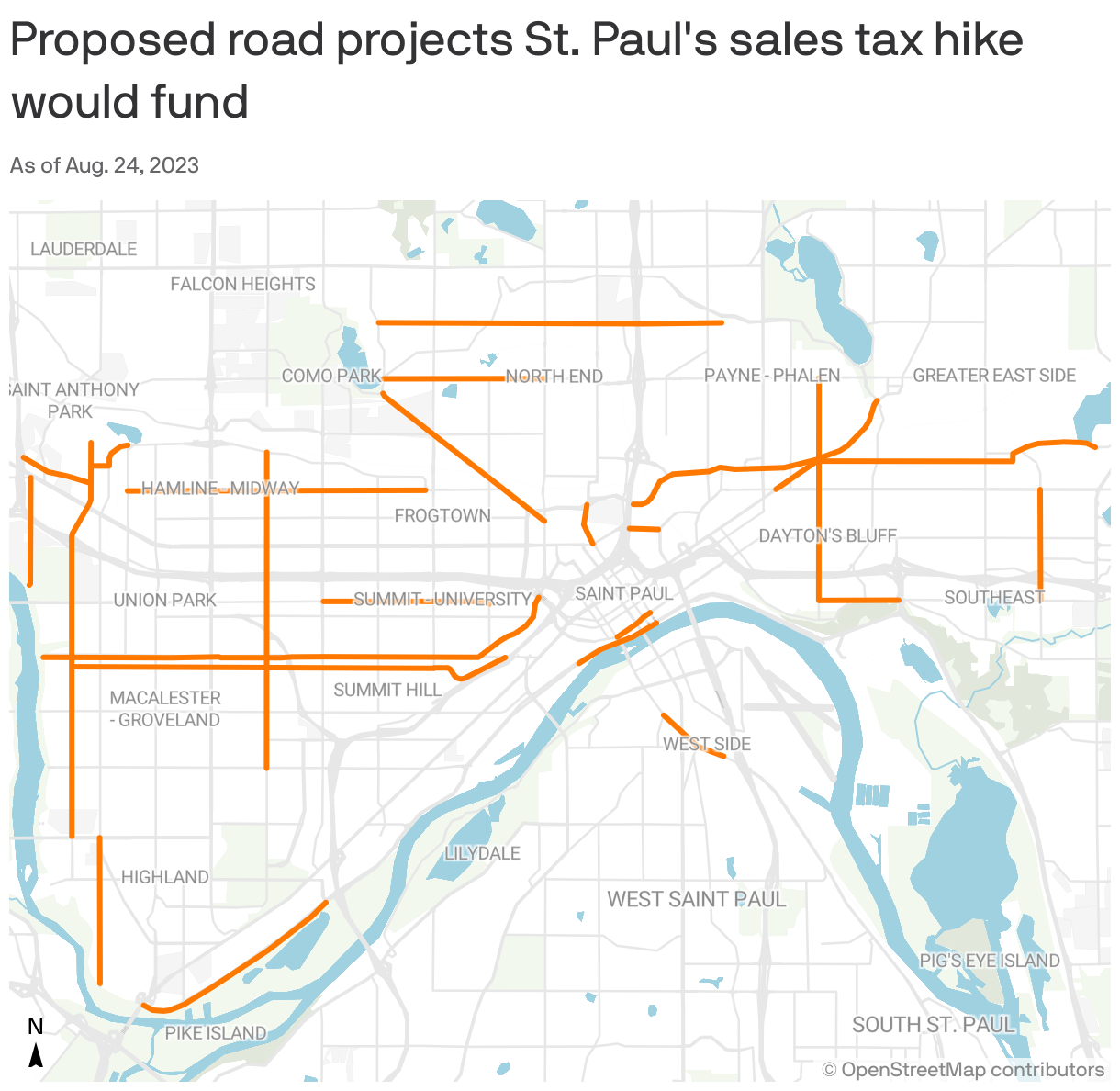
Zoom in: The first streets project to get sales tax funding will be a $13 million rebuild of Grand Avenue between Fairview and Snelling that, among other repairs, would add raised pedestrian crossings near Macalester College. Construction would last through 2025.
- Next up would be reconstructions of Jackson Street, Earl Street, Pelham Boulevard, and a portion of University Avenue east of the State Capitol.
Zoom out: City officials say they'll use the revenue generated from the tax to improve or rebuild 24 stretches of high-traffic streets. That funding will also free up money and resources for repairs on neighborhood streets.
The fine print: Sales tax revenues won't pay for the entire Grand Avenue project. Current plans budget for billing property owners along the route for $1 million worth of the repairs, though Kershaw notes this is a "placeholder" as officials sort out the city's policies on special tax assessments.
- St. Paul has faced legal challenges for charging property owners for too many types of routine street repairs.