Minnesota beset with bad air quality days this summer

Add Axios as your preferred source to
see more of our stories on Google.
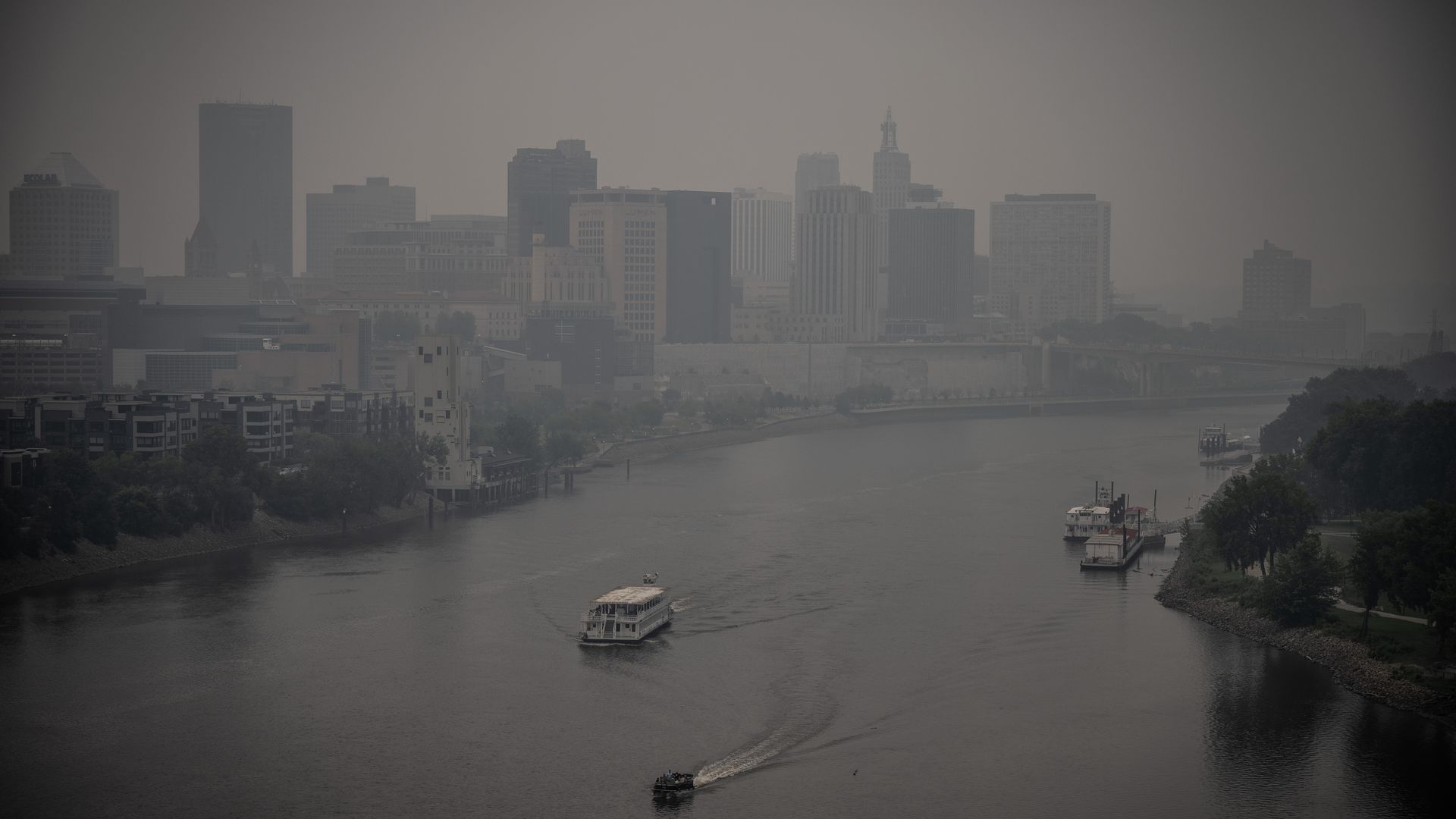
Heavy smoke from the wildfires in downtown St. Paul on June 14. Photo: Jerry Holt/Star Tribune via Getty Images
Minnesota is seeing a surge in bad air quality days this summer, as high temperatures and wildfire smoke blanket the Twin Cities with hazy skies and high ozone levels.
The big picture: The Minnesota Pollution Control Agency has logged 13 "orange" days this year where the air quality was "Unhealthy for Sensitive Groups" or worse in the Twin Cities metro area. That's more than three times what's typical, a spokesperson told Axios.
- That number includes two days where we hit "red" — the last time the area reached red for ozone was June 27, 2012.
- Statewide, 21 days have hit the "orange" level on the Air Quality Index (AQI) this year. A normal range is three to five.
Why it matters: Breathing unhealthy levels of smoke and other air pollution is bad for your body.
- Exposure can increase a person's risk of developing lung and heart conditions and make pre-existing respiratory conditions worse, Axios' Jacob Knudson writes.
Plus: Wildfire smoke in particular can irritate eyes and respiratory systems, leading to coughing and difficulty breathing.
Catch up fast: The Air Quality Index, developed by the federal Environmental Protection Agency, measures levels of five pollutants in the air.
- An AQI of 0 to 50 is considered "good" air quality. Anything over 100 is unhealthy, especially for sensitive groups, such as those with lung diseases, seniors, and children.
- When the AQI hits between 151 and 300, officials recommend that everyone reduce or avoid intense activities outdoors. Values over 301 are considered "hazardous."
Flashback: Earlier in June, a plume of smoke from the Canadian fires left the Twin Cities with some of the worst air quality levels in the world.
- The AQI recorded that day — 243 — was the highest on record since MPCA started daily tracking in 1980, per WCCO-TV.
What we're watching: More poor air quality days are likely on the horizon — and not just because of high temps in the forecast.
- "Usually, the fire season gets a little bit worse as you get toward the late part of the summer and fall," NWS meteorologist Jacob Beitlich told Axios recently. "So, assuming that the season's trends continue, I would be surprised if we didn't have any more smoke issues the rest of the summer."
Be smart: Experts suggest staying indoors as much as possible and limiting physical activity when the AQI reading is high. A well-fitting mask can also help limit exposure outdoors.
- Go deeper via Axios with more tips for weathering smoke and poor air.