Twin Cities evictions climb post-pandemic


Add Axios as your preferred source to
see more of our stories on Google.
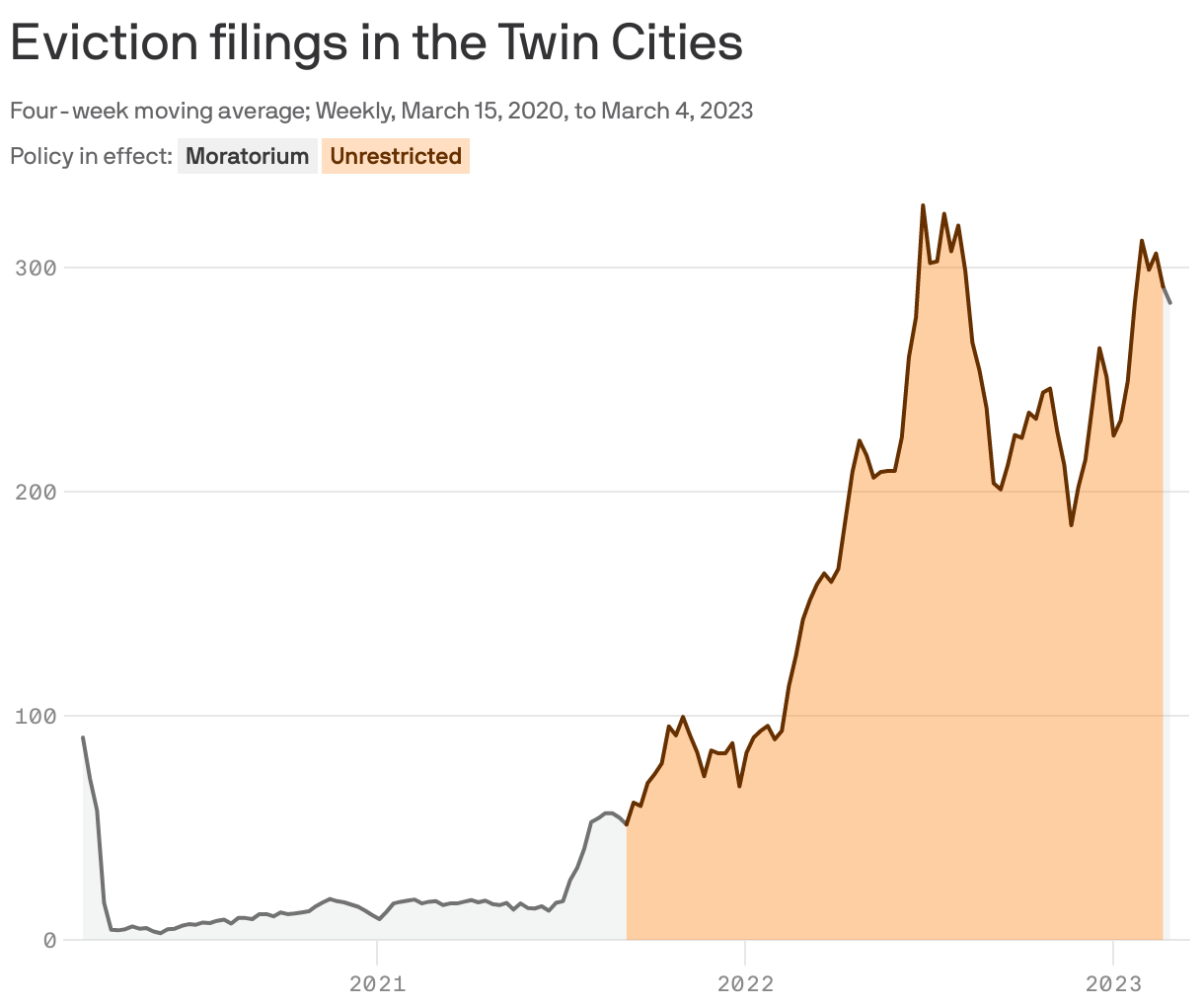
Eviction filings in the Twin Cities continue to exceed pre-pandemic levels, according to data from the Eviction Lab.
Driving the news: Researchers with the Princeton University-based project logged 1,173 filings in the Twin Cities last month, nearly double the historical average of 599.
- Evictions are also up year over year. The group’s most recent data, which covers the week ending March 4, shows a 99% increase from the same period in 2022, when some local protections were still in effect.
The big picture: Sweeping local and national eviction moratoriums helped keep many families in their homes through the heart of the COVID-19 pandemic, Axios' Kavya Beheraj and Alex Fitzpatrick write.
- Those protections are now gone, and evictions have picked up across the country.
What they're saying: Jacob Haas, an Eviction Lab research specialist told Axios, that the return to pre-pandemic levels across the nation is "disappointing given all of the initiatives that were taken to prevent housing instability."
- Local advocates and lawmakers have also raised concerns about the spike, arguing that more should be done to ensure Minnesotans have access to affordable housing.
Between the lines: Cecil Smith, president and CEO of the Minnesota Multi Housing Association, told Axios that the elevated numbers reflect ongoing after-effects from the pandemic, not new widespread defaults on rent payments.
- Some rental property owners gave tenants more time to receive emergency assistance and catch up, which "dragged out what might have been the initial peak of filings" after the moratorium.
- In other cases, the landlords waited until big court backlogs began to clear before taking action against tenants for financial or other causes for removal.
Of note: Overall eviction levels in Minnesota also remain lower than many other parts of the country.
- One factor could be that local rent prices are growing at a slower pace than incomes.
- The Eviction Lab notes that its data doesn't capture illegal evictions or cases where renters are effectively forced out by large rent hikes, and it may be undercounting recent evictions due to processing delays.
What we're watching: The issue is drawing attention at the state Capitol, where lawmakers are considering a number of bills aimed at expanding affordable housing and renter assistance.
- One proposal to add $50 million in emergency funding to a program meant to help tenants pay their rent passed the House last week.
- Smith said he thinks the extra aid will help, though he noted that preventive measures to help renters before they fall far behind would do even more.
Editor's note: This story has been updated.