California vows to fight Trump's mail-in voting order


Add Axios as your preferred source to
see more of our stories on Google.
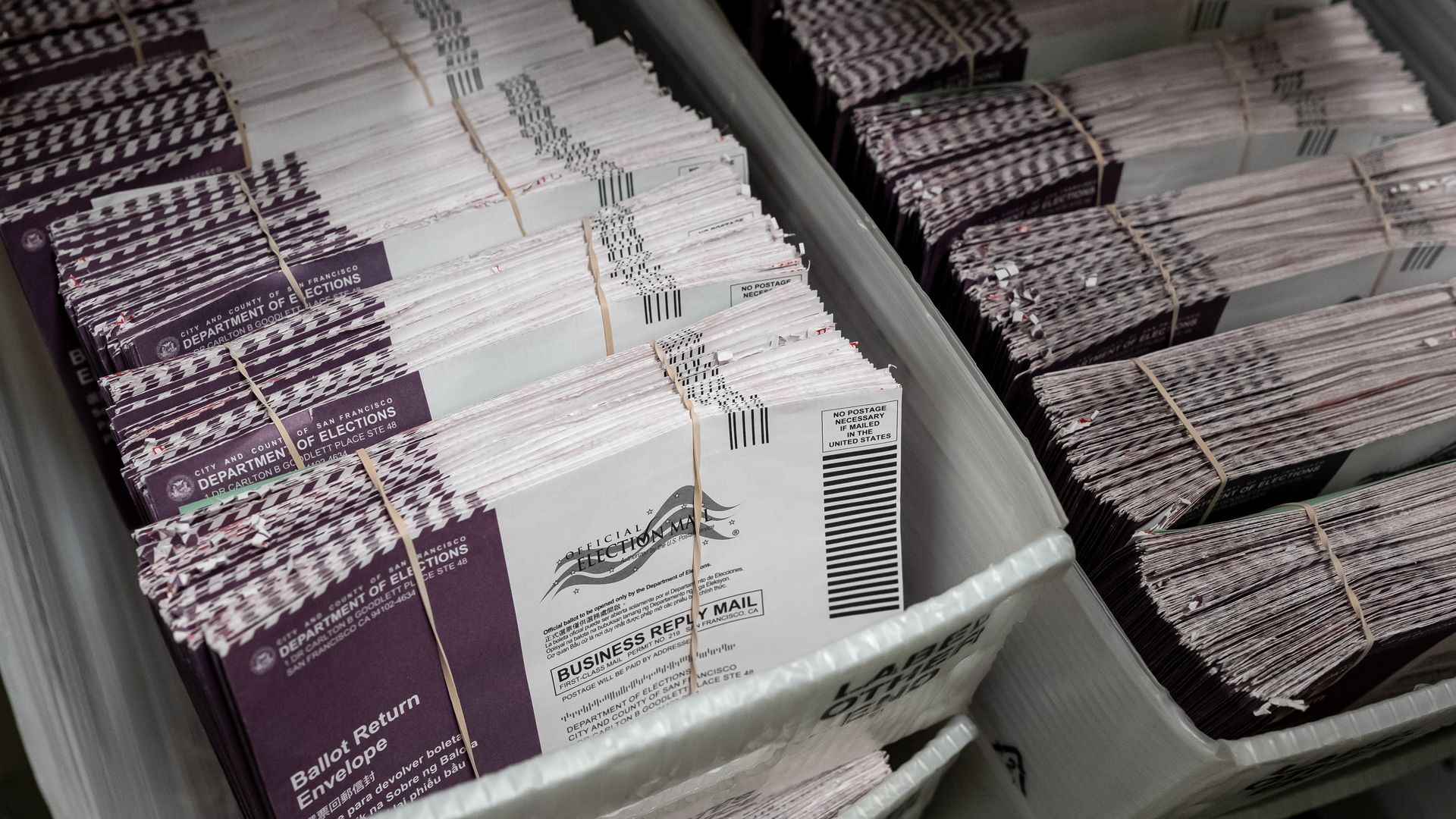
The Supreme Court is allowing a mail-in ballot order from President Trump proceed. Photo: David Paul Morris/Bloomberg via Getty Images
California's vote-by-mail system faces new uncertainty less than three months before the midterms after the Supreme Court on Monday allowed President Trump's executive order restricting mail-in voting to move forward.
Why it matters: The decision could upend the midterms, but the legal battle is far from over and the exact effect on California's upcoming elections remains unclear.
State of play: California mails a ballot to every active registered voter and more than 80% of voters rely on mail-in voting, making the state especially vulnerable to last-minute changes in federal rules.
- The ruling also does not resolve whether the order itself is constitutional.
What they're saying: Gov. Gavin Newsom said Monday that California intends to sue the Trump administration again if it moves to implement the new rules.
- "The Supreme Court just let the Trump administration move ahead (for now) with its plan to disenfranchise voters across the country," Newsom said in a statement. "California will be suing AGAIN to block these Orwellian rules from being implemented."
- State leaders also introduced two new two election-security bills establishing penalties for unlawfully taking ballots, election records or voting equipment and targeting interference with mail ballot delivery and returns, according to Newsom's statement.
Driving the news: The Supreme Court said in the unsigned order that states lack standing to challenge the executive order because it was an "internal directive" that didn't harm the states that sued.
- The 6-3 decision overturns a federal appeals court ruling that found the order could impose "unprecedented levels of involvement by federal officials in how states administer elections" and could confuse and disenfranchise voters.
Catch up quick: Trump's March executive order directed the Department of Homeland Security to compile a list of citizens eligible to vote and called for the U.S. Postal Service to accept ballots only from voters on those lists.
- Eligible voter rolls constantly change as people move, die, turn 18 or change their names. A national list would quickly become outdated, per voting rights groups.
The other side: The court's three liberal justices — Ketanji Brown Jackson, Sonya Sotomayor and Elena Kagan — dissented.
- The decision did not address whether the administration has the authority to implement Trump's order, Sotomayor noted, which Kagan joined.
- They argued that "today's decision merely postpones adjudication of those challenges."
Context: In June, Judge Indira Talwani of Massachusetts blocked key parts of his order. A federal appeals court upheld the order in July, leading the administration to turn to the Supreme Court.
Yes, but: This month, Talwani also issued a separate, broader ruling blocking the president's attempted nationwide voting overhaul.
- Today's order does not end the legal battle.
- All eyes will now likely turn to Talwani's nationwide injunction and what the Supreme Court will decide in that case.
Between the lines: States administer elections under the Constitution. Congress does have the authority to pass legislation that alters election rules.