California’s WWII veterans dwindle as D-Day nears

Add Axios as your preferred source to
see more of our stories on Google.
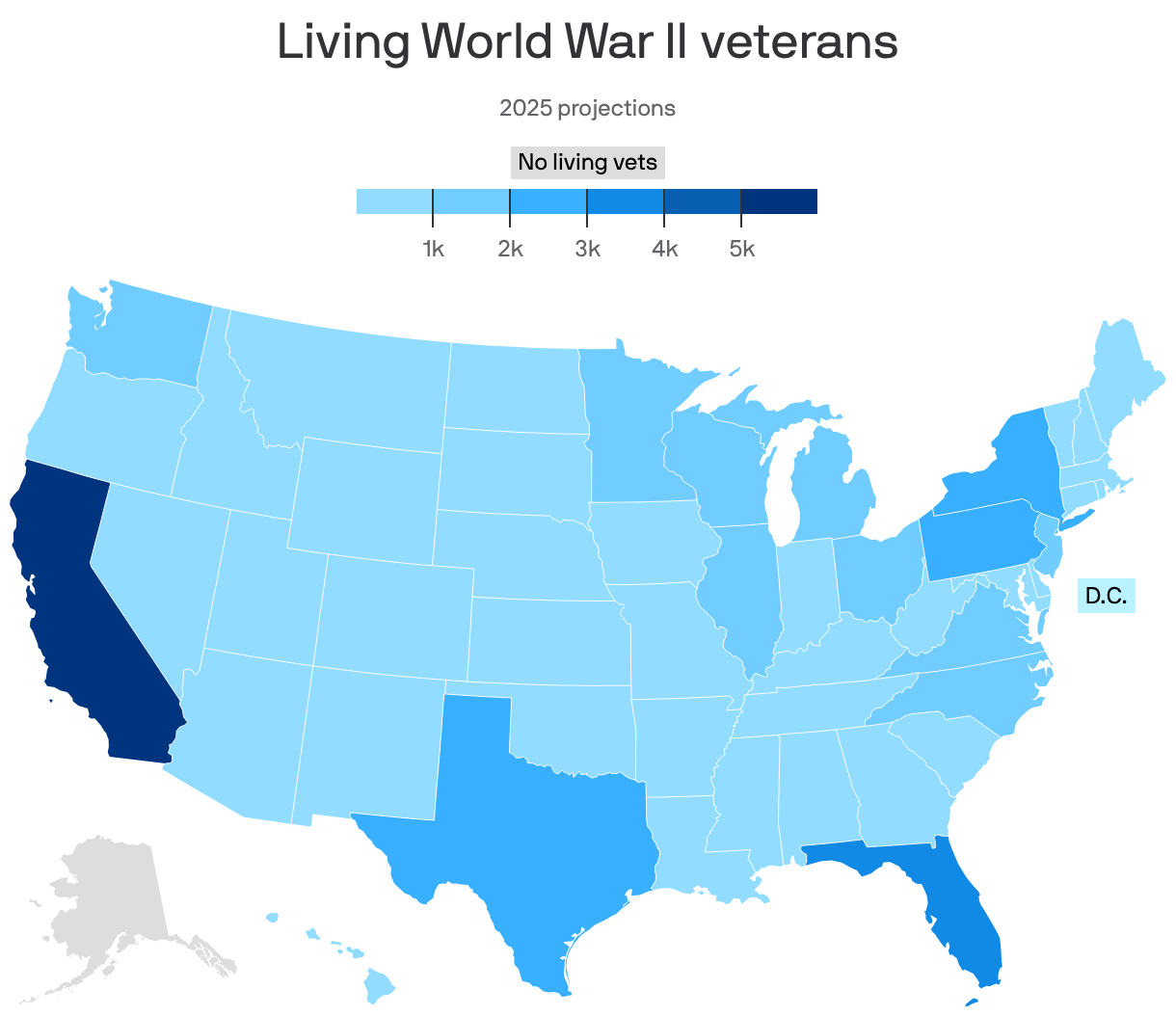
California remains home to more World War II veterans than any other state, but their numbers are dwindling fast.
Why it matters: The U.S. will commemorate the 82nd anniversary of D-Day tomorrow, which honors the Allied invasion that helped liberate Western Europe from Nazi control.
By the numbers: The state had 5,094 surviving World War II veterans as of September 2025, according to the U.S. Department of Veterans Affairs.
- Nationally, about 45,000 veterans remain, down from roughly 66,100 in 2024.
Flashback: On June 6, 1944, Allied forces stormed the beaches of Normandy in the largest seaborne invasion in history.
- More than 150,000 Allied troops landed in Nazi-occupied France, helping turn the tide of the war in Europe.
Zoom in: In San Francisco, the anniversary also carries a more complicated wartime legacy.
- The city was home to one of the nation's largest Japanese American communities before World War II.
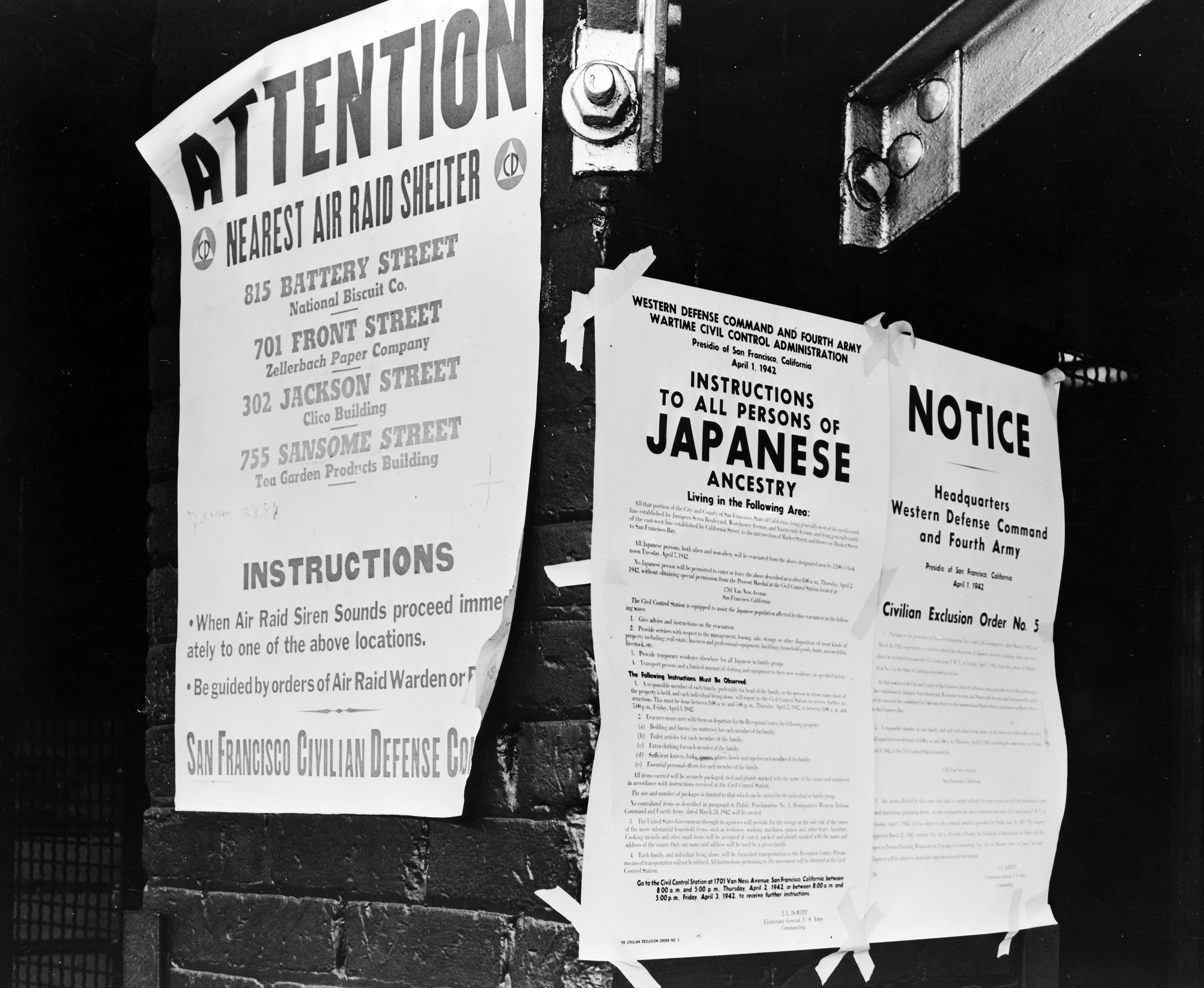
- Following Japan's attack on Pearl Harbor, thousands of Japanese Americans from San Francisco were forcibly removed from their homes and incarcerated in internment camps under Executive Order 9066.
Between the lines: Yet even as their families were imprisoned, many young Japanese American men volunteered to serve in the U.S. military.
- The Nisei soldiers of the 100th Infantry Battalion and the 442nd Regimental Combat Team went on to become one of the most highly decorated units in U.S. military history for their size and length of service.
- Today, their stories are the focus of a traveling exhibit that's currently on display at the Military Intelligence Service Historic Learning Center in the Presidio — which highlights the sacrifices of Japanese American soldiers who fought for a country that had stripped many of their families of their rights.
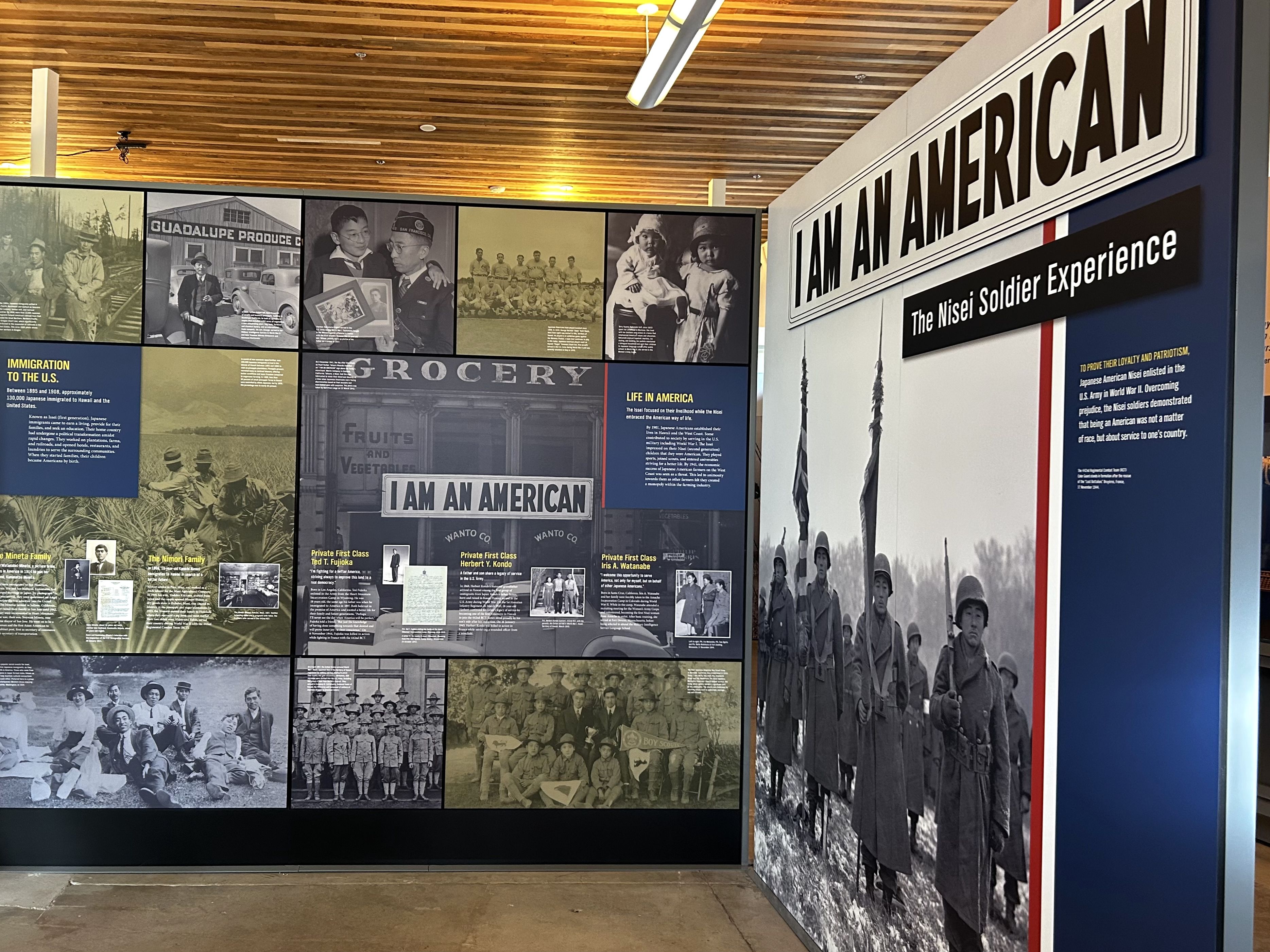
The exhibit, which runs until Aug. 31, serves as both a tribute and a reminder of a painful chapter in the city's history.
- The wartime incarceration of Japanese Americans reshaped San Francisco's Japantown and scattered families, businesses and community institutions across the West.
- Many families returned after the war to find their homes, jobs and property gone, losses that created economic setbacks that persisted across generations.
The bottom line: In San Francisco, remembering World War II means honoring not only those who fought overseas, but also the Japanese American families whose incarceration and service continue to shape the city's legacy today.