Nisei soldiers' WWII story comes to life in new traveling exhibit

Add Axios as your preferred source to
see more of our stories on Google.
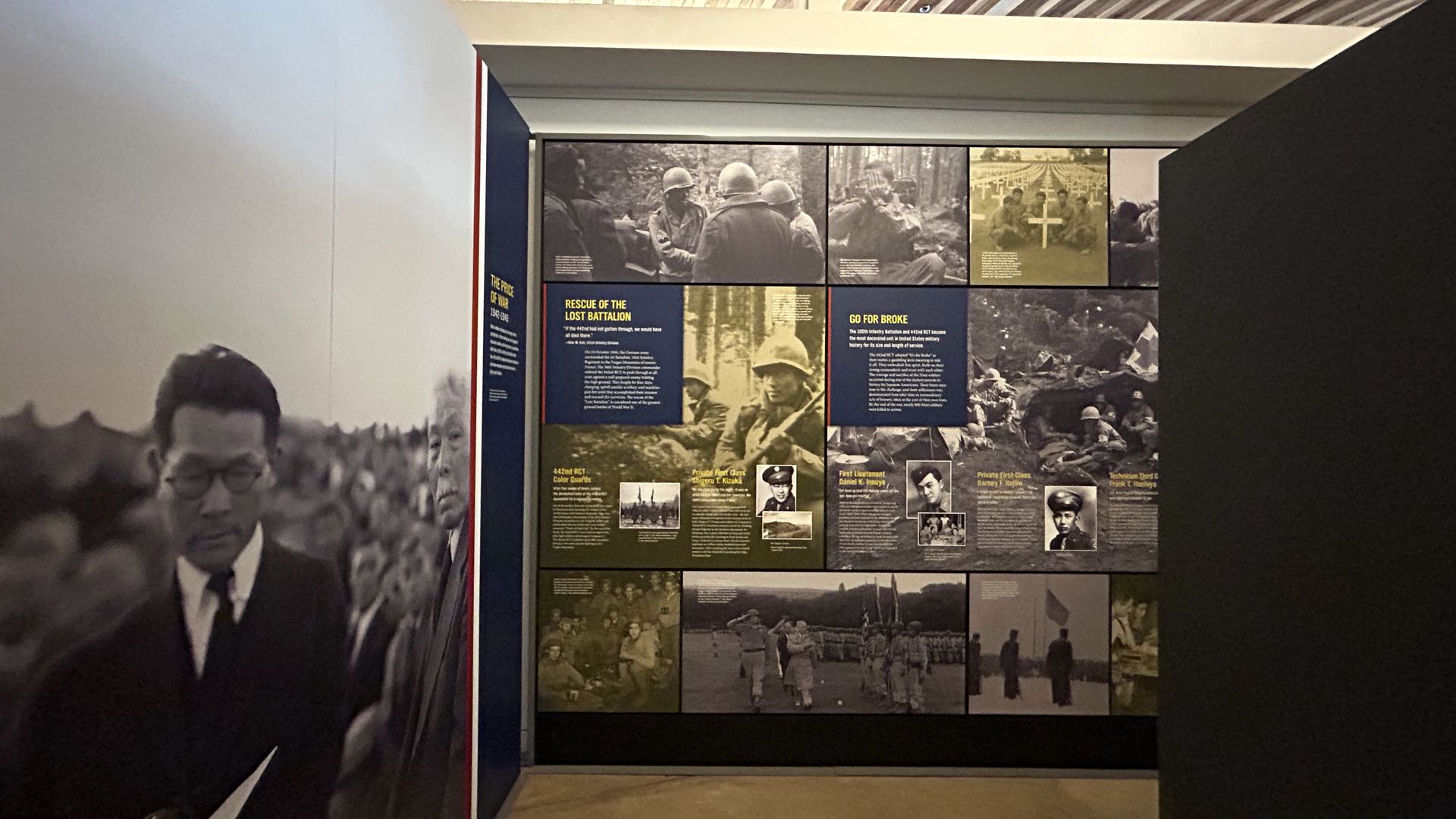
"I Am An American" traces the sacrifices Japanese Americans made during World War II. Photo: Shawna Chen/Axios
A powerful new exhibit that opens Monday in San Francisco tells the story of a generation of Japanese Americans, known as Nisei, who fought wars both at home and overseas during World War II.
Why it matters: As America approaches its 250th anniversary, the soldiers' family members are intent on making sure their history is honored.
The big picture: Nearly 33,000 Nisei soldiers fought in the European and Pacific theaters despite the U.S. government's incarceration of roughly 120,000 people of Japanese ancestry between 1942 and 1945.
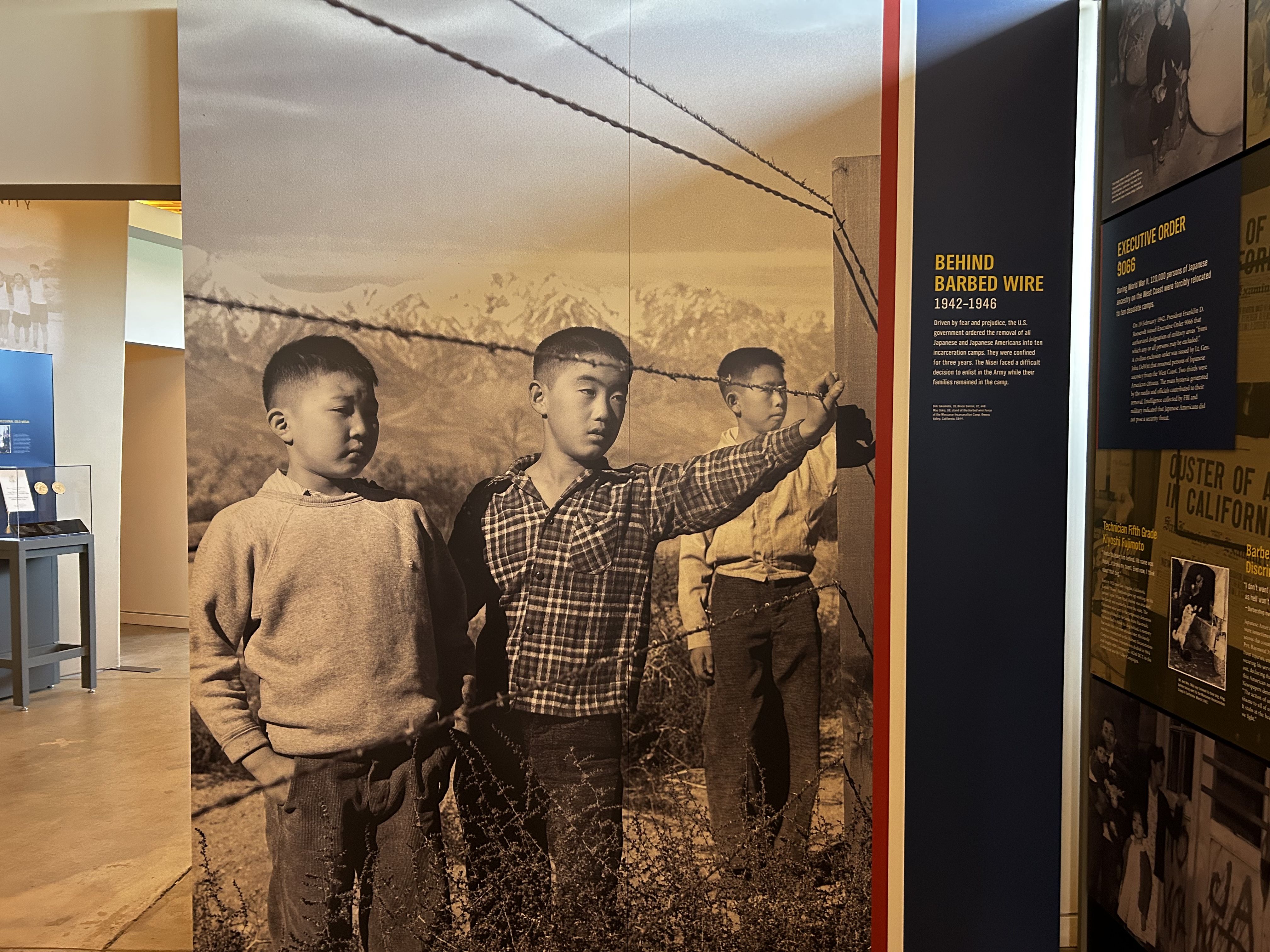
Zoom in: The exhibit — located in the Military Intelligence Service Historic Learning Center — takes viewers through the 20th century Japanese immigration wave, the attack on Pearl Harbor, life behind barbed wire and soldiers' sacrifices on the battlefield.
- The 4,000 men who initially joined the 442nd Regimental Combat Team had to be replaced nearly 3.5 times due to the losses suffered. About 14,000 men served in the unit in total, earning nearly 9,500 Purple Hearts and 21 Medals of Honor, according to the U.S. Army.
- It became the most decorated unit for its size and length of service in U.S. military history.
- Other Nisei worked as linguists in the U.S. Army's Military Intelligence Service, which set up training grounds in the Presidio — where the exhibit is now hosted.
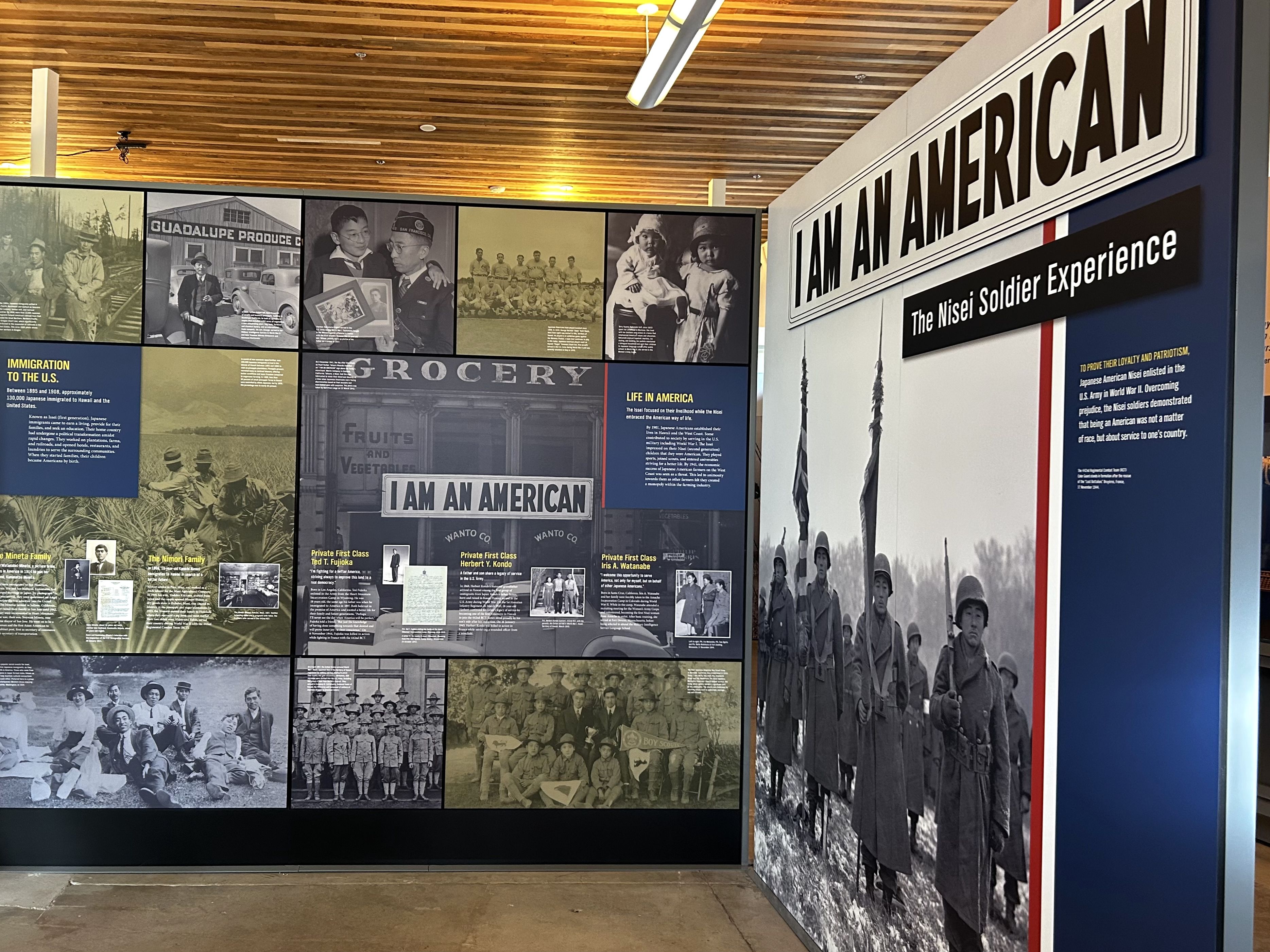
San Francisco is the first stop for the traveling exhibit, which is named "I Am An American" in honor of the sign Tatsuro Matsuda placed in his family's Oakland store the day after the Pearl Harbor attacks.
- "The [Matsuda] family eventually got put into camps, but this was a statement," exhibit curator Christine Sato-Yamazaki told Axios. "Many of the Nisei soldiers, when you talk to them, say, 'Well, we wanted to just prove that we were ... Americans, just like anyone else.'"
Even so, the shame and trauma associated with the history meant a lot of it went unknown.
- "They never talked about it," said Millbrae-based Anne Okubo, whose father served in the 442nd Regimental Combat Unit and mother graduated from high school in a camp. "We knew he was a medic, but that's all we knew."
- "Our parents just wanted to assimilate," Okubo added. "They wanted us to be as American as we could be because they were punished for being Japanese."
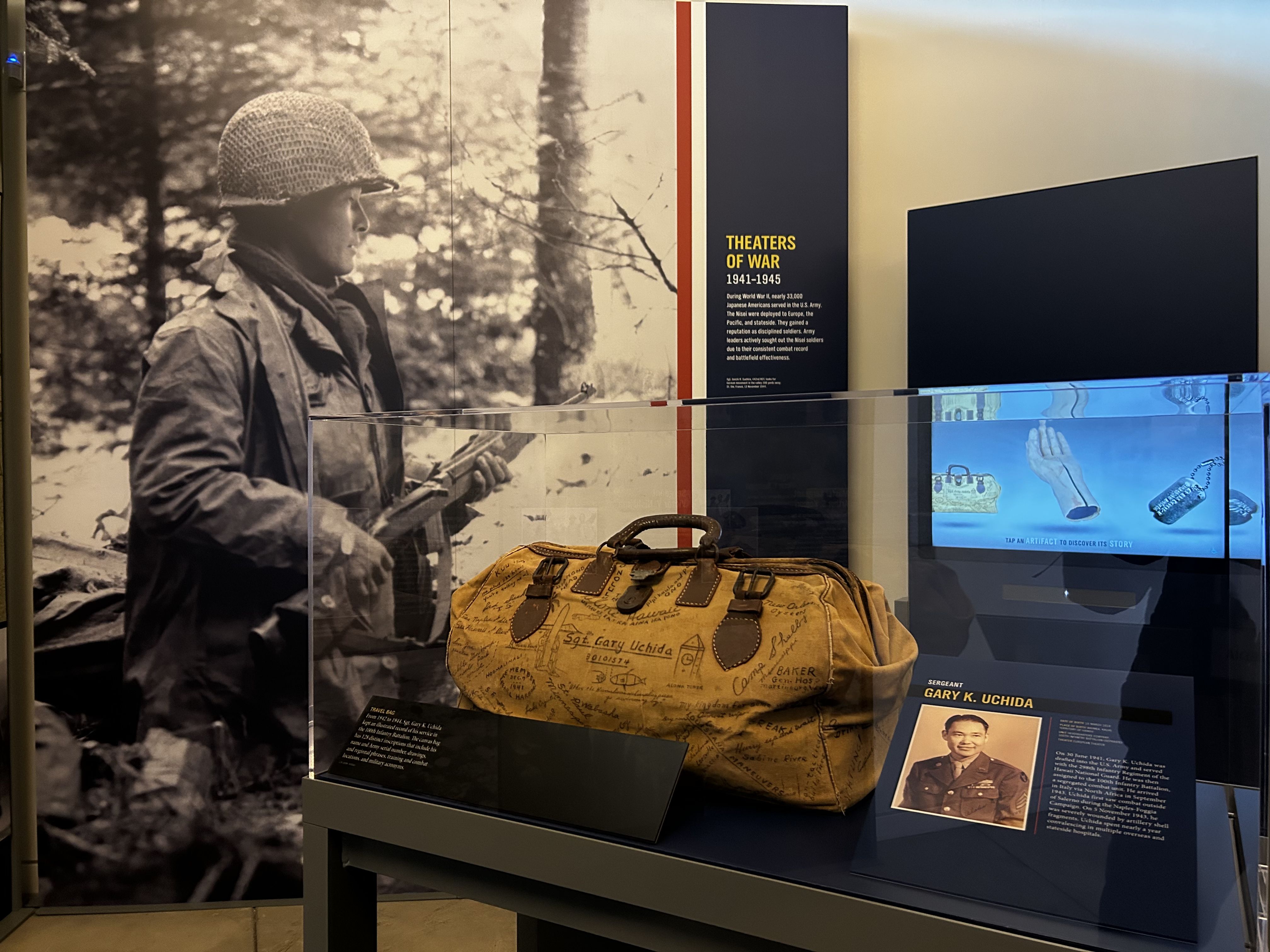
What they're saying: "I'm hoping that this exhibit will help create that awareness, even if it's not taught in schools and the rest of the country," said Sato-Yamazaki, referring to the 442nd unit.
- Her own grandfather, Dave Kawagoye, served as a sergeant; his garrison cap, which features the 442nd unit's motto "Go for Broke," is displayed in the exhibit.
What's next: The exhibit is on display through Aug. 31. Tickets are $15.
- It's set to embark on an 11-city national tour over the next five years, including stops in Portland, Los Angeles, Salt Lake City, Chicago and Honolulu.