Bay Area air ranks among worst in U.S. for health risks

Add Axios as your preferred source to
see more of our stories on Google.
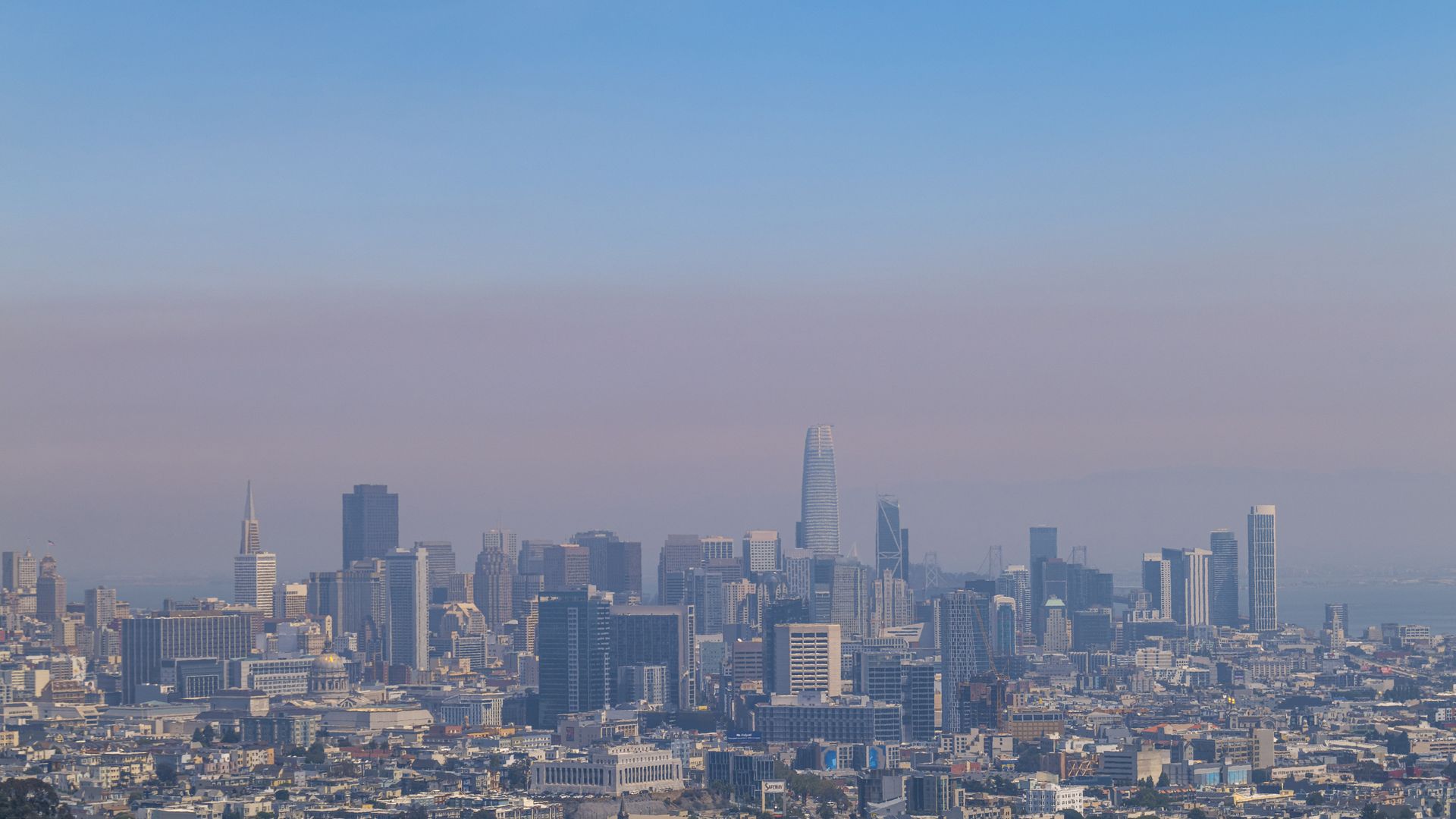
2020 was a real bad year for us, thanks to wildfire smoke and heat. Photo: David Paul Morris/Bloomberg via Getty Images
Bay Area residents face elevated risks of asthma, heart disease and premature death as air pollution here remains among the worst in the U.S.
Why it matters: Air pollution threatens everyone's health, but especially children, seniors and people with asthma or heart and lung conditions.
Driving the news: The San Jose–San Francisco–Oakland metro area earned failing grades on key air quality metrics in this year's State of the Air report by the American Lung Association.
- The region ranks among the top 25 worst in the nation for ozone pollution — meaning frequent unhealthy smog days — and for short-term particle pollution, driven largely by wildfire smoke spikes.
Yes, but: Even as it ranks among the most polluted metros, the Bay Area is showing improvement.
- The report finds the region recorded its lowest-ever level of particle pollution for the second straight year, which means fewer and less severe bad air days than in the past.
The big picture: About 44% of Americans, or 152 million people, are living in counties that received failing grades for unhealthy levels of ozone or particle pollution.
- California cities dominate the most-polluted lists, despite several seeing declining pollution levels.
- In California, 82% of the population lives in counties affected by unhealthy air, per the report.


Zoom in: Air in the Bay Area isn't as polluted as in San Diego, Los Angeles or the Central Valley, home to some of the nation's worst air quality in places like Visalia, Fresno and Bakersfield.
- Wildfire smoke in the Bay Area has caused sharp spikes in fine particle pollution, even though the region tends to have cleaner baseline air than cities in Southern California.
How it works: The report used local air quality data to grade and rank locations in the categories of ozone pollution, daily particle pollution and annual particle pollution.
- It includes data from 2022-2024, "the most recent three years of quality-assured nationwide air pollution data publicly available."
What we're watching: Ozone pollution has worsened across much of the U.S. over the past two years after a run of successful reductions and could continue to do so due to recent rollbacks of environmental rules and clean emissions standards.