Behind the street safety fix SF advocates say could save lives

Add Axios as your preferred source to
see more of our stories on Google.
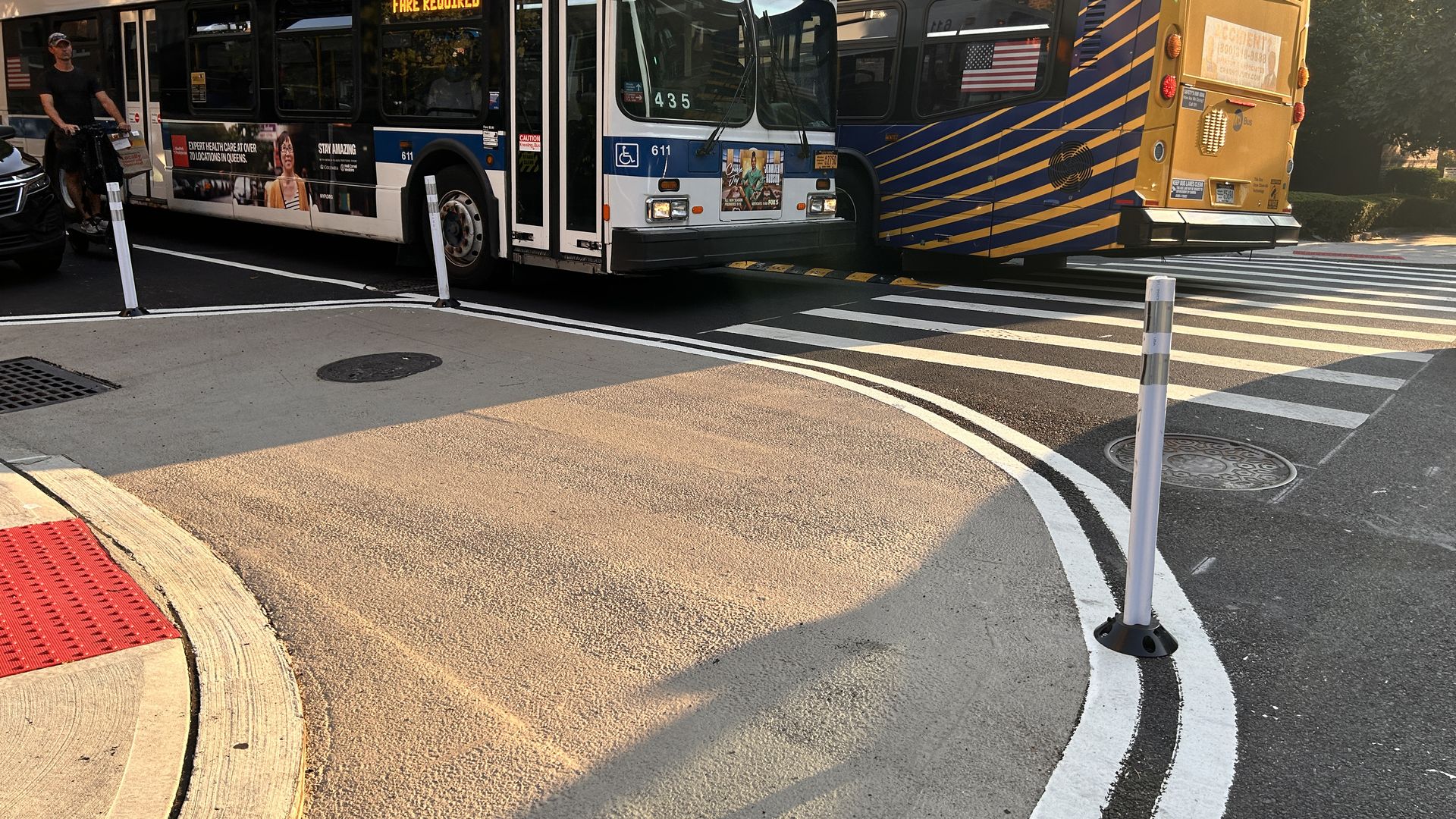
An example of a hardened daylighting curb, using physical posts, in New York City. Photo: Lindsey Nicholson/UCG/Universal Images Group via Getty Images
"Hardened daylighting" might not be a term most people know. But in San Francisco, street safety advocates want it to be a priority as the city weighs competing projects to curb aggressive driving.
The big picture: Hardened daylighting involves inserting physical barriers including planters, bike or scooter racks in the road space next to daylighted curbs (within 20 feet of a crosswalk), to force drivers to round corners more carefully.
- The initiative has seen success in cities like Hoboken, New Jersey, which reportedly hasn't had a traffic death in nine years.
Catch up quick: California's daylighting law, which took effect in January 2025, makes it illegal for drivers to park within 20 feet of a crosswalk.
- The San Francisco Municipal Transportation Authority (SFMTA) is in the process of painting all daylighted curbs red, as mandated by the law, and had completed over 4,800 intersections out of roughly 8,900 as of last week.
Reality check: While red curbs discourage drivers from parking there, the empty space still allows them to speed around corners, according to Luke Bornheimer, executive director of street safety advocacy group Streets Forward.
- That's why Streets Forward and groups such as the Bicycle Coalition and Walk San Francisco are calling on San Francisco to take immediate action on hardened daylighting.
State of play: The SFMTA is developing a program to harden daylighted zones using bike and scooter racks, murals and other physical barriers — though it's an expensive solution, SFMTA spokesperson Parisa Safarzadeh told Axios.
- Improvements like daylighting, upgraded crosswalks and signal timing cost roughly $20,000 per intersection, according to Safarzadeh.
- "We must be strategic about how we scale our safety tools ... [and] prioritize locations based on need and where treatments can be most effective," she said.
SFMTA is already operating on limited resources and still has "a long way to go" to even finish painting curbs, noted Marta Lindsay, communications director for Walk SF.
- But applying hardened daylighting to streets with the highest counts of severe injuries and fatalities — the "gnarliest, busiest intersections" — would be ideal, she said.
- "When you have all this illegal parking happening in the daylighting zone, it's not helping anyway," she added.
Zoom in: Currently, installing bike and scooter parking in daylighted zones relies on a business or organization to submit a request, Bornheimer said.
- Streets Forward wants bike and scooter parking at every daylighted curb in the city — killing two birds with one stone since it'd also reduce sidewalk obstruction by providing dedicated parking space off walkways, per Aaron Breetwor, Streets Forward's program and strategy associate.
- If you don't "take a proactive approach, you will not stem the bleeding," he told Axios.
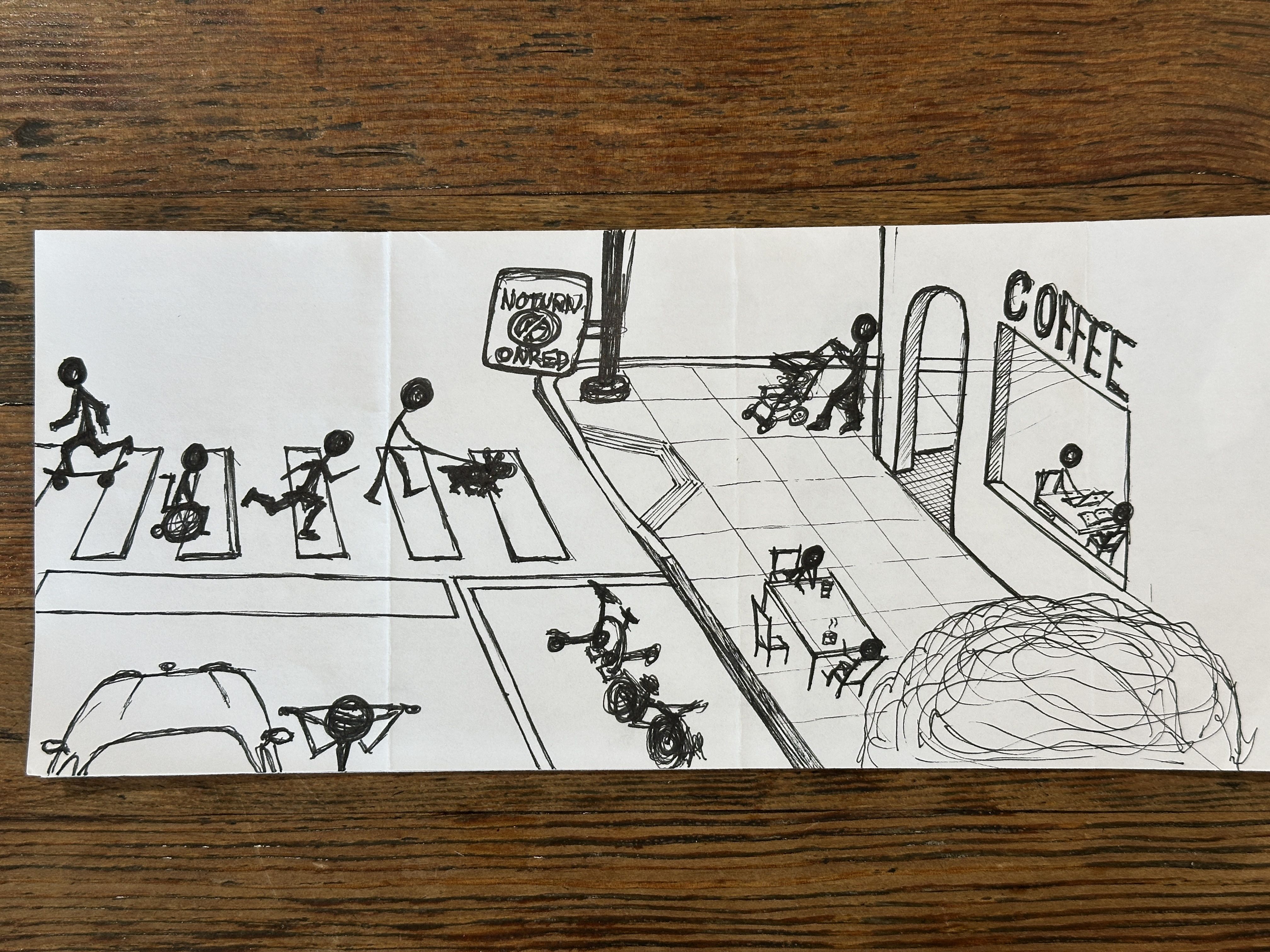
SF locals are also eager to take this issue on, and they often have the best understanding of what intersections need such measures the most, Kate Blumberg, a member of the Livable Streets Committee who led a 2025 civil grand jury report on San Francisco's traffic enforcement failures, told Axios.
What's next: SFMTA is also continuing to target street design changes informed by the updated map of high-injury roadways and monitor rollout of its automated speed safety camera program, which led to a 72% decrease in speeding across 15 sample locations after launching last summer.