SF moves to ban ICE activity on city property


Add Axios as your preferred source to
see more of our stories on Google.
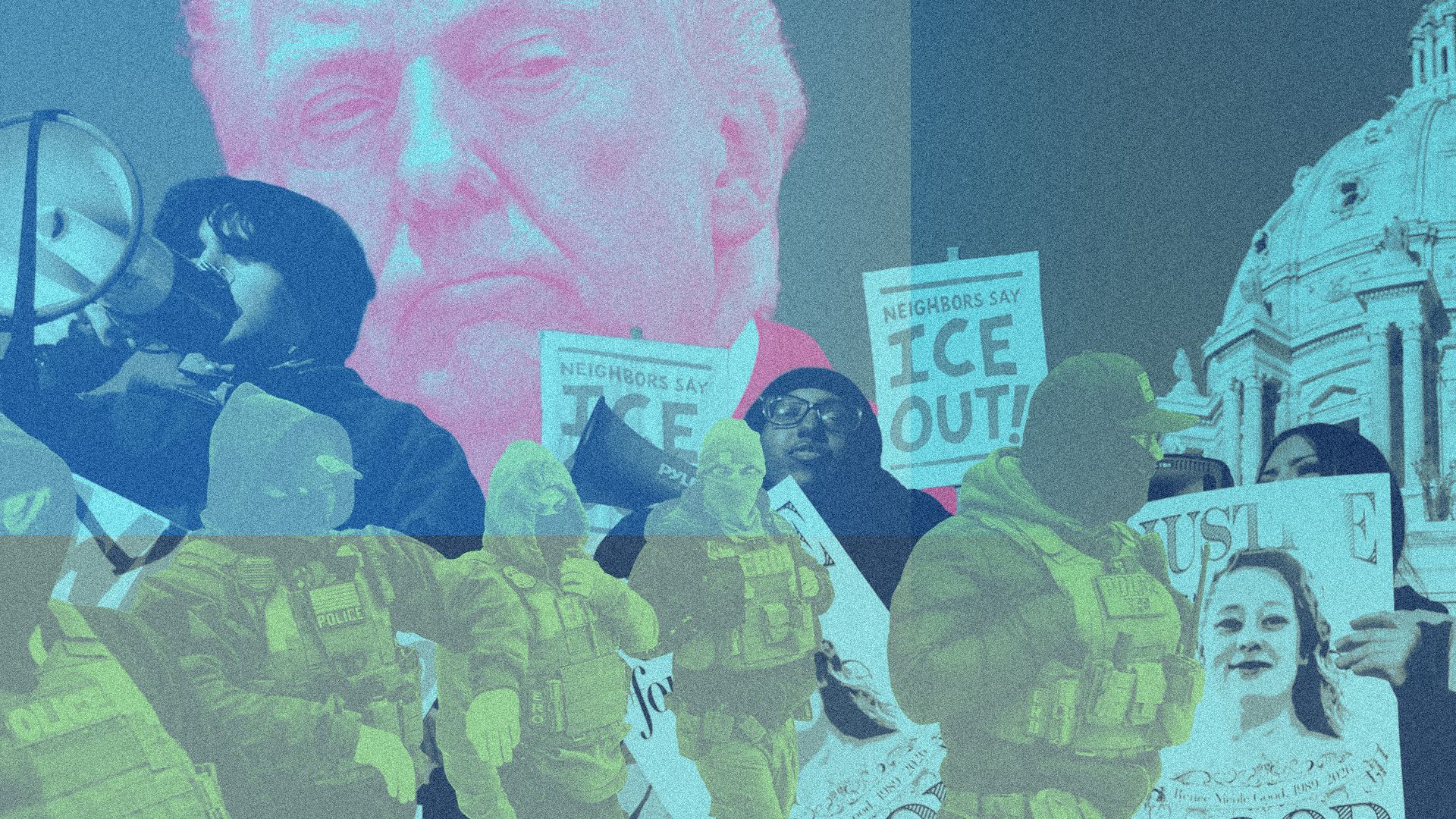
Photo illustration: Brendan Lynch/Axios. Photos: Getty Images
The Board of Supervisors unanimously approved legislation Tuesday that would ban federal immigration enforcement activities on San Francisco city property in a push to create "ICE-free zones."
Why it matters: San Francisco is the latest Bay Area city to pass this kind of measure as elected officials across the country test the extent to which they can counter President Trump's immigration blitz.
Zoom in: The ordinance specifically prohibits the use of city property for immigration enforcement activities that "disrupt" city operations or services.
- The legislation, co-authored by Supervisors Bilal Mahmood and Chyanne Chen, also empowers the city attorney to take legal action against any entity that uses city property for unlawful or unauthorized purposes, such as civil immigration enforcement.
What they're saying: "We've seen what has happened across the country when immigration enforcement occurs at or near public facilities," Mahmood posted on social media when introducing the legislation earlier this month. "Kids miss school. Families avoid collecting benefits. Witnesses stop reporting crimes."
- The goal is to ensure residents can continue utilizing city programs without fear of arrest or deportation, according to Mahmood.
- San Jose, Oakland and Santa Clara County have already enacted similar ordinances.
Yes, but: The new law doesn't prevent ICE from serving judicial warrants or carrying out operations on federal land, KTVU reports.
The big picture: While Congress is at a virtual standstill on ICE reforms, state and local governments are working to put guardrails on federal immigration enforcement.
State of play: The California Senate recently passed legislation allowing suits for monetary damages against any officer, federal included, who violates their constitutional rights.
- State Sen. Scott Wiener, sponsor of the No Kings Act, told Axios that the existing legal framework was "a huge loophole and a huge weakness because it creates a sense of impunity, that federal agents can do whatever they want."
- The bill is currently being discussed in the Assembly.
Reality check: There's a red line states can't cross in their efforts, according to Vikram Amar, a professor of law at UC Davis.
- States "can tell their local officials, 'We don't want you doing ICE's job,' but they can't tell ICE how to do ICE's job," Amar said.
The other side: An ICE spokesperson blasted the "unlawful" efforts in a statement to Axios.
- "Federal officials acting in the course of their duties are immune from liability under state law," they said.
Between the lines: While federal statute authorizes individuals to sue state officials who violate their constitutional rights, Congress never did the same to impose liability on federal officers.
- The Supreme Court established a right to sue for damages via so-called "Bivens actions" — but that right has been limited in subsequent decisions over several decades, with the justices declining to expand it beyond narrow circumstances.
- "To be able to enforce your rights, in order to make them meaningful, you ... need to have a right to sue," says Anya Bidwell, a senior attorney at the Institute for Justice. "And right now, when it comes to federal officials, we don't."
What we're watching: A federal judge struck down California's law banning federal agents from wearing face masks earlier this month, deeming it discriminatory.
- "Where the state regulates the federal government directly, it's a nonstarter," Amar says. "California can't tell ICE how to do its job any more than Alabama can tell the Civil Rights Division how to do its job."