Central Subway debate returns during a shaky moment for transit

Add Axios as your preferred source to
see more of our stories on Google.
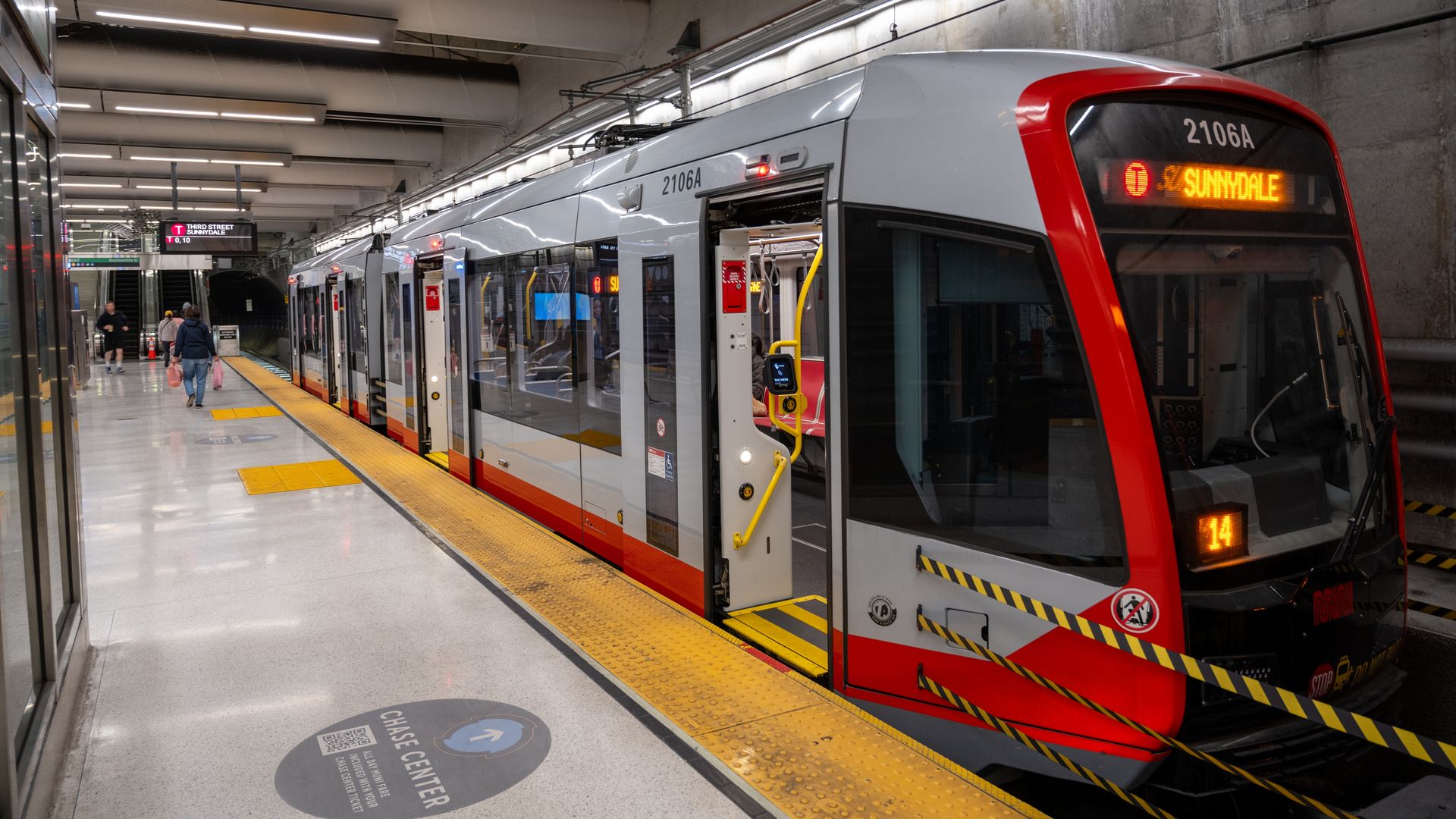
The Central Subway, opened to the public in 2023, runs through SoMa, Union Square and Chinatown. Photo: Smith Collection / Gado via Getty Images
Can the promise of a Central Subway extension help anchor the campaign to save San Francisco public transit? That was the question hanging over a city hearing in which officials estimated the cost could near $2 billion.
The big picture: District 3 Supervisor Danny Sauter is leading a renewed push to extend the Central Subway to North Beach and Fisherman's Wharf as the San Francisco Municipal Transportation Agency (SFMTA) faces route and service cuts amid $300 million annual deficits.
State of play: At a land use and transportation committee hearing Monday, Sauter said that although transit funding measures should be the city's primary focus, "we also need to give people something bigger and better to keep our city excited about what's next."
- Sauter, who campaigned on the extension, has previously said it would drive foot traffic to northeast San Francisco and bolster economic growth, especially since an unfinished tunnel section to North Beach already exists from the first phase of construction.
- Several speakers expressed similar support during public comment, highlighting the extension as an investment for future generations and the capacity for greater movement among neighborhoods.
Catch up quick: The Central Subway opened in 2023, about four years later than planned. The project, a 1.7-mile extension of Muni's T Third Line through SoMa, Union Square and Chinatown, cost the city $1.95 billion despite an original estimate of $645 million.
- Construction took 10 years, leading to traffic disruptions and "a lot of hard moments for both residents and businesses," SFMTA senior manager Sean Kennedy said at the hearing.
- Supervisors probed SFMTA about the financial overrun Monday and urged the agency to streamline contract procurement processes and environmental review.
- Kennedy said the ballooned costs were due to the need for deeper station configurations than expected.
The one-mile Central Subway extension that was the focus of Monday's hearing was estimated to cost $1.6 billion in 2020, according to Kennedy, who added that SFMTA's time and money would remain "focused on projects that improve transit efficiency" rather than long-range planning.
What they're saying: Nick Ferris, president of the Telegraph Hill Dwellers neighborhood association and co-founder of the North Beach Farmers Market, told Axios that although he wants a train stop, the city can't plan "in some kind of fantasy budget."
- "I grew up in the neighborhood," he said. "Having a train stop would've made my life so much easier, but … we need to shift the framing of this a little bit, not about whether the idea sounds good" but whether it's fiscally responsible.
- Local officials need to educate people on the severity of the SFMTA's budget crisis and potential solutions, Ferris added. A proposed ballot initiative would increase funding for transit systems by adding a 1% sales tax, while a parcel tax would charge homeowners at least $129 a year to support Muni.
- If San Franciscans erroneously get the message that money from the measures would primarily go toward the extension, the initiative would likely get shot down, Ferris argued.
What's next: Sauter said he plans to ensure that questions about operating costs are answered as soon as possible so the city doesn't "wait another decade" for the extension.