The battle over Proposition 50, explained

Add Axios as your preferred source to
see more of our stories on Google.
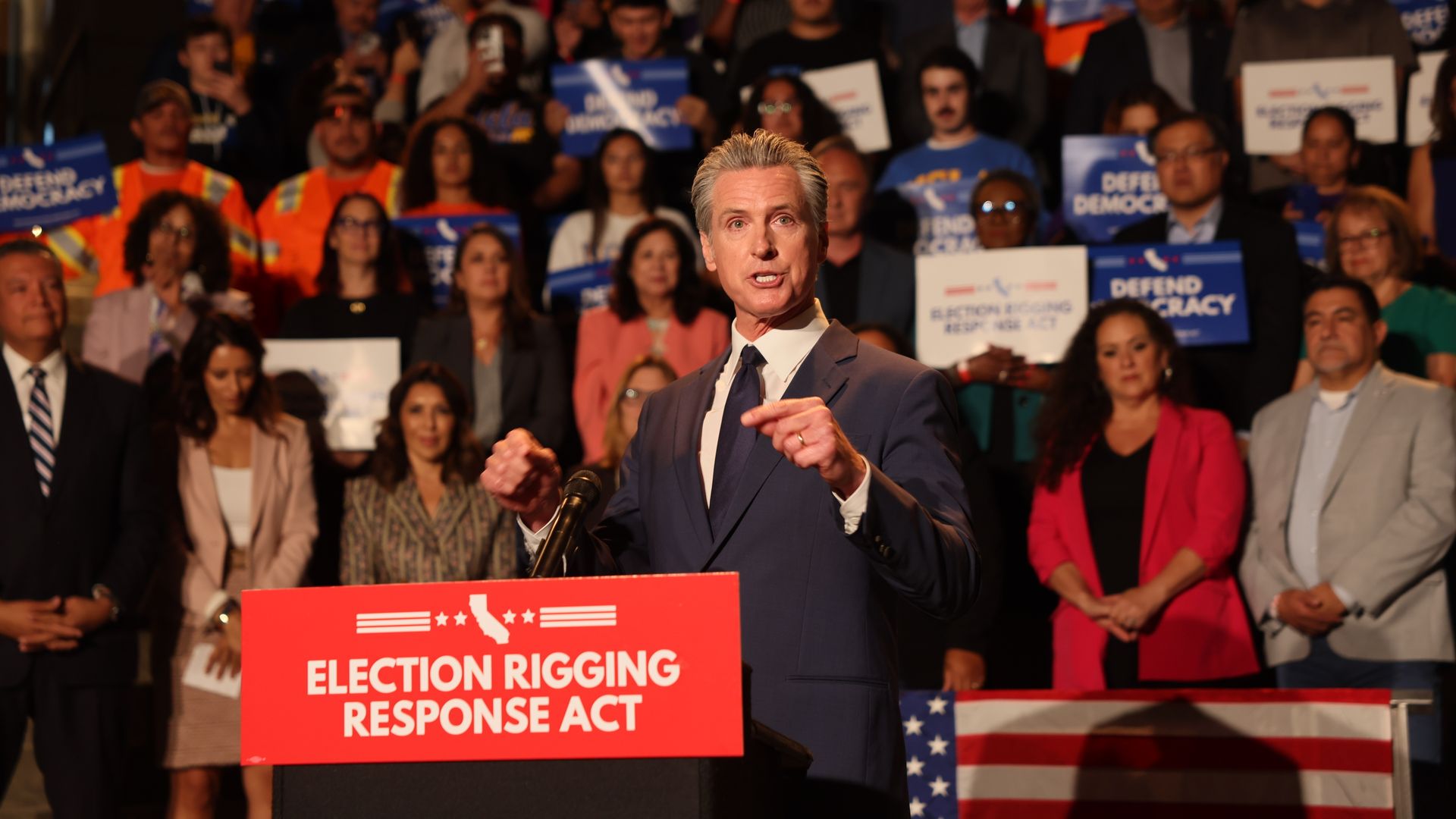
In his defense of Prop. 50, Gov. Gavin Newsom has said California must "fight fire with fire" in the nationwide redistricting arms race. Photo: Mario Tama/Getty Images
California voters began receiving ballots in their mailboxes this week for a Nov. 4 special election that could reshape the balance of power in Congress.
Why it matters: This vote could ripple into the 2026 midterms — and even the 2028 presidential race.
State of play: Proposition 50 — or the Election Rigging Response Act — would let lawmakers redraw the state's congressional map, shifting as many as five GOP-held seats into Democrat-leaning districts.
The big picture: Led by Gov. Gavin Newsom, California's latest ballot measure responds to a redistricting push sparked by President Trump.
- In July, the president urged Texas Republicans to redraw their congressional maps to gain seats — with other Republican-led states quickly following suit.
- Newsom retaliated by proposing a "trigger" ballot measure in August.
How it works: If approved, the proposal would amend a 2008 law that created California's independent redistricting commission.
- The Legislature would temporarily take over mapmaking for the next three election cycles — 2026, 2028 and 2030 — before power returns to the commission. Because redistricting is written into the state constitution, the measure needs a simple majority to pass.
What they're saying: Supporters — including top Democrats and major donors like billionaire George Soros — frame the measure as a defensive "fighting fire with fire" move against GOP gerrymandering, arguing California must act to protect national representation and counteract an uneven playing field.
The other side: Opponents — including Republicans and former Gov. Arnold Schwarzenegger — say it would undo voter-approved reforms, politicize mapmaking and set a dangerous precedent.
By the numbers: Proposition 50 is now one of the most expensive ballot fights in state history, with more than $206 million raised on both sides as of Oct. 7, per the California Secretary of State's database.
Zoom in: California currently has 43 Democrats and nine Republicans in the U.S. House. Here's how districts could change:
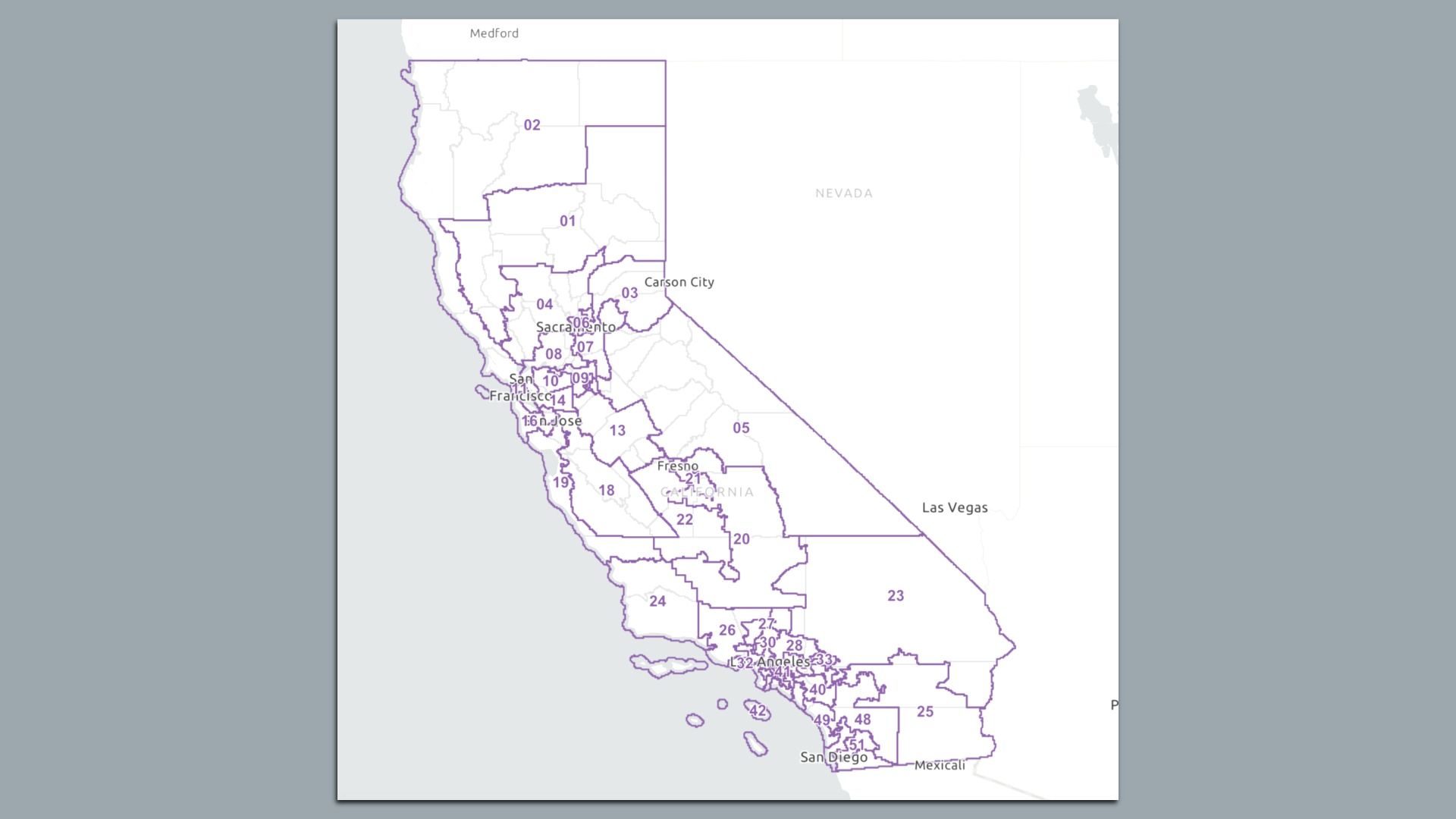
- Key battleground regions — including the Central Valley, Inland Empire, Orange County, northern LA County, San Diego and Northern California — would be affected with leftward shifts significantly diluting the number of Republican voters.
- Northern California would shift left, with Rep. Doug LaMalfa (D-1) losing rural counties and Rep. Kevin Kiley (D-3) gaining more of liberal Sacramento County.
- Swing seats held by Reps. Adam Gray (D-13), Josh Harder (D-9) and George Whitesides (D-27) would tilt more Democratic, while Reps. David Valadao (D-22) and Darrell Issa (D-48) would face tougher reelection odds, per a San Francisco Chronicle analysis.
What's next: Attorney General Rob Bonta is urging Californians to mail their ballots early because new U.S. Postal Service policies could delay postmarks, leaving ballots dropped off on Election Day uncounted.