SF could add more than 61,000 housing units by converting vacant offices

Add Axios as your preferred source to
see more of our stories on Google.
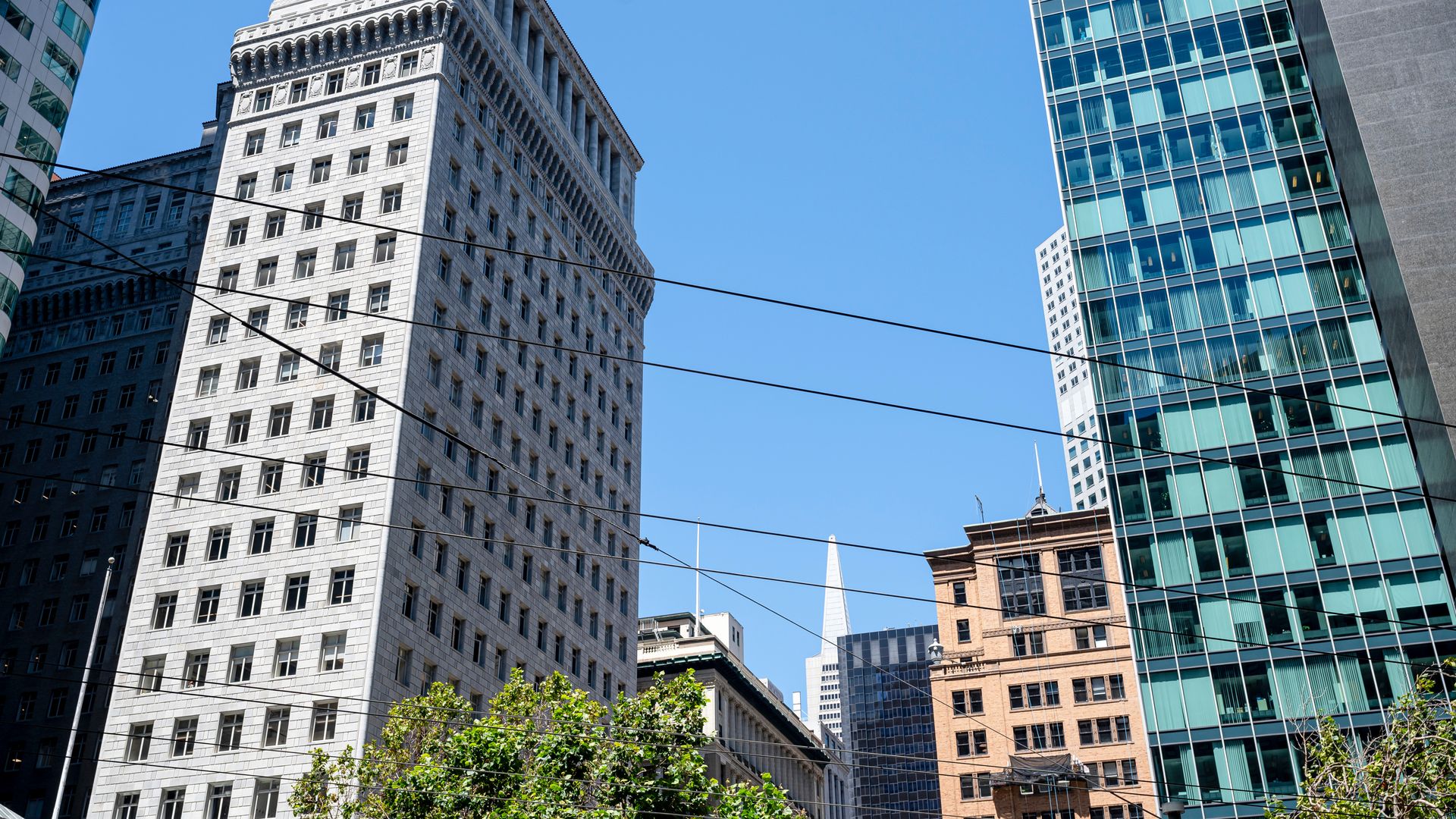
Downtown San Francisco has struggled to recover amid pandemic-driven office vacancies. Photo: David Paul Morris/Bloomberg via Getty Images
San Francisco's empty offices could produce over 61,000 housing units without new construction, a new analysis finds.
Why it matters: While our office vacancy rate has declined since the pandemic, remote and hybrid work have left hundreds of thousands of square feet unused, even as the Bay Area's housing shortage persists.
Driving the news: At 61,603 potential units, San Francisco ranks second in the nation for "office-to-housing conversion potential," according to a recent study by business debt collection agency The Kaplan Group.
- New York City (78,121) is first, while Dallas (57,247) comes in third.
- SF, however, has the highest vacancy rate (34.7%) among the 91 major U.S. cities analyzed.
- Like other markets with high vacancy rates, it's experiencing some of the nation's highest underutilization of office space, per the report.
The big picture: The national office vacancy rate has been inching up, reaching 20.8% in the first quarter of 2025, with the potential to create roughly 1.2 million apartments across the U.S.
The fine print: The analysis uses Cushman & Wakefield office market data from the first quarter of 2025.
- The potential number of units created through office conversions was estimated using the average U.S. apartment size (908 square feet) from RentCafe.
State of play: Local officials have been encouraging more office-to-housing conversions in recent years, including by waiving certain planning code requirements.
- The city's first post-pandemic conversion project is set to revitalize the Humboldt Bank Building on Market Street.
- Yes, but: San Francisco's development regulations remain a key barrier.
What we're watching: Mayor Daniel Lurie signed legislation earlier this month to establish a downtown revitalization financing district and incentivize conversions of underutilized buildings.
- The city would reinvest the increased property tax revenue generated by these developments to offset costs.
- Eligible areas include the Market Street corridor from the waterfront to Civic Center, the Financial District, Union Square and the East Cut, Rincon and Yerba Buena neighborhoods south of Market.
What they're saying: "We're not just speeding needed progress on housing production — we're updating 20th-century land-use decisions to create thriving 21st-century mixed-use neighborhoods," Supervisor Matt Dorsey said in a news release at the time.