San Francisco Bay Area ranks among worst metros for ozone pollution


Add Axios as your preferred source to
see more of our stories on Google.
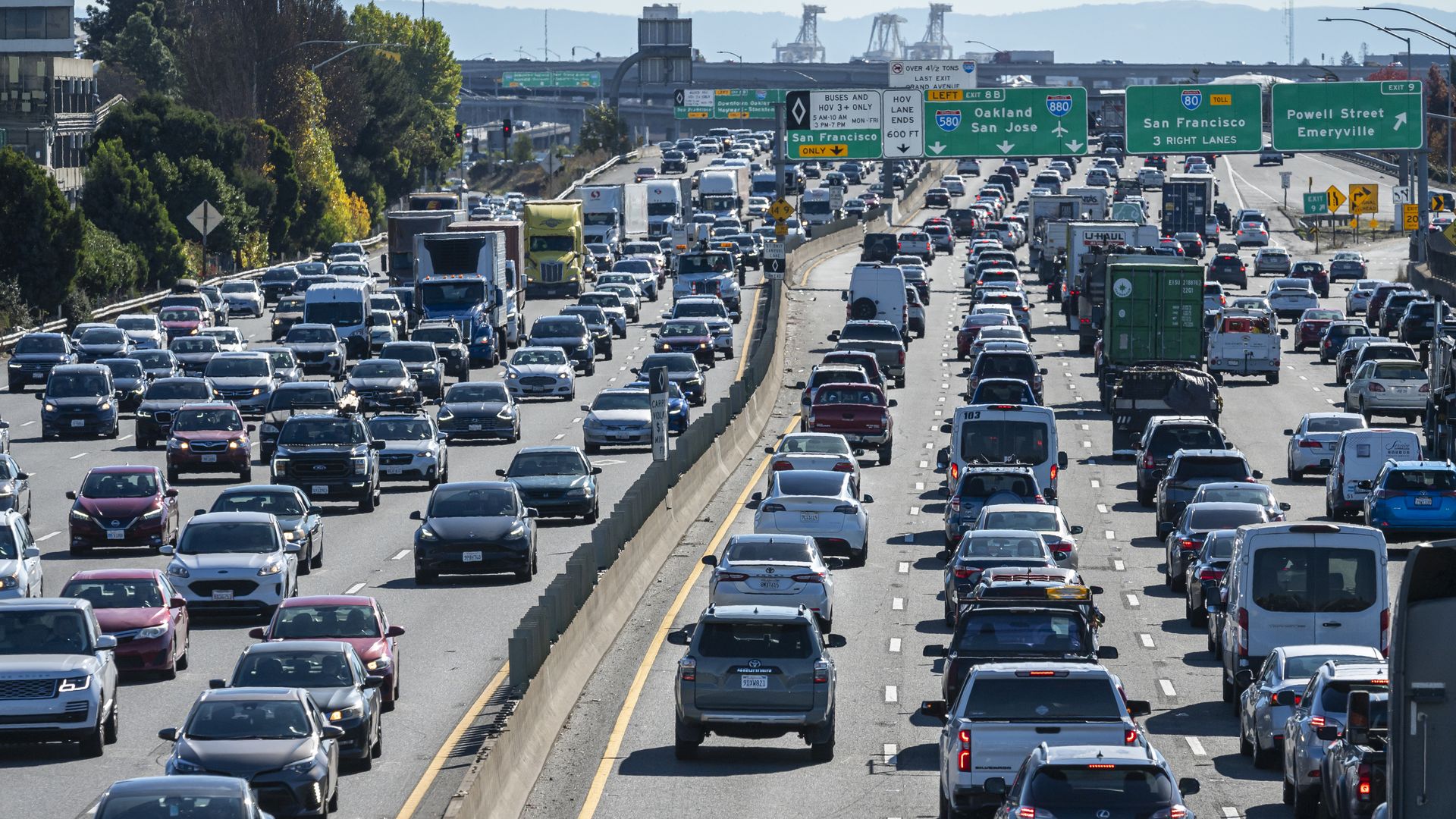
Traffic along Interstate 80 in Emeryville. Photographer: David Paul Morris/Bloomberg via Getty Images
The Bay Area is among the top 25 metros in the U.S. with the worst ozone pollution, according to the American Lung Association's 2025 State of the Air report.
Why it matters: Inhaling smog has been compared to a "sunburn of the lungs," per the report, and may cause shortness of breath, coughing and reduced life expectancy.
State of play: The San Jose-San Francisco-Oakland region ranked 14th in this year's report. Conditions have slightly improved from last year, when the metro area came in 12th.
- The findings, which predate the current Trump administration, come as the White House attempts to roll back EPA rules and regulations meant to curb pollution and promote cleaner air.
What they're saying: "Clearly, we need to do more to control the pollutants that are impacting our changing climate and worsening the factors that go into the wildfires and the extreme heat events that are threatening our health, instead of thinking about how to roll them back," says Katherine Pruitt, senior director of nationwide clean air policy at the American Lung Association and report author.
The big picture: Nearly half of Americans are now exposed to potentially dangerous levels of air pollution, per the report.
Zoom in: Vehicles are the largest contributor to ozone pollution in the Bay Area, representing more than half of all ozone precursors in the region, according to the Bay Area Air Quality Management District.
- Wildfires in recent years have also led to poorer air quality across the state, per the California Air Resources Board.
- Three California metros — Los Angeles, Visalia and Bakersfield — lead as the top three areas in the new rankings.
By the numbers: Just over 156 million Americans — 46% of the population — are living in areas with unhealthy levels of ozone or particle pollution, per the report.
- That's almost 25 million more compared with last year's report, and the highest number in the past decade of the report's history.
Between the lines: Extreme heat, wildfires and drought are degrading air quality nationwide, the lung association says. All have been linked to climate change.
How it works: The report uses local air quality data to grade and rank locations based on ozone pollution, daily particle pollution and annual particle pollution.
- This latest report includes data from 2021 to 2023, "the most recent three years of quality-assured nationwide air pollution data publicly available."
- Ozone is a gas that, at ground level, is a harmful irritant. Particle pollution involves tiny airborne particles from wildfires, fossil fuel burning and more.
Stunning stat: Hispanic people are almost three times more likely than white people to live somewhere with failing grades in all three categories.