Mayor Lurie's first 100 days follow a familiar playbook

Add Axios as your preferred source to
see more of our stories on Google.
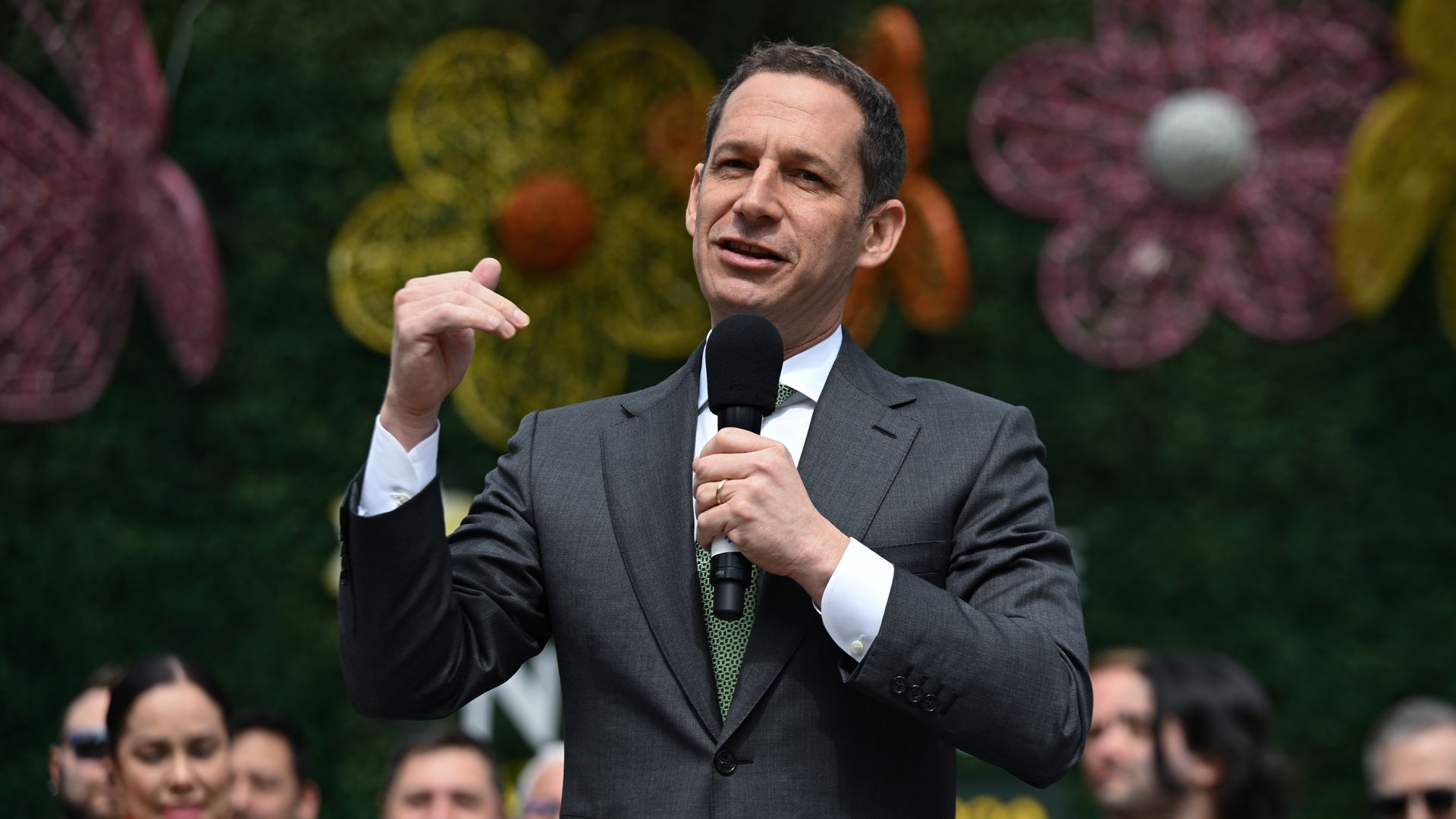
Mayor Daniel Lurie speaks during the 2025 American Flower Bulb Day in Union Square. Photo: Tayfun Coskun/Anadolu via Getty Images
Friday marks Mayor Daniel Lurie's 100th day in office. The Levi Strauss heir, who was elected after attacking established politicians as corrupt, vowed to deliver a safer, cleaner San Francisco — but so far, his policy slate hasn't looked too different from his predecessor's.
Why it matters: Lurie inherited the mantle after a tumultuous few years when former Mayor London Breed struggled to bring San Francisco out of a pandemic-era slump.
What they're saying: It's hard to say whether San Franciscans' increased "appetite for change" is specific to Lurie, but it does work in his favor, according to Sujata Srivastava, chief policy officer at urban policy think tank SPUR.
- His administration has responded by showing "a willingness to try new things," such as restructuring City Hall, Srivastava told Axios.
- 43% of residents say the city is "headed in the right direction," compared to 22% last year, per a February poll from the San Francisco Chamber of Commerce.
State of play: Lurie said in a speech Thursday that while he's proud of what he's been able to achieve, the work continues.
- "San Franciscans want to live in a city they feel proud to call home," he said. "And we are going to deliver."
Yes, but: While Lurie has made progress on a number of issues, many of his policy actions have been an extension of Breed's.
Downtown recovery
Lurie benefited from several major events that infused cash into the city shortly after his inauguration, including the NBA All-Star Game.
- He's built on Breed's successes by moving to create five more entertainment zones and extending a program that makes it easier for entrepreneurs to open small businesses.
Where Lurie has stood out is in partnering with state legislators to bring back a last-call extension that would allow patrons to drink until 4am.
Public safety
Lurie has touted the decline in crime, which is at its lowest in 23 years citywide, but it was already falling before he took office. The same goes for encampments, which Breed cracked down on last summer.
- The launch of automated speed cameras last month was similarly greenlit at Breed's urging.
Yes, but: Lurie launched a "hospitality zone task force" to focus on preventative policing in high-traffic areas and plans to open a behavioral health center in the Tenderloin.
- His fentanyl emergency order, which some critics called performative, helped expedite funding and staffing for tackling the epidemic.
Housing
Lurie recently introduced a rezoning plan that would concentrate taller homes in neighborhoods that haven't seen major construction in decades.
- The proposal, an expansion of a Breed policy, was lauded by affordable housing advocates but faces opposition from many westside residents.
- His push for office-to-housing conversions was similarly advocated for by Breed.
Other initiatives include overhauling the city's homelessness response, deploying emergency vouchers for interim housing and adding 1,500 shelter beds.
- Reality check: Public health experts tell Axios the only real solution is affordable housing, which requires streamlining the largely untouched permitting process.
Between the lines: Lurie's push to reorganize departments is a start, but policy analysts say San Francisco's government — which Srivastava likened to a maze that gets a new section every time something goes wrong — still needs more reform.
- "It makes it really hard for people to understand, 'Who's responsible? How do I get these services? Who do I talk to when something goes wrong?'" Srivastava told Axios.
What we're watching: It's unclear how Lurie plans to close a $818 million deficit in the budget. He must submit a budget proposal to the Board of Supervisors in June.