Thrifting in San Francisco expected to boom as tariffs increase cost of living


Add Axios as your preferred source to
see more of our stories on Google.
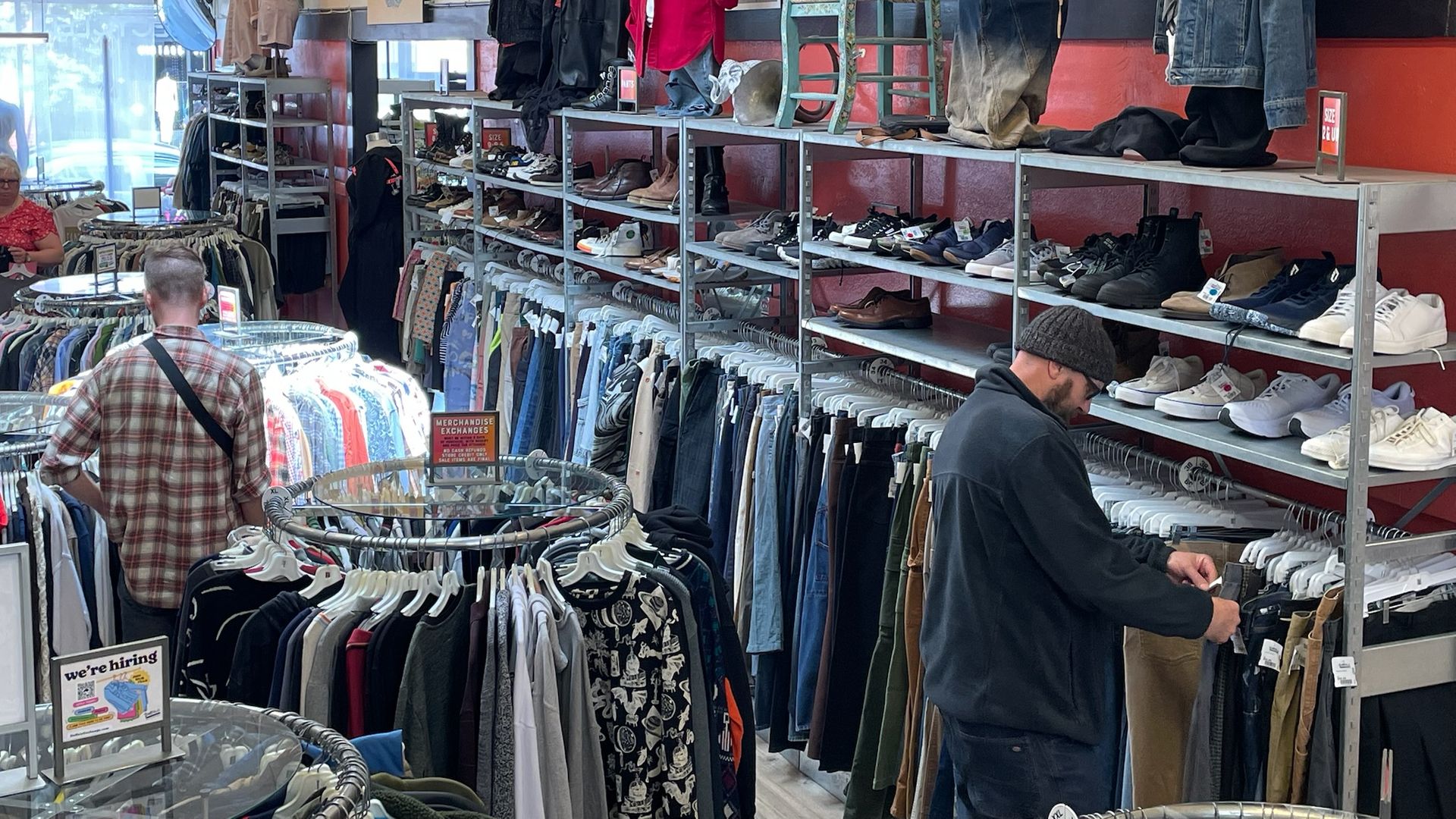
Shoppers thrift at Buffalo Exchange on Haight Street in San Francisco. Photo: Courtesy of Buffalo Exchange
President Trump's global tariffs mean clothes at U.S. retailers stand to get a lot more expensive.
The big picture: With the U.S. importing nearly all of its clothing and shoes — more than half from China, Vietnam and Bangladesh alone — soaring apparel prices could send shoppers thrifting.
State of play: While resale does well all the time, "it does even better during an economic turn-down," said Adele Meyer, executive director of the National Association of Resale Professionals.
- People looking to save money can attract those who have never shopped resale before, she said.
Zoom in: San Francisco already has a high concentration of secondhand stores across the city, ranging from traditional options like Goodwill and Salvation Army to high-end boutique consignments and resale retailers like Crossroads Trading Co. and Buffalo Exchange.
- The city is ranked as one of the top 10 in the U.S. for thrift shopping, with some of the highest-rated secondhand stores, according to a 2019 study by Joybird, a modern furniture and home decor brand.
What they're saying: Jessica Pruitt, an assistant marketing manager at Buffalo Exchange told Axios that the company's two stores in San Francisco have seen an uptick in business over the past few weeks since the tariffs went into effect, and she expects those stores to "definitely thrive" as time goes by.
- "San Francisco is not a cheap place to live — we'll see the cost of living go up even more, so people will then turn towards wanting to either sell their clothing to make money or look towards secondhand as an affordable option," Pruitt added.
By the numbers: The popularity of secondhand shopping was already on the rise before the tariffs.
- 35% of shoppers embarked on their first resale journey in the past year; an 8% year-over-year increase, according to a 2024 report from OfferUp, a peer-to-peer marketplace for local goods.
- A majority of shoppers said they turned to resale due to increased cost of living (58%) or price savings compared with buying new (53%).
- 55% growth is projected for the re-commerce market by 2029, reaching $291.6 billion, with resale expected to account for 8% of total retail, even without the tariff impact.
Between the lines: During the Great Depression, which also saw an increase in tariffs, consumers turned to thrift stores, but there weren't enough goods until the 1970s, when the stores saw significant growth, Jennifer Le Zotte, a professor at the University of North Carolina-Wilmington, said.
- Nearly two-thirds of U.S. resale store respondents reported a 31% average increase in sales during the Great Recession, per a 2009 National Association of Resale & Thrift Shops survey.
The intrigue: When affordability becomes a higher priority, people want to find good deals, Pruitt said. That means more people might start choosing store credit over cash when selling items at stores like Buffalo Exchange.
- Buffalo Exchange assesses an item's value and gives the seller the option between receiving 50% in store credit or 25% of the merchandise's value in cash.
- Currently, the split is about half and half between cash and store credit, though Pruitt expects more people will increasingly prefer to trade in their clothes for credit to get "new" items without spending additional money.
The bottom line: "Consumers want to stretch their budgets without sacrificing quality," Ken Murphy, OfferUp's chief innovation officer, told Axios.