The SF man whose case established birthright citizenship

Add Axios as your preferred source to
see more of our stories on Google.
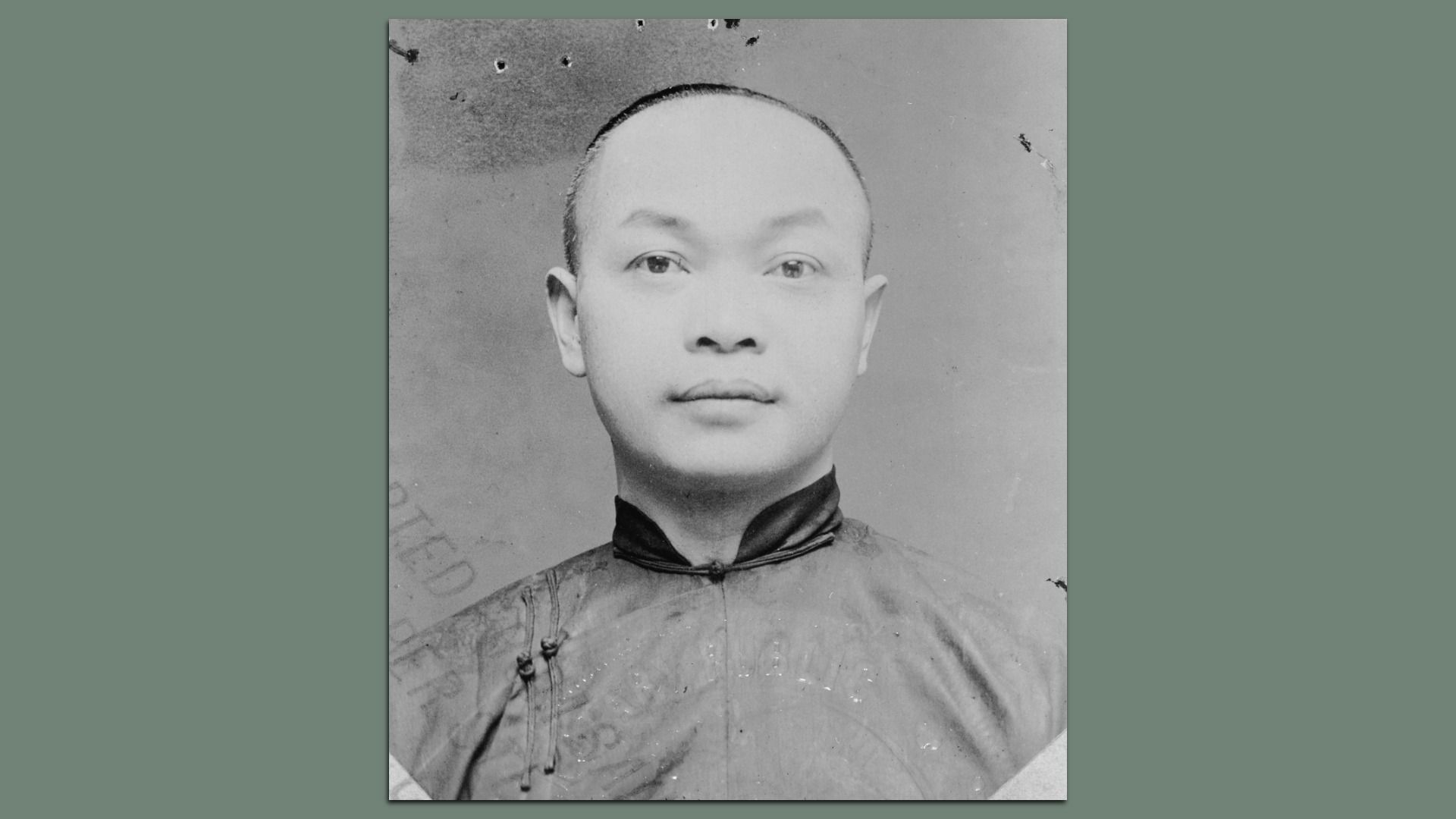
Wong Kim Ark in 1904. Photo: National Archives/Interim Archives via Getty Images
As the U.S. Supreme Court litigates Trump's move to revoke birthright citizenship, the story of one San Francisco native is gaining wider recognition.
Why it matters: Wong Kim Ark's case set the precedent for birthright citizenship in the U.S.
Driving the news: Over 30 million immigrants are in the U.S. workforce, according to Pew Research Center. None of their future children would be able to call themselves citizens if Trump's executive order is upheld.
Flashback: Wong was born to Chinese immigrants in San Francisco's Chinatown in 1873.
- Under the 14th Amendment he was an American citizen even though his parents were barred from naturalizing due to the 1882 Chinese Exclusion Act.
- But upon returning from visiting relatives in China in 1895, 21-year-old Wong was denied entry and detained on a ship, even though he had an affidavit signed by white men attesting that he was "well known to us" and indeed born in San Francisco.
- "Instead of just tolerating that indignity, Wong Kim Ark, along with the Chinatown community, rallied and fought his case all the way up to the Supreme Court," Annie Lee, managing director of policy at advocacy group Chinese for Affirmative Action, told Axios.
Friction point: John Wise, an openly anti-Chinese bigot who controlled immigration into the San Francisco port at the time, wanted a test case that would deny U.S. citizenship to Chinese residents. U.S. Solicitor General Holmes Conrad took up the charge against Wong in court, arguing that he was a subject of the Chinese emperor by way of his parents.
- But in a landmark 6-2 decision in 1898, the Supreme Court ruled that the 14th Amendment guarantees U.S. citizenship to Wong and any other person born on U.S. soil.
- Following the logic of the federal government "would be to deny citizenship to thousands of persons of English, Scotch, Irish, German, or other European parentage," Justice Horace Gray wrote in the opinion.
Yes, but: Wong's story is still largely unknown.
- Even Norman Wong, his great-grandson, didn't know much about the case until later in life.
- What he did learn, however, is that Wong "had an active defiance in him," Norman told Axios.
Zoom in: During his time of confinement, Wong often conversed with officials in English, according to stories passed down the family.
- But on interrogation days, he'd "go straight to Cantonese," Norman said.
- "It's actually very important that ... he didn't make it easy for them," explained Norman, who has spoken out against Trump's order. "People who are apathetic about what's going on or are trying to avoid it ... give consent to the nonsense."
What they're saying: The Trump administration "wants to make birthright citizenship an immigration issue, but it's really not," Lee noted. "Most Americans are citizens by birthright — white, Black, Latino, Asian."
- "They have a view of who belongs in America ... and a belief that certain communities do not belong here," she added. "That's why, at this moment, we cannot be complacent ... We must talk about this case."
The other side: Trump's legal team has defended the order by claiming that children whose parents aren't citizens are "subject to foreign powers" and not American jurisdiction as envisioned in the 14th Amendment.
- Republican allies also say it's a matter of "allegiance."
State of play: San Francisco leaders unveiled a plaque in Chinatown last week honoring Wong's legacy and reaffirmed their commitment to protecting birthright citizenship.
- San Francisco and California are among a number of jurisdictions suing the federal government over Trump's directive, which constitutional law experts have told Axios faces steep legal obstacles.